Best Tent Camping near Everglades National Park

CAMPER SUMMARY PRESENTED BYFord

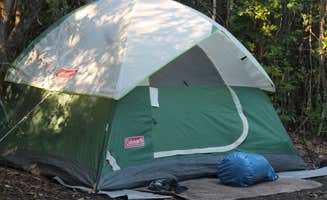
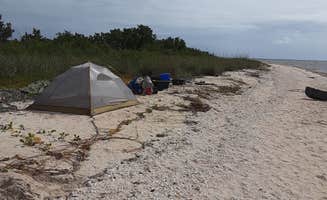
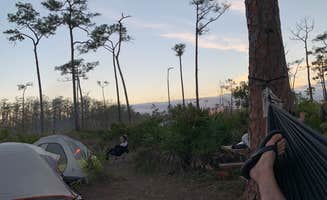
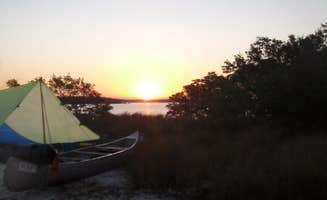
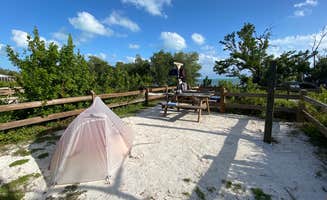
Tent camping in the Everglades National Park offers unique backcountry experiences predominantly accessible by water. Backcountry Highland Beach and Canepatch Wilderness Campground provide primitive tent-only sites within the park boundaries, with no amenities but exceptional wilderness immersion. Most sites require permits and are reached by canoe, kayak, or small boat, creating a true wilderness experience rarely found in Florida's developed camping areas.

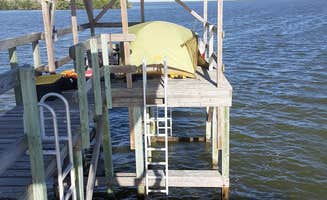
Backcountry tent sites throughout the Everglades consist primarily of chickees (elevated wooden platforms) or beach camping areas with minimal infrastructure. Most locations prohibit fires, have no drinking water, and require campers to pack out all trash. Portable toilets are available at some chickees like Hells Bay and Pearl Bay, though maintenance varies by location and season. According to one reviewer, "The porta-potty was very clean, and the mosquitos were very bad as expected. Make sure you're in your tent come sunset and you'll be okay." Permits must be obtained 24 hours in advance at ranger stations, with a processing fee of approximately $15 plus $2 per person.

The primitive nature of Everglades tent camping provides extraordinary wildlife viewing opportunities. Many sites along the Wilderness Waterway offer chances to see dolphins, sharks, and various bird species from the comfort of your tent site. A camper noted that at Highland Beach, "if you're lucky you can watch sharks feed right off the beach." Tent campers should be prepared for insects, particularly at dawn and dusk, with mosquitoes and no-see-ums often intense regardless of season. Sites vary significantly in accessibility—some like Pearl Bay Chickee are relatively easy paddles suitable for beginners, while others require navigation skills and physical endurance. Winter months typically offer the most comfortable tent camping conditions with fewer insects and milder temperatures, making tent-only camping more enjoyable.

Best Tent Sites Near Everglades National Park (29)

Show More
Showing results 1-10 of 29 campgrounds

2025 Detourist Giveaway

Presented byToyota Trucks

Review Campgrounds. Win Prizes.

Enter to Win


Tent Camping Reviews near Everglades National Park

339 Reviews of 29 Everglades National Park Campgrounds


  • J
    Sep. 30, 2016

    Monument Lake Campground — Big Cypress National Preserve

    Big Cypress park

    Nice simple campground right in the middle of the huge wilderness of Big Cypress National Preserve and not far from Everglades National Park. Pros: right off the main road through the Everglades & Big Cypress, RV sites are all around a pond, boardwalk hikes nearby (short drive), visitor center and Native American museum nearby (short drive), ranger programs (short drive to visitor center), clean, level & grassy campsites, surrounded by trees, some of the best stargazing in all of Florida, great wildlife around camp and on the trails nearby. Cons: tent-only area is next to the RV dump station, very open and very little shade at most sites. FYI: bring all the food & supplies you need into the park, though they do have water at the campground.

  • Jean C.The Dyrt PRO User
    Feb. 28, 2020

    Mitchell Landing Campground — Big Cypress National Preserve

    Primitive Campground in a National Preserve

    This is a primitive campground off the loop road south of Tamiami trail through Big Cypress National Preserve. The first couple of sites have large parking pads for campgrounds hosts that were unoccupied when I was there.  Sites are first-come, first served and you'll have a choice of sites that are tucked away behind brush and trees or large, more open sites. There's no drinking water available. There are vault toilets available that were clean. Few of the sites were occupied in late January. At the back of the campground there is airboat access to backcountry trails in the Stairsteps section of the Big Cypress Preservel elsewhere along the loop road you may be able to use swamp buggies and ATVs. There are extensive rules and permitting to take your vehicle on these trails as well as online training requirements, so check them out on the Big Cypress website. 

    Sites are $24/night, half price if you have a Senior pass or Access pass, though to be honest I didn't see any envelopes for payments and the campers I spoke with indicated they weren't paying anything. You can stay 10 nights during peak season (Jan-Apr), 14 consecutive nights the rest of the year. They  have picnic tables (look at the end of the table for the site number), fire rings, and lantern poles. Bearboxes provide food protection if you don't have a hardsided vehicle. You're in a panther habitat.

  • Katie M.
    Aug. 24, 2021

    Flamingo Campground — Everglades National Park

    Eco Tents 😍

    Down at Flamingo, there’s four types of camping: eco tents, tents (A Loop), campers/ RVs (T Loop) and the backcountry chickees. This review is for the ✨eco tents✨.

    The eco tents are awesome in general, but more so if you’re new to camping. Some come fully furnished with beds, nightstands, etc, while others are completely unfurnished and you can set up your own gear, so you choose your level of comfort. They also come with electric fans.

    It’s incredibly quiet down there and the full moons are outta this world - no pun intended! 😉 Waking up and drinking your coffee on the shore of Florida Bay is a great way to start the day.

    But there is no food allowed in the tents whatsoever. Because the walkways to and the platforms of the eco tents are elevated, there’s also no way to cook even near your eco tent. There are fire rings and picnic tables near the parking area, which is also where the bathrooms are. So if you’re someone who wakes often in the middle of the night for “bio breaks”, you might want to keep that walk in mind - or plan for an alternative.

    There are bathrooms with running (non potable) water and toilets with real plumbing, but no showers.

    I’d definitely recommend the eco tents for a short stay!

  • Stephanie Z.The Dyrt PRO User
    May. 26, 2019

    Midway Campground — Big Cypress National Preserve

    Year Round Camping with Alligators

    Midway Campground is half way between Naples and Miami and a great central point if you're planning to explore both Everglades National Park and Big Cypress Preserve.

    The campground is both RV and Tent friendly, and unlike the other nearby campgrounds, this one is open all year round -- although you're likely to have it mostly to yourself in the summer. 

    The campground is set up wide open as a big loop around a lake. There isn't any privacy between sites which isn't a problem in the winter. In the summer, be prepared to get to know your neighbors.

    The site is close to the Big Cypress Nature Trail as well as the Everglades Bird Trail.

    There isn't anything available at the campground- so be sure to pack everything in with you-- especially you're mosquito repellant.

  • Jean C.The Dyrt PRO User
    Jan. 29, 2020

    Pinecrest Group Campground — Big Cypress National Preserve

    Large clearing for group camping

    The only indication that you have reached the turn off for Pinecrest group campground is the brown tent sign. The sign for the campground itself is parallel to the road, so you won't see it until you are upon it. You'll need to reserve a campsite online in advance. Otherwise the gate to the campground is locked. Each of the 4 sites can accommodate 15 campers/8 tents as they are paired in such a way that sites 1&2 are together and 3&4 occupy a separate corner, perfect if you're group requires two sites.. Each site has a picnic table, fire ring, and half of a bear box; extra tables were gathered in the center. There are vault toilets, but no running water. Plenty to do in the area...fishing, birding, boating, hinting. Explore the preserve or neighboring Everglades. It's off the gravel loop road south of Tamiami Trail Rd.

  • Sara B.
    Jan. 10, 2021

    Long Pine Key Campground — Everglades National Park

    FORGET IT

    DYRT IS WRONG, NO ELECTRIC AT ANY SITE and NO WATER AT SITES. If you are dry camping, go for it, IF your reservation exists when you arrive!  We booked a site, arrived and they did not have any record of our reservation.

    The showers are solar and only hot in the middle of the day.  Forget a shower at night if you get in late.   NO Generators after 8 PM.

  • Nick C.
    Aug. 1, 2021

    Collier–Seminole State Park Campground

    Hot Hot Summer

    This place was nicely maintained. We camped on the tent only loop. Most of the sites are pretty private with water, a fire ring and picnic table at each spot. Some get more shade and some have more trees. The shower was great but broken and the light was broken in there as well. But I’m not a complainer. There are some trails in the park with canoe / kayak rentals. And then more trails off the main road. Overall a pleasant tent camping spot but wow it was crazy HOT July 31st. So many mosquitoes and yellow biting flies. I would go in the cooler months for sure!

  • Kelly L.
    Feb. 25, 2019

    Monument Lake Campground — Big Cypress National Preserve

    Go in the winter time

    My husband and I lucked out to get an absolutely gorgeous day to tent camp at this campground. The next day was back to Florida’s hot and humidity. This campground is in one of natire’s most wonderful places, big cypress national preserve. This campground has tent and rv sites. No electric sites. We went on a Sunday and the whole campground was full, it’s a popular spot, would recommend making reservations in advance. There are vault toilets over on the rv sites and flush toilets by the tent sites. There are campground hosts, fire pits in the tent area, and a lake that does have alligators, because this is Florida. The nite sky was perfect so many stars to see. Little to no noise pollution. Make sure to bring your insect repellent, I got eaten alive once the sun started setting. No trails at the campground but there are trails within big cypress. Tent campsites were level and not right on top of one another. There were a few trees for shade as well.


Guide to Everglades National Park

Tent camping in Everglades National Park requires careful preparation for its unique subtropical ecosystem. The park spans 1.5 million acres of wetlands with water levels fluctuating seasonally, affecting both accessibility and wildlife visibility. Backcountry sites vary significantly in paddling distance, with routes ranging from 4 to 13 kilometers from trailheads, most requiring navigation through narrow mangrove tunnels.

What to do

Wildlife photography opportunities: The remote chickee platforms provide excellent vantage points for capturing unique wildlife. At Willy Willy Wilderness Campground, campers can photograph native species in their natural habitat. According to Michael W., "Very secluded, obviously you can only get there by kayak or canoe, perhaps a smaller boat on high tide. Water is nearly fresh this far into the glades."

Night sky observation: The lack of light pollution makes stargazing exceptional from many backcountry sites. A visitor at Backcountry Highland Beach noted, "The night sky is absolutely incredible from this piece of Florida real estate and in the winter there is a steady breeze that keeps the bugs at bay."

Paddling routes: The Hell's Bay Canoe Trail offers a moderately challenging paddle suitable for intermediate kayakers. Katie L. reports, "The trail is well marked for the most part and easy enough for a beginner paddler. The chickee was windy, but in good repair."

Fishing opportunities: Several chickee platforms offer good fishing access. Liz M. reported "Decent fishing for smaller fish (little snook, red drum, jack)" at Lane Bay Chickee. Remember that saltwater fishing requires a Florida fishing license.

What campers like

Isolation and solitude: Many campers value the remote experience of Everglades backcountry sites. At Backcountry Lane Bay Chickee, Liz M. appreciated that "Unlike the other chickees, it is a single platform, so your group will be the only ones out there... we were completely alone."

Wildlife viewing from platforms: Elevated chickees provide safe wildlife observation points. Robin M. from South Joe River Chickee reported, "Beautiful area with mangroves and lots of dolphins. On the water, beautiful views."

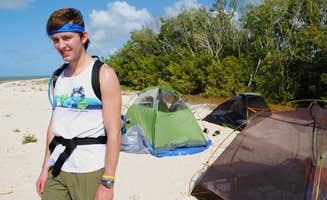
Beach camping: Some sites offer beach access rather than platforms. At Backcountry Northwest Cape, David P. enjoyed the "Great Sunset! Just pick a spot above the high tide line to pitch your tent. Tide goes way out!!"

Well-maintained facilities: Despite the remote locations, many portable toilets are regularly serviced. A Lane Bay Chickee camper noted, "The porta-potty was very clean," which provides comfort in an otherwise primitive setting.

What you should know

Insect preparation is essential: No-see-ums and mosquitoes can be intense at all backcountry sites. David P. warns about Northwest Cape: "Then the bugs came out with a vengeance. Noseeums will slip thru cheaper tents bug screens. This is the Everglades! Be prepared."

Tide awareness: Water levels affect landing sites and navigation. At Northwest Cape, "Tide goes way out!!" requiring careful planning for arrivals and departures.

Limited facilities: Most chickees lack amenities like cooking stations. Liz M. noted that Backcountry Hells Bay Chickee had issues with "camping stoves melted the composite floorboards" due to lack of proper cooking surfaces.

Permit requirements: All backcountry camping requires permits obtained from visitor centers. Sasha W. explains for Canepatch, "You will need a backcountry permit in order to camp here. You can order that online... I believe the permit costs $15 (processing fee), and you also have to pay a small fee ($2) per person."

Tips for camping with families

Choose shorter paddling routes: For family trips with children, select closer chickees. Emily G. recommends Hells Bay: "The paddle took about 3-4 hours each way but we took our time. There was only one place where we were unsure which direction to go, but after paddling around a bit we found our way."

Plan tent-only activities: Once darkness falls, insects make outdoor activities challenging. Emily G. suggests: "Pack some cards or something to do in the tent after sunset before bed."

Consider weather windows: Winter months typically offer milder temperatures and fewer insects. Katie L. reports paddling Hells Bay in January: "We kayaked the Hells Bay trail in January and had a great time."

Pre-trip preparation: Ranger stations provide critical information for successful family trips. A visitor to Canepatch Wilderness Campground shared: "My family and I got more information by calling the 'Flamingo' Visitor Center. They were super helpful, and helped us plan out our trip and how to get to the campsite."

Tips from RVers

No RV access to backcountry sites: All Everglades backcountry camping requires boat access. David P. from Backcountry Oyster Bay Chickee notes, "All these Back country Chickees are a welcome site to a tired paddler! Port o Pottys are well maintained. Roof and shade! Dry spot to stand!"

Park at designated launch points: Secure parking is available at main launch sites including Flamingo Visitor Center and Gulf Coast Visitor Center while on overnight paddling trips.

Advance planning required: Due to limited permits, book well ahead, especially during peak winter season. Sasha W. advises, "The permits do go pretty fast, so make sure to plan out this adventure in advance and get your permit!"


Frequently Asked Questions

Which is the most popular tent campsite near Everglades National Park?

According to TheDyrt.com, the most popular tent campground near Everglades National Park is Backcountry Highland Beach — Everglades National Park with a 5-star rating from 1 review.

What is the best site to find tent camping near Everglades National Park?

TheDyrt.com has all 29 tent camping locations near Everglades National Park, with real photos and reviews from campers.