Mojave National Preserve dispersed camping areas sit between 2,000 and 5,000 feet elevation in the eastern California desert. The preserve spans 1.6 million acres of desert landscape with volcanic cinder cones, limestone caves, and ancient Joshua tree forests. Winter overnight temperatures often drop below freezing from December through February, while summer daytime temperatures regularly exceed 100°F from June through September.
What to do
Explore lava tubes: About 8 miles from Baker on Kelbaker Road, visitors can access hiking trails to volcanic formations. North Lava Tube Camp provides convenient access to these geological features. "The trails are well marked and one can explore the Lava Tubes which is just across the dirt road and easy access. It's hot even in spring so bring a lot of water - more than you think you need," notes a camper at North Lava Tube Camp.
Stargazing sessions: The Mojave's dark skies offer exceptional celestial viewing conditions. "I had a fire and it was great to sit, relax, and stargaze. There isn't a lot of light pollution so on a clear night, it's awesome," reports a visitor to North Lava Tube Camp. The Providence Mountains area offers similar viewing conditions where one camper noted, "We laughed as loud as we wanted and sang even louder. This place was perfect."
Historical route exploration: The Mojave Road follows ancient Native American pathways and later pioneer routes. "This designated dispersed camping area is at 17 Mile Point, the approximate halfway point on the Mojave Rd between Soda Springs and Marl Springs. Just west of the point is a dry camp where pioneers and freighters would stop for the night," explains a camper at 17 Mile Camp.
What campers like
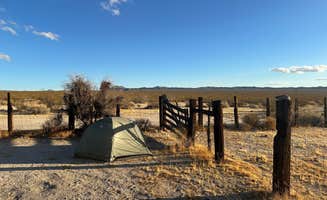
Natural windbreaks: Rock formations throughout the preserve provide shelter from desert winds. "This site is great. It's right up against the side of the hillside which helps with shade," writes a visitor to 17 Mile Camp. Another camper at Tank Six Camp appreciated the "fabulous quiet spot with a nostalgic cattle corral. Gorgeous vistas."
Cell coverage in remote areas: Despite the remote setting, several tent campsites near Mojave National Preserve offer connectivity. "I had 3 bars of Verizon LTE and was able to text and send videos and do some of my remote work," reports a North Lava Tube camper. Another mentions, "We had cell signal here which was a nice change and in the far off distance you could see ant-sized semis on the highway."
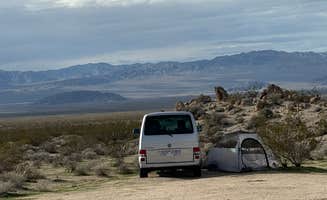
Flat parking areas: Several sites feature level ground suitable for vehicle camping. "Great easy access dispersed camping. Showed up past midnight and it was still really easy to find a flat spot to park our camper van," notes a visitor to 17 Mile Camp. A camper at Granite Pass found that the "spot was perfect and beautiful."
What you should know
Vehicle considerations: Many access roads require appropriate vehicles. "The road is sandy, rocky, and hilly with rivets and ruts. I made it in an AWD Subaru, but be careful. I scraped the undercarriage in one spot of the road and worried about getting stuck in sand in several other spots," warns a camper at Kelbaker Road Dispersed Camping.
Wildlife encounters: Local wildlife may visit campsites. "Make sure to wear shoes as there are thorns. Also be ready to wake up to critters running across your exhaust, chewing on their dinner," notes a Granite Pass camper. At North Lava Tube Camp, visitors are advised to "WATCH OUT FOR SNAKES."
Navigational challenges: Some campsites can be difficult to locate. "PLEASE NOTE, the coordinates are slightly off. If headed east, turn left onto a short paved road that turns into a dirt road BEFORE the coordinates state. If headed west, the turn would be after the coordinates on the right," advises a 17 Mile Camp visitor.
Tips for camping with families
Emergency planning: Baker provides nearby services for families needing supplies. "I like this camp area because it's isolated and out of town but close enough to get supplies while allowing access further into the preserve," writes a North Lava Tube camper. "Baker is just 10 miles away and has a few gas stations and a market that have pretty much everything from firewood to laundry detergent."
Timing considerations: Sunrise viewing opportunities are worth planning for. "Sunrise was beautiful! Would definitely stay here again," notes a camper at 17 Mile Camp. Winter camping offers more moderate temperatures with Tank Six Camp visitors reporting "50F at night in February."
Site selection for privacy: Strategic site selection can enhance the camping experience. "The campsite we chose past the little hill was not visible from the other campsites and it had a great view of the valley and the mountains. You could barely see the highway, and you could not hear it," reports a visitor to North Lava Tube Camp.
Tips from RVers
RV parking considerations: Some sites accommodate larger vehicles. "There are two designated dispersed campsites that I saw. The first one is maybe 200m down the road on the left. It has a driveway leading to a circular area so it would be good for a pull through camper or two," notes a North Lava Tube Camp visitor.
Turnaround challenges: Sandy conditions can complicate vehicle maneuvering. "A word of caution, it is not easy to turn around because it's very sandy," warns a North Lava Tube Camp visitor. When navigating the preserve's unpaved roads, RVers should scout ahead before committing to narrow sections.





 Legend


