



A
Alex R. Traveler
TravelerRyan Campground — Joshua Tree National Park
No Where Else...
Joshua Tree National Park is a world of it's own. Ryan was a beautiful site with great rock formations all around.
Black Rock Equestrian Campground provides tent camping sites specifically for visitors with horses near Joshua Tree National Park. Located within Yucca Valley, this campground requires reservations and allows pets. The equestrian area includes fire rings and picnic tables at each site. Trails accessible from the campground connect directly to Joshua Tree's backcountry riding routes. The campground receives a perfect 5-star rating from campers who appreciate the seclusion while still maintaining proximity to park attractions. Sites accommodate horse trailers with adequate parking space, though water must be brought in as drinking water is not available.
Pioneertown Corrals offers another horse-friendly option approximately 20 miles from Joshua Tree's west entrance. This facility accommodates both RV and tent camping with drive-in access. The campground permits alcohol and has trash disposal facilities and toilets available. Ribbonwood Equestrian Campground, situated near Idyllwild, provides water hookups and drinking water on site, making it more suitable for extended stays with horses. This campground features level sites that can accommodate horse trailers, with potable water available for both riders and horses. The trail system connects to numerous riding routes through the San Bernardino National Forest, offering varied terrain from desert landscapes to mountain paths. Advance reservations are strongly recommended during peak season.
$30 / night
"Joshua Tree National Park is a world of it's own. Ryan was a beautiful site with great rock formations all around."
"This camp site was tucked in the back, 12 miles from Joshua Tree park entrance. This site was on the side of the rocks that provided shade for more than 12 hours in the day."
"Love the rock formations within the campground and proximity to hiking from the campground. Pit toilets, garbage and recycling available. Fire pits, bbq’s and picnic tables at every site."
"Amazing rocks, night skies, and climbing to do all around."
$35 / night
"On the outskirts of Joshua Tree National Park in an old growth Joshua Tree grove. The trees are tall and fat, very close to each other. Heftier than the trees inside the Park."
"Short drive to the park and easy to get to the main grocery stores. The sites are not very shady and there is not too much privacy but overall it's a nice place and the bathrooms are very clean."
"Equestrian sites are partial hookup and are $35. There is a dump station on site for all campers to use."
"Lake Cahuilla has a lot to offer, including a playground, lake for fishing only (no swimming), and a pool that was closed while we were there, and somewhat spacious sites."
$25 - $35 / night
"Cascade Trails is a unique experience created by impassioned owners who are personally committed to saving the wild mustangs. Check them out and leave a review."
$30 - $213 / night
$35 / night
"Huge open horse camp with 10 corrals, picnic tables, bbqs and fire rings, pick your spot anywhere you like. Almost all sloped but not awful. Lot gets regularly graded."
$60 - $75 / night
"Next to one of best small music venues. We stayed here for a concert and walked to and from the show avoiding the traffic in and out. Friendly host."
$30 / night
"Good campsite, has the coolest hike trails, and the nights are really beautiful. It was so much fun and I would definitely come back Id just need more blankets because the nights are beyond cold."
TravelerJoshua Tree National Park is a world of it's own. Ryan was a beautiful site with great rock formations all around.

 Traveler
On the outskirts of Joshua Tree National Park in an old growth Joshua Tree grove. The trees are tall and fat, very close to each other. Heftier than the trees inside the Park.
It has water and dump station, otherwise the campgrounds inside the Park are more majestic with huge rocks.
If you're a fulltime RVer or vanlifer with an efficient solar system, having water in/out and a place to stay safely for cheap is grand. It's four klicks from malls, thus ideal if you need stuff. As a fulltime RVer I book several consecutive days with the app. The grounds are empty on weekdays, thus can spend quality time organizing my rig, thoughts, and plans.
From June to autumn half the campsites are shuttered. The area has limited visitation in summer.

 Guide
GuideWhile technically in Joshua Tree National Park, this campground sits on the Northwest edge of J.T., requires no park entrance fee, and does not connect with the main road through the park. It's a fine campground for those who can't get a site at one of the other campgrounds, or those who don't want to make the long, slow drive into the park. If you want to actually visit Joshua Tree, I'd find a different campground further into the park.
PROS: Easy access, Lots of sites with nice views overlooking the town, Several hiking trails starting at the edge of campground, separate campground for people with horses.
CONS: No shade, lot of the sites are uneven and hard-packed ground (You can't get spikes in deep enough at some sites, I wouldn't trust my tent being secure in high winds), Not really "in" the park, long drive to park entrance, you don't get that isolated feeling, campsites feel a bit too close to each other.
Each site has a fire pit and a concrete picnic table. Size of campsites seem to vary greatly. Facilities are clean, with flush toilets/urinals.
After being unable to get a site at our preferred campground in Joshua Tree we grabbed two spots at Black Rock Campground. While not bad, it wasn't that normal Joshua Tree feel, the lights from the nearby town wash out some of the night sky, and the camp just felt packed, even when it was at ~60% capacity.

 Ranger
This is a really fun place to stay and has a bunch of awesome amenities. Right behind the campground is the Pioneertown Main Street, featuring replica buildings from the old west. They have stores, gun fights, and a restaurant nearby. The campground itself has a communal fire pit and bbq area that all campers can use. Each site has a table and fire pit. The layout of the sites is a little cramped and there is no privacy. It is designed mostly for equestrian camping and has horse stalls you can rent along with your site. The restaurant (Pappy and Harriet’s Pioneertown Palace) is somewhat of a local icon, and has amazing food and is known for their live music.
 Guide
GuideStayed here one night when the park was full. Short drive to the park and easy to get to the main grocery stores. The sites are not very shady and there is not too much privacy but overall it's a nice place and the bathrooms are very clean. It also has an equestrian campground attached.

 Legend
This campground is a little outside the main Joshua Tree area. It used to be the only campground you could reserve ahead. So we usually spend the first night here and then head into the main park in the morning. It has full facilites and water on sight. It has a small visitor center/ranger station as well.
You drive through a residential area and then you are at the campground. You are on a knoll or incline so you are looking down over the valley. There is horse site as well but I do not know the details of that.
We are tent campers. There are good tent sites as well RV sites. A great place to watch the star, the sunset and the sunrise. Trail right fromt= the campground up to a hill/mountain behind the campground.
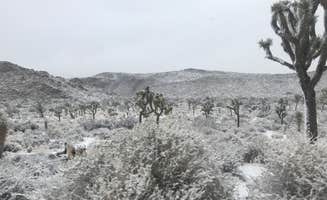
Be prepared. We have been snowed on here and wind whipped. Always go in February.
Sites have tables, fire rings and water. Modern bathrooms.
You are surrounded by Joshua Trees and if you catch them in the right time they are blooming.
 Ranger
Although it's technically in the park, you'll need to drive over to one of the main entrances for park access. Still, this is a great option. The horse stalls are on the north end of the camp, and there are a few loops. It's desert camping so bring your own shade and lots of water. The weather was great in October, and there is a short trail on the west end of camp (plus lots of other in the area to explore).
We had an RV so I can't speak to the bathrooms.
GuideHuge open horse camp with 10 corrals, picnic tables, bbqs and fire rings, pick your spot anywhere you like. Almost all sloped but not awful. Lot gets regularly graded. Central water location so you do have to schlepp your water to the corrals. Trails are amazing. There is even an overland trail from here to the south end of Joshua Tree NP which is around 35 miles long.

 Legend
Originally booked this site because it is a good endpoint for the California Riding & Hiking trail though the national park, so if you’re looking to run or complete the traverse, it is a good spot to campout and/or leave a car. There are also great hiking trails right next to the campground. The campground is also super close to the towns of Yucca Valley and Joshua Tree for picking up supplies, enjoying the local Luna bakery (we went 3 times in 2 days!)
Only downside was sites felt really close together (particularly site 56, although some looked better), so noise levels were a little rough.
We were able to score this site on a Saturday night during the spring break season using Dyrt Alerts!
Joshua Tree National Park sits at elevations ranging from 536 to 5,814 feet, creating distinct ecosystems throughout the park. Summer temperatures regularly exceed 100°F while winter nights can drop below freezing, requiring campers to prepare for extreme temperature variations. Most horse-friendly campgrounds near Joshua Tree provide access to both desert terrain and mountain trails, with numerous locations offering equestrian-specific amenities.
Desert hiking with impressive views: From Ryan Campground, several trails provide access to key park features. "This campsite is firstcome, first-served and the campground is at 4,300 feet (1,310 m) in elevation. It only have 31 sites and make sure you bring plenty of water since there isn't a single potable water in this site," notes Roland B. The nearby trail system connects to popular destinations including Keys View.
Horseback riding on established trails: Horse owners can access numerous riding routes directly from Black Rock Equestrian Campground. "Huge open horse camp with 10 corrals, picnic tables, bbqs and fire rings, pick your spot anywhere you like. Almost all sloped but not awful. Lot gets regularly graded," shares Judith W. The campground provides access to an overland trail extending approximately 35 miles to the southern end of Joshua Tree National Park.
Nighttime stargazing: Joshua Tree offers exceptional night sky viewing due to minimal light pollution. "Beautiful landscape. Very dry. You must bring all of your own water and firewood (not allowed to collect it there)," reports Kelly M. from Ryan Campground. "The scenery and starry night sky are breathtaking."
Strategic central locations: Many campers appreciate Belle Campground's position within the park. "Awesome location situated at the base of a huge boulder. Fire pit, grill, and bathrooms provided," states Noah S. Belle provides easy access to multiple day hiking opportunities.
Rock formations for exploration: The distinctive rock formations throughout the park create natural playgrounds. "This campground is right in the middle of the park. You're an easy drive to most of the park. The campground backs up to big rocks you can climb on," comments Stefanie W. about Ryan Campground. These geological features provide both recreational opportunities and shelter from desert winds.
Wildlife viewing opportunities: Several equestrian campgrounds near Joshua Tree National Park offer chances to see local fauna. Cascade Trails Mustang Sanctuary invites "guests to come interactively experience the herd, equine therapy and overnight stays," according to Ashley F. The sanctuary combines camping with opportunities to learn about wild mustang preservation efforts.
Water availability varies significantly: Most campgrounds in Joshua Tree National Park have no potable water. "Less busy than Hidden Valley, but just as nice and centrally located. Clean pit toilets, but no water. Non-reservable," reports Amanda P. about Ryan Campground. Campers must transport all drinking water from outside sources.
First-come, first-served sites fill quickly: Many campgrounds operate without reservations during peak seasons. "This campground is first come first serve so come early. The only down side is they do not provide water. This campground is right in the middle of Joshua tree," explains Kevin T. about Belle Campground. Arriving mid-week substantially improves your chances of securing a site.
Reservation systems vary by location: Lake Cahuilla offers both reserved and walk-up options. "Primitive sites are $25 and are first come first serve only. Partial hookups were $30 I think, and FHU were $40 if I remember right. Equestrian sites are partial hookup and are $35," explains Laura M. Understanding each campground's reservation policies helps prevent disappointment during busy periods.
Look for campgrounds with amenities: Lake Cahuilla provides family-friendly facilities. "Lake Cahuilla has a lot to offer, including a playground, lake for fishing only (no swimming), and a pool that was closed while we were there, and somewhat spacious sites," notes Morgen M. These amenities keep children engaged during multi-day stays.
Consider weather impacts carefully: Desert temperature fluctuations affect children more severely. "We visited in January, and should have been better prepared! The campground was beautiful, and the desert at Joshua Tree and around is really special. The campsites are kinda open to the wind," explains Justin L. from Black Rock Campground. Temperature ranges often exceed 40 degrees between daytime highs and overnight lows.
Plan activities around shade availability: Many Joshua Tree campsites offer minimal natural shade. "Enormous boulders are the backdrop (and only promise of shifting shade relief) of this little campground in Joshua Tree," describes Kathleen D. about Ryan Campground. Morning hikes and evening activities help avoid peak sun exposure.
Consider space limitations for larger rigs: Many equestrian campgrounds near Joshua Tree accommodate trailers but with limitations. "Really only one spot that our larger RV (35 foot) would fit. Close to other campers and we run our generator some so we decided not to be those people!" notes Alisa P. regarding Belle Campground. Sites often lack level surfaces, requiring adjustments during setup.
Balance proximity to attractions and amenities: Pioneertown Corrals offers unique positioning near entertainment options. "It's a very cool and unique place. They have two bars/restaurants with live bands and even a bingo night, a few gift shops and plenty of open camp sites during the week," describes Christopher H. This proximity allows convenient access to attractions while maintaining a camping experience.
Account for seasonal crowds: RV campers face particular challenges during peak visitation periods. "The campground was very well maintained in that the bathrooms were clean, not much trash and very nice camp hosts. However, the sites were close together, narrow roads and the sites were not level," explains Julie K. from Black Rock Campground. Visiting mid-week during shoulder seasons provides greater site selection.
Frequently Asked Questions
Which is the most popular equestrian campsite near Joshua Tree National Park?
According to TheDyrt.com, the most popular equestrian campground near Joshua Tree National Park is Ryan Campground — Joshua Tree National Park with a 4.6-star rating from 32 reviews.
What is the best site to find equestrian camping near Joshua Tree National Park?
TheDyrt.com has all 9 equestrian camping locations near Joshua Tree National Park, with real photos and reviews from campers.
Keep Exploring