









Matt G. Ranger
Death Valley: Dispersed Camping East Side of Park
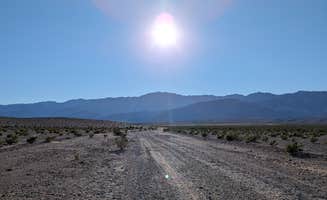
Loved this place. Room for anyone and everyone. Pads everywhere to choose from. A few miles from Dearh Valley entrance. No cell coverage but a great place none the less.
Driving across Death Valley National Park, you'll find scattered dispersed camping spots where few other people go. These free camping areas have no facilities at all, so bring everything you need including plenty of water. The park follows standard Leave No Trace rules - pack out everything you pack in. If you head toward Pinto Peak, you'll need a vehicle with good clearance since the roads aren't maintained. Most dirt roads leading to camping spots get very rough after rain. The park limits camping to 14 days in any location. Fire rules change throughout the year depending on conditions, so check with rangers before planning to have one. All camping must be at least 200 feet from springs and water sources, which protects the rare desert water systems. The nearest supply points are in Beatty or Pahrump, so stock up before heading into the park. Summer temperatures regularly exceed 120°F, making winter and spring the best seasons for dispersed camping here. Coyotes and desert tortoises are common in the area - store food properly and give wildlife space. The park has strict regulations about where you can drive off-road (basically nowhere), so stick to established dirt roads. The night skies in Death Valley rank among the darkest in the country, with virtually no light pollution in the backcountry areas.
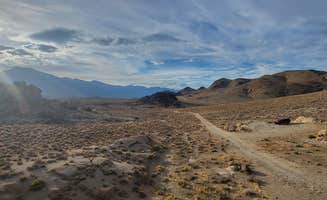
"It’s technically not an established “site”, just a dirt road that stretches for miles into the Lemoigne Canyons. A 4x4 vehicle is required, though the clearance is more important than the 4WD is."
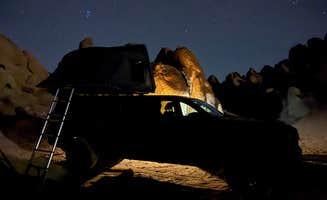
"Location- ALABAMA HILLS, Lone Pine- Movie Rd. CA. Tent Dry Camping. BLM Land, for disperse camping. No reservations required, unless you choose to stay at a “campground”."
"Camped in the dispersed camping area late April. This place is beautiful! No facilities so bring your water, bathroom equipment, cooking and cleaning supplies."
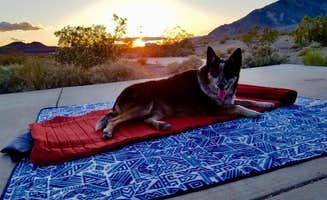
"Loved this spot right outside of Death Vally National Park. My dog and I pulled up and stayed for one night. It was easy enough to find and we were one of two sites occupied."
"No cell an no amenities. Road wasn't bad getting there. An no one was around."
"A beautiful and remote area of Death Valley National Park “backcountry.” Be sure to research the Park’s rules for disperse camping."
"Very close to the park. Right off the highway and easy to find. No water, no restrooms and no cell service. Be careful if you tent camp off the pads."
"No amenities whatsoever. "
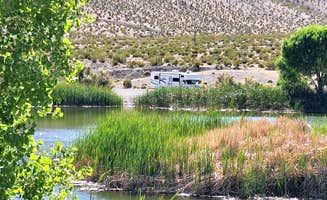
"This spot is wide open easy access off 95 next to the pond and directly on the 50 mile OHV Rhyolite Ghost Town Trail. 30' flat towing had no issues pulling right in off Vanderbilt Rd about 2 miles south"
"Being accessible by long stretches of rough roads to the north or rugged 4X4 trails to the south, really cuts back on the crowds."
"There are pit toilets, 5 different hot springs and plenty of stars. From Big Pine it is about a 3.5 hour drive, 40 miles of which is off-road. AWD or 4x4 is recommended, same with ground clearance."
"Getting there was a little confusing at first as my (Apple) maps simply stopped me parallel to the site on the main road."
"Flat terrain, one fire pit, plenty of room. Beautiful panoramic views. We managed with a 25ft 2WD RV. Note: Travel visa the East side (via Titus Canyon Road)."
RangerLoved this place. Room for anyone and everyone. Pads everywhere to choose from. A few miles from Dearh Valley entrance. No cell coverage but a great place none the less.

 Legend
Great spot just out of town. Several people camped here. Back from the road so not too much road noise. Pond is a bonus feature.
 Guide
Great spot with epic views. Quiet besides the occasional vehicle on the road before the turn off. Stayed in the first spot but saw a few other rigs farther back. Lovely place.
 Guide
My favorite spot at Alabama Hills. Very low traffic. There are only three campsites on this dead end road. It looks like 4 from Google Maps, but they are rehabbing one area. Most of the stuff people want to see at Alabama Hills is over a mile away. There Is a lot of broken glass and dog poo in the site. I stayed in site #2. It is huge. 3 has nice view; 4 is practically private-but very unlevel. The mountains are gorgeous. I will definitely camp here again.
 Scout
This place used to be a mining outfit with mobile homes on site, so there are cement pads everywhere out here. Nice level camping, I’ve been walking around barefoot out here without issues. It is about 15 miles or so from Furnace Creek but the elevation is at 3,000 feet so the temperature difference has been about 13 degrees cooler with a little breeze.
RangerGood for what it is. Nice place for a stop over. No cell an no amenities. Road wasn't bad getting there. An no one was around.
GuideFirst time here. Is sooo cool. Little windy but the wind did die down for a bit then started again. Little hard finding a spot. Is Monday and most of the spots were taken by the entrance.
 Guide
The city of los Angeles owns most of the land out here that’s flat and perfect for camping, a lot of the other ideal spots are on day use only roads, aggravating to say the least

 Traveler
I had the place all to myself and was able to get the spot up on top of the hill overlooking the valley. A really nice place to camp.
Dispersed camping near Death Valley National Park spans multiple valleys with drastic elevation changes from -282 feet below sea level to over 5,000 feet in the surrounding areas. This terrain variation creates temperature differences of 15-20°F between lower and higher elevation camping spots. Most accessible dispersed sites exist on Bureau of Land Management (BLM) land surrounding the park's boundaries rather than within the park itself.
Hike to Panamint Dunes: Pack extra water and allow 3-4 hours for the complete hike. At Panamint Dunes Dispersed, the dunes require a 1-mile cross-country hike from the parking area. "Being accessible by long stretches of rough roads to the north or rugged 4X4 trails to the south, really cuts back on the crowds. Saline Valley is a gorgeous, empty expanse with stellar sunrise/set views," notes one camper about the broader area.
Wildlife photography: Set up early morning or late afternoon when animals are most active. At Minietta Road, you might spot desert wildlife from your campsite. "We saw a couple of RVs but everyone has a TON of space. I was able to let dog and cat out of camper and they weren't going anywhere....nothing to chase," reports one camper at Minietta Road.
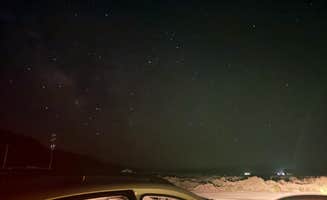
Stargazing: Death Valley has some of the darkest skies in the country, particularly from higher elevation camps. "At night, you get an unmatched view of the stars and Milky Way because there's no light pollution," notes a camper at Minietta Road.
Concrete pads for level parking: Many sites feature remnants of old mining operations. "This spot has a ton of abandoned flat concrete pads, mostly level and mostly accessible. On some of them the surrounding dirt has washed away so it's a big drop from the pad to the ground," explains a camper at Death Valley: Dispersed Camping East Side of Park.
Complete silence: The remote nature provides unusually quiet camping experiences. "The valley is known for having ZERO background noise, so the only sound you'll hear are the occasionally car, the ravens, and the Hornet fighter jet that flights overhead," shares a Minietta Road visitor.
Proximity to park attractions: Some sites provide convenient access without park entrance fees. "Large space, you can park on the pads or the dirt. Very close to the park. Right off the highway and easy to find," notes a camper at Death Valley: Dispersed Camping East Side of Park.
True self-sufficiency required: There are absolutely no services available at most sites. "In this place you are like lost on an unihabited island, no phone signal, not a single tree. I prepared enough food and stuff to camp in the RV about nearly 2 days," explains a camper at Minietta Road.
Road conditions vary drastically: Many access roads deteriorate quickly after rain. "Road ends on the half of the way. No advise to enter the road with RV," warns a visitor to Dispersed Site off 190 - Ridgecrest BLM.
Cell service is extremely limited: Most dispersed sites have no connectivity at all. "Zero cell service in this area with Verizon and ATT," reports a visitor to Death Valley: Dispersed Camping East Side of Park.
Choose established sites with concrete pads: These provide more stable terrain for tents and play areas. "The ground is hard and can be rocky, depending on which spot you get. I put my set up in my car a few nights and slept in there," notes a camper at Death Valley: Dispersed Camping East Side of Park.
Pack extra sun protection: The lack of natural shade makes improvised shelter essential. "There is absolutely no shade, which is bad when it's hot. But it was great for me to test out my Starlink and Jackery, which both performed great," reports a camper.
Watch for desert hazards: The terrain can be dangerous for children. "This area is an abandoned mining town so there are small pipes and some drop offs on a few slabs. Arriving at night is not a good idea," warns a visitor at Pinto Peak View Camp.
Scout sites before bringing in large rigs: Many areas have unmarked hazards. "There is a wide open area in the turn off I would recommend hoofing it to scope your spot then move your rig in if you're over 25ft," advises a camper at Death Valley: Dispersed Camping East Side of Park.
Plan for temperature extremes: RVs may require additional cooling or heating. "We had to keep the windows closed overnight because the wind felt like it was going to break our windows off, so it got a little warm in the RV overnight," notes a camper.
Choose ground carefully for tent camping: The desert surface can damage equipment. "Be careful if you tent camp off the pads. My tent got some holes from the tiny rocks, even with a good foot print. Some are just very pointy," shares a camper at Vanderbilt Rd. Dispersed.
Frequently Asked Questions
Where is dispersed camping allowed in Death Valley National Park?
Dispersed camping is allowed in Death Valley National Park along established roadways, particularly on the east side of the park. Death Valley: Dispersed Camping East Side of Park offers several pull-offs with concrete slabs for parking, many with fire pits. You must camp at least one mile from any developed area, paved road, or wilderness boundary. Camping is limited to previously disturbed areas within 50 feet of designated roadways. The park requires vehicles to stay on established roads, and you must follow Leave No Trace principles. Dispersed camping is not permitted in certain sensitive areas, so always check current park regulations before your trip.
Is free boondocking available in Death Valley National Park?
Yes, free boondocking is available in Death Valley National Park in designated backcountry areas. Saline Valley Primitive Campground offers free primitive camping opportunities with no facilities. Teakettle Junction is another option for free boondocking within park boundaries. These areas have no water, restrooms, or cell service, so come fully self-contained with ample supplies. Remember that summer temperatures can be dangerously high, making winter and shoulder seasons the best time for boondocking. All park regulations apply, including proper waste disposal and no off-road driving. Always check current park notices before heading out.
What are the rules for backcountry camping in Death Valley?
In Death Valley National Park, backcountry camping rules require you to camp at least one mile from any developed area, paved road, or day-use-only area. You must use existing campsites where available and stay on established roads - no off-road driving is permitted. Panamint Dunes Dispersed is a popular backcountry area requiring a hike-in approach. Campfires are generally prohibited, and you must pack out all trash. Camping is limited to 14 days in one location and 30 days total per year. Some areas require permits, particularly for larger groups. The park recommends carrying extra water, as no facilities exist in the backcountry. Always check current regulations at visitor centers before your trip.
Where is BLM land for camping near Death Valley National Park?
Alabama Hills Recreation Area offers beautiful dispersed camping on BLM land near Lone Pine, with stunning views of Mt. Whitney. This popular area has no facilities, so bring all necessary water and supplies. Ballarat Ghost Town provides dry camping opportunities on BLM land near the park's western boundary. Additional BLM dispersed camping can be found along Minietta Road and other access roads surrounding the park. Most BLM sites near Death Valley have no water or facilities, and 4x4 vehicles are recommended for accessing some areas. The 14-day camping limit applies on most BLM lands. Always practice Leave No Trace principles.
Keep Exploring