Talladega National Forest offers numerous dispersed camping opportunities near Ashland, Alabama at elevations ranging from 600 to 2,400 feet. The forest spans approximately 392,000 acres across the Appalachian Mountain foothills. Most primitive camping sites require a short to moderate hike and have established fire rings but limited amenities during extended dry periods, typically occurring in late summer and early fall.
What to do
Waterfall hiking routes: Several backcountry sites are positioned along trails leading to seasonal waterfalls. The Chinnabee Silent Trail Backcountry Site 7 offers convenient access to swimming opportunities. "I also liked how close it is to the waterfall so you could set up camp and go for a nice evening swim before cooking dinner," notes one camper.
Trail intersections exploration: The Skyway Loop Backcountry Site Near Chinnabee sits at a junction of multiple trails. "This site is really wonderful because of how easy it is to access, its location on the water, and its large level areas for setting up tents. You can get to the site from any of the 2 skyway loop starting points or you can park at Lake Chinnabee and walk a short distance," explains a reviewer who found the strategic location useful.
Rock formations: The Pinhoti Backcountry Campground near Odum Trail provides access to nearby boulder formations and overlooks. "The only downside is this site doesn't have a view from the site itself but it's only a short walk to one of the nearby overlooks," writes one hiker who valued the geological features.
What campers like
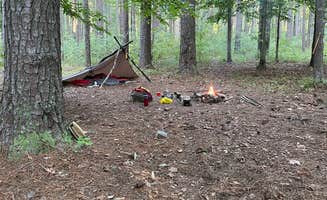
Large group sites: Chinnabee Silent Trail Backcountry Site 2 offers spacious accommodations for bigger parties. According to one review, "A nice open area in a pine thicket, this large site has 2 fire rings and is big enough for even large groups to spread out. It's also right next to a creek for an easy water source and about 50 yards down a side trail so it's nice and private."
Protection from elements: Some sites offer natural barriers from wind and weather. "The site itself is well cleared and has an established fire pit. There are also several large boulders that work well to block the wind and make this a more comfortable space in bad weather or when it is cold out," notes a camper at Pinhoti Backcountry Campground near Odum Intersection.
Nighttime astronomy: Clear ridge sites provide stargazing opportunities away from light pollution. "Make sure to spend some time out on the rocks at night since you can see every star in the sky," recommends one backpacker about the Skyway Loop Backcountry site.
What you should know
Water source reliability: Water availability varies drastically by season. A camper at Chinnabee Silent Trail Backcountry Site 5 advises, "If available some of the best sites are right next to Sipsey falls a little further along where you have access to water for pumping and swimming when the weather is right."
Navigation challenges: Trail junctions can become confusing, especially in autumn. "The signage along these trails is also good and they are well traveled though there are a few stream crossings that can get confusing so keep an eye out for turns in the trail, especially in the fall or winter when there are leaves on the ground," cautions one hiker.
Privacy considerations: Some sites receive more trail traffic than others. One camper observes, "If you are not an early riser be aware that this site is right alongside the trail so you may hear people who get out on the trail in the morning."
Tips for camping with families
Shorter hike options: For young hikers, choose sites with minimal approach distances. One reviewer recommends a specific primitive camping site near Ashland, Alabama: "A final feature is that if you have any younger campers joining along it is not such a far trek in from where you park so they will have an easier time hauling gear."
Base camp strategy: Consider using accessible sites as a home base for day hikes. "This site works great as either a base camp to leave your gear and hike for the day or a stopping point to sleep for the night if you are attempting the entire loop," suggests one experienced camper.
Timing considerations: Spring offers moderate temperatures and wildflowers. "This is a great place to visit in Spring or early summer before it gets too hot and while the water levels are still high. You can see some amazing wildflowers," notes one seasonal visitor.
Tips from RVers
Alternative options for vehicle-based camping: While dispersed sites are hike-in only, Turnipseed campground serves as a front-country alternative near trailheads. "Not far up the trail from the Turnipseed campground, you reach a giant tree standing in front of a small creek," mentions one backpacker describing the approach to primitive campsites.
Parking considerations: Limited trailhead parking requires early arrival during peak seasons. Vehicle parking is available at Lake Chinnabee recreation area and several designated trailheads along forest roads with most requiring a short walk to reach camping areas.
Road conditions: Forest service roads accessing trailheads can become rutted after heavy rainfall. High-clearance vehicles are recommended during wet seasons, while passenger cars can typically access most trailheads during dry conditions.




 Guide
Guide


