











 Legend
Colter Bay RV Park at Colter Bay Village — Grand Teton National Park
The Happy Ending
Colter Bay Village has a few options for setting up temporary residence: first-come, first-serve campground, reservable tent-cabins and tents, an RV park, and maybe a lodge. When arriving at Colter Bay, the campground is to the right and the cabins and tent cabins are both to the left. They are operated separately; the cabins and tent-cabins are operated by the Grand Teton Lodge Company. The tent cabins and the actual cabins each have different check-in areas (a driver will pass the cabins first and the take another left to go up the hill to the tent cabins). From the cabins, there is a short walk to Jackson lake, the village with the market, laundromat, showers, and wifi, the evening ranger talks, the boat ramps, and the visitor center. The ranger talks in the evening were really marvelous.
Before arriving, we had travelled 7,000 miles across the country, tent camping the entire way. We planned to tent camp in the Tetons too, but to our dismay, we discovered that there are no practical, reservable car-camping sites, and I wasn't willing to risk first-come, first-serve as an option (good thing, because that campground was full by 9). So we reserved a tent-cabin and looked forward to a new experience. It was so wonderful that we are going back this summer.
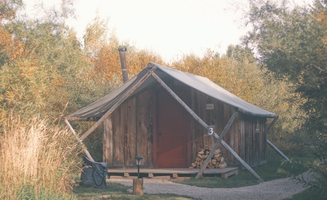
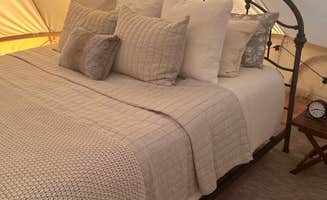
What is a tent-cabin? It is a structure that has two log walls and two canvas walls, a canvas roof, and a little, tiny wood stove. There is an electrical light, but I don't think there are any plugs. There is a covered picnic area outside the door and a bear box for each site, along with the picnic table and fire ring. There are four beds (two bunks on each log wall), and campers will need to bring their own everything except for the bed and tent. There are flushing toilets close by, and a dishwashing sink. We had a perimeter cabin, as seen in the video.
Colter Bay Village has restaurants, a lovely and well supplied market, a laundromat and pay showers. The laundromat/shower facility has wifi which extends out as far as the gift shop and market.
The five stars is something I reserve for only our most beloved places in this world. Why we love Colter Bay: the atmosphere is just so easy going and undemanding, the people are relaxed. The landscape is breathtaking--like the water temperature of Colter Bay. The wildlife was incredible. We saw a grizzly, and a moose with her calf, among other creatures. Maybe the presence of Colter Bay was simply a release from the tension of Yellowstone, which was beautiful, but crowded, and people seemed a little edgy after being in lines, sulphur, and the very hot sun all day. But really, I believe that Colter Bay has a truly peaceful serenity that soothes the soul and is as simple and clear as the waters of Jackson lake, and as warm and smooth as the rocks that line the shore.


