






 Ranger
Dispersed camping at Mower Basin
Not for everybody, but definitely for me! dispersed camping at its finest
I do a lot of dispersed camping, and have done several dispersed camping sites in West Virginia recently. Mower Basin is, hands down, my favorite one so far. And I suppose it depends on what you value and what you are looking for, but here's why I'm particularly fond of Mower Basin camping:
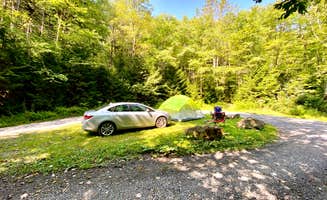
1. Many of the sites are legitimately dispersed, i.e. nowhere near other campsites, and sometimes not even visible from the main dirt road.
2. Remote enough that it is often not crowded because it does take a bit of work to get to it.
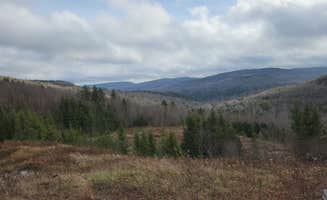
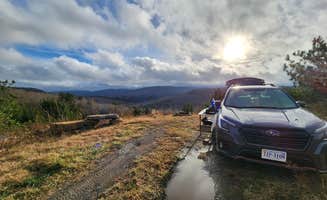
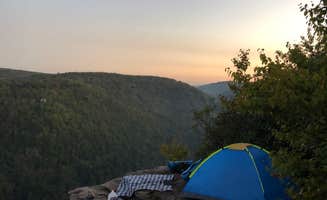
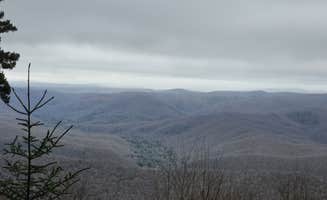
3. Significant variety from one camping spot to another. Some have stellar views from their 4000 foot-elevation perch, loooking down into the fog covered valleys far below, while others will have you surrounded in dense forests of pines, and some have tons of sun exposure -- handy if you've got a solar generator to charge.
4. Trails nearby— some of the finest trails I've experienced in WV— which is a lot of trails since that is one of my prime reasons for camping is to be near trails for hiking or trail running. There is a gorgeous network of trails defined as multi-use but designed particularly for mountain bikers, complete with berms, moguls, and generally sufficient width for navigating without hanging up a handlebar. Most noteworthy: the trails are beautifully groomed, well-maintained(which is definitely not the case in many of the national forest trails in the region).
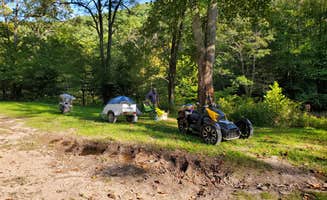
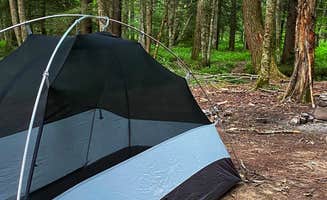
5. Many of the sites are very tent-friendly, and most are also camper/RV friendly. Because of the roughness of the road to get up to Mower Basin, I doubt you could get easily get a large motorhome up here, but I have seen MANY fifth wheel or campers up to 25 feet in length. I wouldn't call the road four-wheel-drive, high clearance terrain, but it is fairly rotted, so you want to drive slow.
Reasons why it might not be perfect for everyone:
-
Really remote. I'm pretty sure the nearest hospital is at least an hour away, and I never get cell phone reception at any of the sites I have camped at. At best, I might get a momentary rush of incoming emails at one or two spots along one of the trails. But, for the most part, you will be truly off the grid here.
2. Definitely not perfect if you aren't into dispersed, primitive camping, so look that up if you aren't familiar with it. The short story: if you need to go#2, be ready to dig a hole unless you've got a camper.:-)
3. Because of its remoteness and high altitude, it could be impassable for any vehicle in winter when there's heavy snow.


