Horse camping opportunities near Silverlake, Washington provide direct trail access for riders throughout the Gifford Pinchot National Forest. The region sits at approximately 500-800 feet elevation with volcanic soil conditions that drain well even during rainy periods. Most equestrian sites in this area remain accessible from late spring through fall, with some facilities closing after the first significant snowfall.
What to do
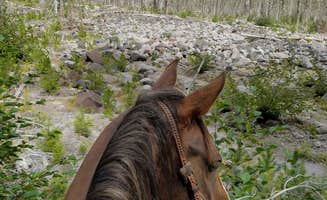
Trail riding from camp: At Kalama Horse Camp Campground, riders can access multiple trail systems without trailering. "There are several awesome trails you can take right from the campground and there is a campground trail that guides you around the whole campground area," explains Kelcie T.
Fishing opportunities: Seaquest State Park Campground offers nearby lake fishing access. "Great fishing! Trout, bass, blue gill... swimming area. Store on sites. Nice hike around lake with plenty of spots to rest and fish," notes Brian B. The park sits near Silver Lake with multiple fishing access points.
Mount St. Helens exploration: Base your exploration from nearby campgrounds. "From Sequest State Park, it was a 10 hour day to do the loop in order to see the east side, with only one short hike thrown in," reports Carol, highlighting the time commitment for comprehensive volcanic touring.
What campers like
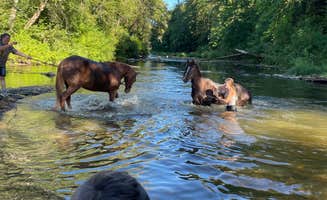
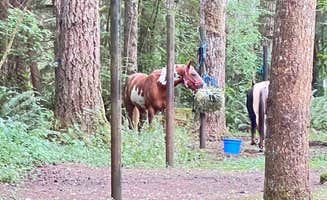
Private equestrian sites: Horse-focused campgrounds provide substantial space between sites. "Each spot is large and quite private. The sites are nice and close to a creek which was nice since it was hot," shares Jessica C. about the Kalama Horse Camp layout.
Natural water sources: Lewis & Clark State Park Campground offers creek access amid old-growth forests. "Sitting in our peaceful and private campsite amid a grove of trees, I felt I must share kudos for this state park. Many of the structures were built in the 1930's by the CCC and it has an iconic feel," writes Janet S.
Seasonal wildlife viewing: The forests around Silverlake attract diverse wildlife. "Seen a heard of elk on one of my hikes," notes Guy S. at Camp Wilkerson, which connects to multiple equestrian trails in the region.
What you should know
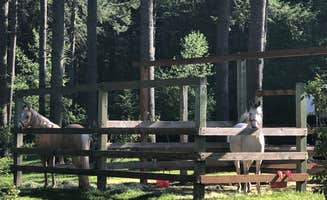
Water limitations: Many horse camps rely on natural sources rather than developed systems. "There is stock water and wheelbarrows for mucking. Pit toilets are pretty good but just in case, bring TP!" advises Mari R. about facilities at Kalama Horse Camp.
Weather considerations: The shoulder seasons can bring unexpected conditions. "We stayed here one night while heading north. Hoped to see Mt. St. Helens but it was overcast," reports Kim G., highlighting how weather can impact visibility at Battle Ground Lake State Park Campground.
Primitive facilities: Most horse-specific campgrounds offer basic amenities only. "When we went one of the showers was out of order, but we were told it would be getting fixed soon," notes Mary C., reflecting the maintenance realities of remote facilities.
Tips for camping with families
Activity options: Rainbow Falls State Park Campground provides diverse recreation. "First off, rainbow falls are not what you would expect by the name. It is located on a river which has a small drop which is more of a small rapid then a water fall... The campground is well kept. There is a large field with a playground, pavilion, and playground."
Fishing with kids: Many local lakes offer accessible fishing for beginners. "The lake had a very long and nice boat ramp deep enough to accommodate just about any boat," explains Kevin W. at Riffe Lake Campground, noting the easy water access.
Junior Ranger programs: Several parks run educational programs. "At night the campground had a great Junior Ranger program with a very enthusiastic park ranger that kept the almost 50 people/kids entertained. She was great at engaging all the kids and teaching them about the park," shares Ashley B.
Tips from RVers
Limited hookup locations: Horse campgrounds typically offer minimal RV facilities. "The RV section had six spots. 3 of those spots back up to a busy paved road with traffic," warns Lisa P. about placement issues at Lewis & Clark State Park, highlighting the importance of site selection.
Size considerations: Most equestrian sites accommodate modest rigs only. "The camp site I chose was equipped with the standard amenities of a picnic table and fire ring and the pull in section was just large enough for my smaller car. Throughout camp I did notice some sites were designed specifically for tent campers while others would cater better to larger units," observes Crystal C.
Dump station access: Merrill Lake Campground and similar sites typically lack RV services. "This campground is best suited for tent camping, as there is only one RV site and sometimes it's occupied by a camp host," notes Kathy B., emphasizing the limited RV capacity at many horse-focused facilities.






 Legend


