Rustic camping near Heisson, Washington offers secluded options in dense Pacific Northwest forests at elevations ranging from 500 to 2,500 feet. The volcanic terrain surrounding Mount St. Helens creates unique camping conditions with frequent temperature fluctuations—daytime highs can reach 90°F in summer while dropping to 45°F overnight, requiring proper layering and cold-weather gear regardless of season.
What to do
Mushroom hunting: During late summer and early fall, the forests near Butte Camp/Climbers Bivouac Dispersed Campsite provide abundant edible mushrooms. A camper noted, "During August and September, you can find tons of edible mushrooms" in the forest that "resembles a rainforest when it rains."
Swimming in forest creeks: Several dispersed sites have hidden swimming spots within walking distance. At FR-604 Dispersed, campers recommend following "the trail by foot in the back of the forest for maybe 10 minutes" to find "a beautiful swimming hole and small waterfalls."
Wildlife viewing: The wilderness areas around Heisson provide opportunities to spot elk and other wildlife. At Gifford Pinchot National Forest Dispersed Site, campers report seeing elk in the area. One reviewer advised, "If you look hard enough you can find a PRIMITIVE toilet (plywood stand with toilet seat)" for longer wildlife observation stays.
What campers like
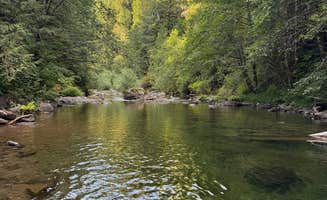
Private river camping: Panther Creek Creekside Camp offers secluded spots along rushing water. Campers praise how "you will feel totally immersed out here" despite being "not too far from the nearest town." The creek access provides "ice cold" water and the towering trees create private camping spaces.
Easy weekday escapes: For quieter wilderness experiences, mid-week visits significantly reduce encounters with other campers. At Little Soda Springs Rd Dispersed, one camper found "2-3 free sites you can drive in and, 2 more walk-in sites near the bridge" with "a nearby latrine at the trailhead," making it "perfect for a group."
Volcanic landscapes: The unique terrain around Mount St. Helens provides distinct camping experiences. One visitor to Mount St. Helens Dispersed Camping described finding "dozens of open sites that we had our pick of" despite initially seeing "a few large parties" that made them "apprehensive."
What you should know
Road conditions vary dramatically: Forest service roads require careful navigation and proper vehicle preparation. One camper at Gifford Pinchot National Forest Dispersed Site warned that "I wouldn't want to drive [an RV] on the roads" despite multiple sites having "plenty of room for RVs."
Download maps before arrival: Cell service throughout the region is extremely limited or nonexistent. A camper at Panther Creek Creekside Camp reported, "My carrier is Verizon, I didn't have any service whatsoever," highlighting the need for offline navigation tools.
Permits required: Most dispersed camping areas near Heisson require either a Northwest Forest Pass or America the Beautiful pass. Little Soda Springs Rd campsites are regularly patrolled by Forest Service personnel, and one camper mentioned being able to "buy US National Forrest camping passes from the gas station in Carson" when other options were unavailable.
Tips for camping with families
Best beginner backpacking: Snag Creek Trailhead Dispersed offers an accessible introduction to backpacking with children. A camper described it as "a beginner backpacking trip (10 to 12 miles round trip) close to town" where "the creek would have been quite nice for camping."
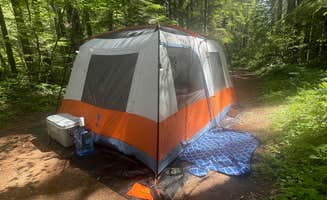
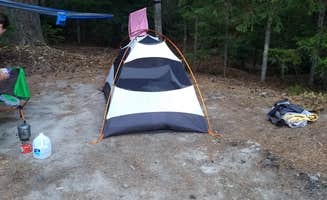
Tent spot selection: Families should select sites with flat, even ground away from high-traffic areas. At Mount St. Helens Dispersed Camping, families can find "a good deal of trailheads near by, meaning you're never too far from a pit toilet or a bulletin board with information."
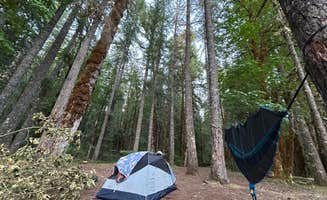
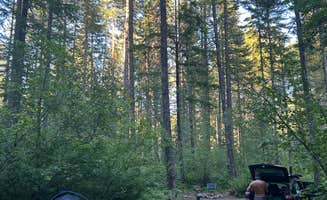
Nighttime considerations: Tall forest canopy causes earlier darkness than expected. One camper noted, "The tall trees make things a lot darker before it actually gets dark," suggesting families bring adequate lighting for evening activities.
Tips from RVers
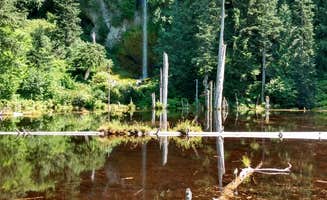
Best small trailer sites: McBride Lake NF-81 Dispersed accommodates smaller trailers with some limitations. A camper reported, "I could pull my 17' pop-up 'A' frame trailer and back into one of the two spots with no problem," but cautioned "it may be a bit more snug with bigger rigs (25+ feet long and anything more than 8+ feet wide)."
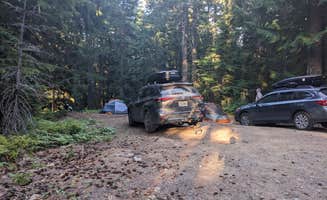
Blocking techniques: RVers at FR-604 Dispersed recommend "blocking the entrance with your vehicles to block noise and people trying to drive in to the campsite" for improved privacy and reduced road noise.
Site accessibility timing: RV access varies significantly by season. McBride Lake campers noted that per the state website, while "mostly paved, be prepared for several miles of gravel (between Forest Road 830 and 8123) and a road that is sometimes very rough." Spring snowmelt can make many sites inaccessible until late May or early June.














 Guide
Guide


