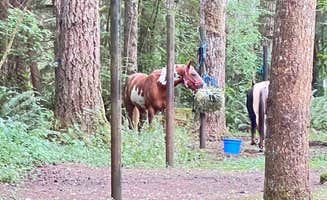
Equestrian camping near Centralia, Washington gives riders access to extensive trail systems throughout Capitol State Forest and neighboring areas. The forest encompasses over 100,000 acres of managed timberland with elevations ranging from 400 to 2,700 feet. Trail conditions vary seasonally, with optimal riding from May through October when most trails have dried from winter rains.
What to do
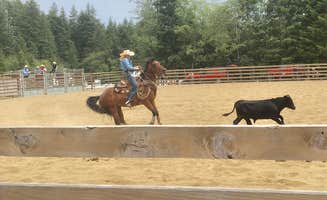
Trail riding at Capitol Forest: Capitol Forest offers over 160 miles of multi-use trails accessible directly from Margaret McKenny Equestrian Campground. "Spent 7 days (max) here. Camp hosts went out of their way to make it comfortable, clean and quiet. Completely dispersed tent or rv camping with a Washington Discovery Pass ($35 year) otherwise FREE for up too 7 days," notes Jody S. The trails vary in difficulty and terrain.
Explore riverfront areas: Porter Creek Campground provides creek access for horses to cool down after rides. "The river is gorgeous and fun to explore!" reports Jessica A. Located within Capitol Forest, this campground offers primitive sites that can accommodate horse trailers and serves as a starting point for multiple trail systems.
Visit Mount St. Helens: Horse trails near Mount St. Helens are accessible from camping areas around Castle Rock. The volcanic landscape creates a unique riding environment with open views and distinctive terrain features. Many trails connect to larger networks that extend throughout the region.
What campers like
Spacious sites: Dragon's Gate Gardens receives praise for its expansive campsites. "Each reservable space is massive.... 4-5 times the size of most campsites. While you may reasonably run into other campers within each section if you go for a walk, you won't even know anyone is in the other sections, its so private," writes Amanda. This allows ample space for horse trailers and equipment.
Helpful camp hosts: Many equestrian campgrounds have dedicated hosts who maintain facilities and provide local knowledge. At Margaret McKenny Equestrian Campground, campers appreciate the personal attention: "The camp hosts Steve and Ginny are helpful, kind and keep it maintained well," according to Rachel W.
Natural water access: Streams and creeks provide natural water sources for horses at several campgrounds. At Fall Creek Campground, "Kids really enjoyed the creek nearby and it was great for our tent camping. We were able to hike around and had water, and restrooms that were clean," mentions Mayna M.
What you should know
Permit requirements: Washington State Discovery Pass ($35 annually) is required at most equestrian campgrounds. "You are supposed to have a Washington State Discovery pass to stay here, also they want you to fill out self registration once you arrive, fyi there are no pens onsite to do so," Samuel H. notes about Fall Creek Campground.
Limited amenities: Most equestrian campgrounds offer minimal facilities. Abby M. reports about Margaret McKenny: "No trash, no water, no hook ups so come prepared. There's a host onsite and they are very kind. You do need a discovery pass in order to stay and just register up front."
Seasonal closures: Trail and campground accessibility varies by season. At Porter Creek, one visitor found: "We arrived at the end of the road to find the campground closed, so we ended up abandoning our final night and driving home... DNR would do well to post closure information so that apps like The Dyrt can more easily pick it up," according to Phoebe B.
Tips for camping with families
Playground facilities: Lewis & Clark State Park Campground includes features for children. "There is a amphitheater for guests and the rangers put on decent shows. There are only two bathrooms for the entire campground but they do have showers. My kids loved the addition of a playground. Many parks dont have this and it kept them entertained for hours," Mary C. reports.
Swimming options: Several campgrounds offer swimming areas adjacent to horse trails. At Riffe Lake Campground, one camper notes: "This park is huge! Lots of space to hand out and swim. There's always kids running around so it is great for young ones. Bathrooms were clean and big," according to Bree G.
Junior Ranger programs: Some state parks near Centralia offer educational programs for children. The more developed campgrounds typically offer these structured activities during summer months, providing learning opportunities alongside horse camping experiences.
Tips from RVers
Site selection: Millersylvania State Park Campground offers separated camping areas for different needs. "Separated tent and RV sites, sites are spacious, a very pretty and clean lake, Beer Garden at the lake, clean bathrooms, shower requires tokens but shortens the shower time if you have to wait," explains John G. This separation helps when bringing horses and large rigs.
RV length limits: Many equestrian campgrounds have limited space for larger RVs. Christina F. advises about Millersylvania: "We had a pull-through site right across from the dumpster, bathrooms, and camp host. We had decent service for Verizon. The only reason for 4 stars instead of 5 is because our site had a huge mud puddle from the road going to the power and water hook-up."
Hookup availability: Most equestrian-specific campgrounds lack water and electrical hookups. For those requiring connections, consider staying at campgrounds with dedicated RV sections and using day-use equestrian areas for riding access.




 Ranger


