







 Legend
White Mountain National Forest Wildwood Campground
quiet, large sites
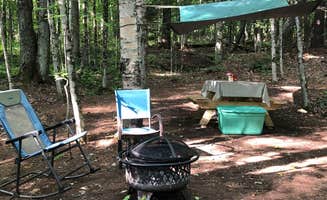
I reviewed this campground last fall after visiting on the final day of the season, but I just had a chance to sty here during a peak summer weekend and have a few additional insights. Fees are now up to $20/night, still a bargain, but it comes with only the most basic amenities, i.e. vault toilets, running water at faucets, picnic tables and fire rings. Although the campground description indicates that the sites are first-come, first-served, this has changed and many of them are available online in advance. I didn't realize this and when i arrived late Friday afternoon I had 5 or 6 campsites to choose from that could accommodate my small teardrop camper; if I were tent camping, I'd have had a couple more sites available to me. The tent only sites require a short walk from the parking area.
When you arrive, each site will be labelled either Reserved or _Open. _ If it is Reserved, the dates it is reserved will be listed and they may not be contiguous. All the sites filled up Friday night.
I had site 24 which I liked. it was very large and level, with ample space for today's large tents. The water spigot was near the site next door. I could see my neighbors, but they didn't bother me. Every host site always seems to look messy with tarp-covered items and wood piles and site 24 will give you a view of the host site, but it's far enough away that you can ignore it.
If I were in a tent, I'd try for site 22. It's a walk-in site that includes 7-8 steps down, but it opens into a large open area and just a bit beyond there is a small brook, too.
The campground is just a few miles west of I-93 and the town of Woodstock. If you want to hike Mooselauke or the Kinsmans, the Appalachian Trail crosses 112 nearby. Lost River Gorge is nearby as are numerous tourist attractions/activities in Woodstock and Lincoln. Take some time to explore Cascade Park in Woodstock if you want to cool off in the river and lounge on the rocks (park on the street or in the lot that is north of 112 just before the traffic light at Rte 3 in Woodstock). While you're there, pick up ice cream at Coneheads; choose among numerous hard serve ice cream made on site (downstairs) or dozens of soft-serve flavors.
This side of 112 seems quieter than the stretch east of Lincoln. Noise level was quite low. Cell coverage is non-existent for several miles around here; you'll start to get a signal closer to Lost River Gorge in the direction of Woodstock.


