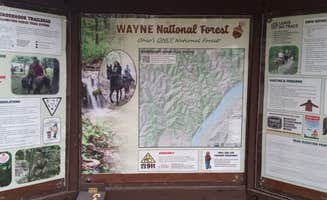
Wayne National Forest encompasses over 244,000 acres across southeastern Ohio with elevations ranging from 650 to 1,200 feet. The forest spans 12 counties with three distinct units: Athens, Marietta, and Ironton. Seasonal temperatures fluctuate widely, with summer highs often reaching 85-90°F and winter lows dropping to 20-25°F, making campsite preparation important throughout the year.
What to do
Fishing and water activities: Lake Hope State Park offers numerous water recreation options just outside Wayne National Forest. "The fishing was good, and the activities with the naturalist (Cayden) were fun and engaging... the beach was a little dirty from the geese, but that didn't slow anyone down on swimming" (Blue Rock State Park Campground).
Hiking diverse terrain: Trails around the forest vary from flat rail-trails to challenging hill climbs. "The trails are well marked and easy to follow. And there are several loop sections so you can easily plan various tips accordingly. There are three main camping areas with established fire rings, bathrooms and water supplies making the stops at the end of the day that much more pleasant" (Zaleski State Forest).
Historical exploration: The forest contains remnants of industrial history. "As history buffs will know that Ohio was one of the nation's leading iron producers back in the day... The haunted Moonville Tunnel is nearby and worth the short drive and hike" (Lake Hope State Park Campground).
What campers like
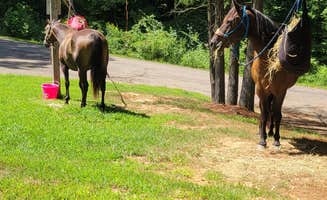
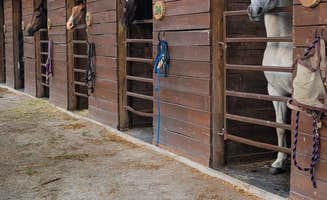
Trail system connectivity: Horse trail networks connect multiple areas within Wayne National Forest. "We have camped at both Dock 3 and Dock 2 with our dog, those are the only two areas that allow pets. At Dock 3 we were right on the water but dock 2 is probably 200 yards from the water. The hiking trails are nice but very muddy after the rain. Lots of geocasches in the area on the trails in Wayne national forest" (Burr Oak State Park Campground).
Wildlife encounters: Campers frequently report diverse wildlife sightings. "You will see lots of wildlife, we have seen salamanders, deer, snakes, a wild turkey even wandered into our camp in May 2018. Back in 1988, I saw two rattlesnakes together beside the trail on the northern loop" (Zaleski State Forest).
Seasonal flexibility: Many horse campgrounds near Wayne National Forest maintain year-round accessibility, though amenities may be limited. "We stopped here on Thanksgiving on our way South. Self paying, off season was $15. But the restrooms were closed. There were only 3 other sides occupied" (Strouds Run State Park Campground).
What you should know
Variable site conditions: Equestrian camping areas often have uneven terrain. "Camp sites are very small and very unlevel, had to raise back of camper and put front about a 1/4" off ground to get close to level. Site around is sloped in all directions. No internet or phone service so great to disconnect" (Blue Rock State Park Campground).
Seasonal weather effects: The forest's climate impacts trail conditions significantly. "The trails are nice and kept well, campsites are clean and well maintained. At each backpacking camp (3 in total) there is water and a toilet (nothing to wipe with) water is definitely well water tastes meh better off bringing a filter just in case" (Dorr-Run Red Oak Trailhead).
Limited services: Many equestrian sites have minimal facilities. "The vault toilet here is very clean and even had a lockable door. There is also drinkable water from a city water hand pump. Very quiet at night, except for a handful of cars that might drive through or spend the night" (Kinderhook Horse Trail).
Tips for camping with families
Scout ahead for flat sites: If tent camping with children, research site topography. "Make sure to pay attention to 'walk-in' sites. It's more like 'hike a half mile with your gear' sites! All in all we had a blast and a good laugh about our trek with all our stuff!!" (Hocking Hills State Park Campground).
Bring water filtration: Many horse camps have rustic water sources. "I would recommend printing maps & seeing additional information about the area & trails here: https://www.backpackohio.com/trails/zaleski-state-forest-backpack-trail/" (Zaleski State Forest).
Pack for temperature swings: Southeastern Ohio experiences significant day-night temperature variations. "We spent one night at the group site for the Thunderbunny trail races. It was raining and I was prepared and just slept in my car, as many others did" (Strouds Run State Park Campground).
Tips from RVers
Site accessibility challenges: Larger rigs face limitations at many Wayne National Forest horse campsites. "The campground is pretty secluded but beautiful rolling hills. While the site we stayed in with the motorhome was fairly level, sites are mostly small and tight on hilly terrain. That said, I would still recommend this as a nice weekend getaway" (Lake Hope State Park Campground).
Limited hookup options: Plan for self-contained camping. "We enjoyed a full hookup site. The spots aren't very spacious but there's lots of trees nearby and an easy walk to get to Old Mans Cave. We enjoyed swimming in the pool. There's outhouses with no running water but also a relatively new bath house with nice showers and toilets" (Hocking Hills State Park Campground).
Supply planning essential: Remote locations require bringing necessities. "Fairly remote, cell service is dicey but if that is what you are going for, you will be pleased. Beautiful scenery. Fall is a good time to visit. Not much nearby in the way of supplies" (Burr Oak State Park Campground).





 Legend


