Tent camping near Vass, North Carolina offers access to the Sandhills region's unique ecosystem where longleaf pine forests meet sandy soil at elevations between 200-500 feet. This area sits within the larger Carolina Sandhills National Wildlife Refuge ecosystem and experiences mild winters with temperatures rarely dropping below freezing, making year-round camping possible. Summer temperatures often reach 90°F with high humidity levels, so proper hydration and sun protection are essential during warmer months.
What to do
Paddle the Lumber River: Chalk Banks offers direct river access ideal for kayakers and anglers. "There is a put in for kayaks about half a mile from the campground," notes Cody T., while another camper mentioned "The Lumber River is right here, so fishing and canoeing/kayaking are popular activities."
Wildlife observation: The Sandhills region hosts diverse wildlife including white-tailed deer, wild turkey, and numerous bird species. Multiple hiking trails cross through the protected forests and around waterways. According to a visitor at Deep Water Trail Camp, "We enjoyed our weekend at this fantastic spot! The big pieces of quartz we found were gorgeous, and so was the view at the water!"
Mountain biking: The Uwharrie National Forest trail system provides various difficulty levels for riders. A camper at Uwharrie Hunt Camp observed, "There are trails for days within these stunning mountains that serve as the foothills for the Appalachians," making it popular for outdoor enthusiasts looking for diverse terrain options.
What campers like
Privacy and seclusion: For tent campers seeking isolation, several options exist. At East Morris Mountain, a visitor noted, "Only three sites on this little out of the way fire trail. We go to the end of the road for complete privacy." This offers a true wilderness experience with minimal facilities.
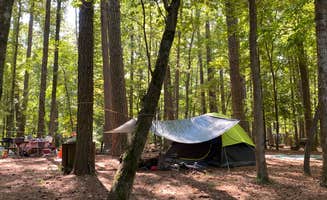
Spacious campsites: Campers frequently mention the generous size of sites in this region. At Chalk Banks, one camper observed, "This campsite doesn't seem to be too popular which is fine. The tent sites are some of the better spread out ones that I've seen," while another mentioned "Extra large and private campsites. One of the campsites has a hammock stand."
Water access: Many campers appreciate waterfront sites. A Deep Water Trail Camp visitor shared, "Great spot lots of space. There's some open areas to camp before you get to the water. You need a truck or something big to get down to the water unless they re-did the road." This makes the location ideal for fishing and paddling activities.
What you should know
Vehicle requirements: Many primitive camping areas have rough access roads requiring appropriate vehicles. One Deep Water Trail camper warned, "PLEASE take something with a little ground clearance and better than 2 wheel drive to get here. My Honda Element was on two wheels at one point but the AWD handled it like a champ."
Seasonal considerations: Most campsites remain open year-round, though facilities may be limited during winter months. San-Lee Park reportedly only allows camping until "the end of October," so checking seasonal availability before arrival is essential.







 Guide


