Primitive camping options dot the Uwharrie National Forest region near Trinity, North Carolina, where elevations range from 350 to 1,000 feet. The area contains some of the oldest mountain formations in eastern North America, with bedrock dating back over 500 million years. Summer temperatures typically reach the upper 80s while winter nights can drop below freezing, making spring and fall the most popular camping seasons.
What to do
Fishing access: Multiple campsites at Deep Water Trail Camp provide direct access to the Yadkin River. One camper noted, "Beautiful area, lots of space on the lower ground, gorgeous views from the higher ground, and some damn good fishing." Anglers commonly catch channel catfish.
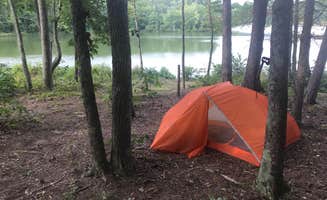
Hiking trails: The Lake Curriher Wilderness offers secluded hiking options. A visitor mentioned, "I hike in to the remote campsite on the lake." The area includes multiple trail difficulty levels with lakeside paths suitable for most skill levels.
Disc golf: Cedarock Park features two separate disc golf courses with 36 total holes. The Wellspring course receives particularly positive reviews from frequent players. The park spans nearly 500 acres with multiple recreational options beyond camping.
What campers like
Privacy and seclusion: Campers appreciate the remote feel at many sites. At Uwharrie Hunt Camp, you'll find "a good trail around the lake that offers some beautiful views across the lake." The trails provide opportunities to spot wildlife while maintaining distance from other campers.
Water access: Many sites allow direct water access for cooling off during hot months. One visitor at Deep Water Trail Camp mentioned, "We brought our two pups & they had a blast playing & laying in the water!" Sites near water tend to fill quickly during summer weekends.
Affordability: Most primitive sites in the area are either free or cost under $10 per night. Uwharrie Hunt Camp charges just $5 per night and includes basic amenities. A camper noted it has "only 6 sites and what appears to be an over-sized parking lot right next to it, the lot accommodates the OHV trailers."
What you should know
Road conditions: Access to many sites requires careful vehicle selection. A camper at Deep Water Trailt Horse Camp warned, "I would highly recommend 4WD if you're going all the way to the water sites. I attempted in my van and made it down to a sweet spot, but was stuck in the mud." High-clearance vehicles perform best on most forest roads.
Limited amenities: Most sites lack basic services. Come prepared with all necessary supplies including water. A visitor to Deep Water Trail Camp cautioned, "You have to haul all your supplies and trash in and out to include water."
Trash issues: Several campsites suffer from previous visitors leaving garbage. One camper at Deep Water Trail Camp reported, "I bagged up 4 large bags of garbage that some college aged kids just left." Always pack out all waste and consider bringing extra bags to help clean areas if needed.
Tips for camping with families
Cabin alternatives: For families wanting more comfort, Lake Curriher Wilderness offers cabin rentals. A visitor recommended, "The cabins here are also great. Clean and nice location. I would suggest the overlook cabin."
Short hiking options: Cedarock Park features family-friendly trails with minimal elevation change. The camping area requires "a short quarter-mile hike required to reach them, though the sites remain primitive with no services at the camping location itself."
Water activities: During warm months, consider campgrounds with swimming access. Homeplace Recreational Park offers additional water features, with one visitor noting it has "one of the best pools in the area." The park's water facilities make it particularly appealing for summer family camping.
Tips from RVers
Site selection: RV campers should carefully research access roads before arrival. One visitor to Deep Water Trail Camp explained, "There's some open areas to camp before you get to the water. You need a truck or something big to get down to the water."
Seasonal considerations: Winter camping brings fewer crowds but requires additional preparation. The gates at some parks close early during fall and winter seasons. One camper at Lake Curriher noted, "The gates close at 5pm during the fall/winter."
Leveling challenges: Many primitive sites aren't level, requiring additional equipment. A camper at Deep Water Trail Camp mentioned, "The one to the left by the bad spots in the road wasn't as flat as we'd hoped, but it was still manageable." Bring leveling blocks for any RV camping in the area.






 Scout


