Tent campsites near Purling, New York offer diverse camping experiences beyond the immediate Echo Lake and Giant Ledge areas. The Catskill region provides camping options from 1,200 to 3,500 feet elevation with terrain varying from creekside flats to mountain ridges. Most primitive sites require preparation for potential weather changes, as temperatures can drop 10-15 degrees at night even during summer months.
What to do
Challenging hikes from base camp: Giant Ledge Primitive Camp serves as an excellent starting point for serious hikers. "There's a couple marked campsites scattered along the trail, we camped at the first one on the way up. Good hike with a bit of a challenge climbing rocks at the end towards the ledge but nothing crazy," reports Emily S. The trail includes rock gardens requiring careful footing.
Stargazing opportunities: The elevation and distance from urban centers make Giant Ledge Primitive Camp ideal for night sky viewing. Ryan notes, "Yes you can camp on top of the mountain. Yes you can make a camp fire. Yes you can star gaze by the views near the camp." Clear nights provide excellent visibility of constellations and occasional meteor showers.
Spring water collection: Accessing natural water sources requires planning at wilderness sites. John S. from Giant Ledge mentions, "The spring water source is a short hike back from the campsite, relatively convenient to restock from camp." Visitors should bring filtration equipment as water sources remain untreated.
What campers like
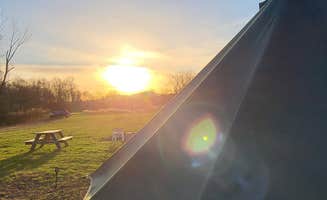
Sunrise viewpoints: The eastern exposure at many Catskill campsites creates memorable morning experiences. Raj T. describes Giant Ledge Primitive Camp as the "Best site in Catskills, sunrise and sunset." Sites on elevated terrain often provide unobstructed views across valleys.
Lakeside camping flexibility: Echo Lake's perimeter offers multiple camping options with varying advantages. James A. notes, "Lake is surrounded by hills and there is a small lean to with a few campfire spots. Other campsites are scattered and require navigating through small overgrown trails (wear pants). We camped on the hill with a beautiful view of the whole lake and breeze."
Secluded creek access: Waterfront sites provide both recreational opportunities and practical benefits. Upper Esopus Creekside Camp offers proximity to trailheads while maintaining creek access. Ashley F. notes it's "the closest private property to Slide Mountain. It's also just minutes from so many other trailheads and peaks."
What you should know
Road conditions vary significantly: Access to primitive sites often requires navigating unmaintained roads. At Duck Pond Campsite, The L. warns, "The road in on old cemetery rd was pretty rough, so we decided to go out the other way, which was way worse. The site itself was pretty nice, fire pit, trickling stream, but the years taken off the life of my truck was not worth it."
Trail difficulty can surprise newcomers: Some sites require more technical approaches than apparent from descriptions. Caleb J. shares about Giant Ledge: "It is a near vertical hike the first mile with 90% or more being over rock gardens. Not some rocks littering the trail. I think the trail used to be a stream or creek. It doesn't wind its way up the mountain, someone picked a side and said 'we go up from here, straight up'."
Bear precautions essential: Wildlife encounters require proper preparation. John S. reports, "Thought I heard bears come through overnight, but may have been a lucid dream. Bear can was undisturbed in the morning." Tina D. recommends, "Bring a bear bell and bear mace can to be safe. We did not see any but definite signs of them."
Tips for camping with families
Choose tent sites with natural barriers: When camping with children, select sites with natural boundaries. At Echo Lake, the shoreline creates natural containment while hillside sites provide elevation advantages. Yae U. found Duck Pond Campsite appropriate, noting, "After driving unpaved dirt road for a while, we arrived at surprisingly well maintained beautiful campsites. The pond is small so the mosquitos were not too bad."
Pack protective clothing: Overgrown trails between sites require preparation. James A. specifically advises, "Other campsites are scattered and require navigating through small overgrown trails (wear pants)." Long sleeves and pants protect against both insects and scratches from vegetation.
Bring trekking poles for stream crossings: Several approaches to tent campsites near Purling require crossing small streams. Tina D. recommends, "Get tracking poles if you don't already have some. Very helpful here." Poles provide stability on slippery rocks and help gauge water depth.
Tips from RVers
Low clearance warning: Most dispersed camping areas near Purling have road conditions unsuitable for traditional RVs. The L. cautions about Duck Pond Campsite, "Intermittent cell service which was frightening while driving on these rough roads." Consider parking at established locations and hiking to primitive sites.
Limited turnaround areas: Forest roads often lack adequate space for larger vehicles to turn around. Yae U. advises, "Just be careful driving in the sometimes rough conditions." Scout ahead when possible before committing to narrow access roads.










 Traveler


