Dispersed camping near Hudson, New York provides access to primitive sites throughout the Catskill Forest Preserve and surrounding state forests. The region's campsites range from 500 to 3,500 feet in elevation, with topography affecting temperature and precipitation patterns. Winter camping options remain accessible when roads are passable, with temperature differences of 10-15 degrees between valley campsites and mountain locations.
What to do
Riverside relaxation: Betty Brook Camp offers streamside camping with natural sounds that enhance the wilderness experience. According to camper Robert B., "Love to camp here all year long have been coming to the area for a couple of decades now. Remote. Sometimes you never see anyone. Sometimes you see some people. You camp on the stream."
Mountain hiking: The Denning Trailhead provides access to backcountry camping that serves as a starting point for challenging peak ascents. As reviewer Ali B. explains, "Great camping spots about 1.5 mile hike in from Denning Trailhead. A lot of spots right by the river. Great spot to camp and then wake up to hike to tabletop/ peekamoose mountain."
Wildlife observation: The forests surrounding Allaben Primitive Campsites support diverse wildlife viewing opportunities within a short drive of Hudson. One camper noted the site offers "Trails to the fishing access across the road" and is positioned near a "small pond" that attracts various birds and animals.
What campers like
Proximity to town with wilderness feel: Taconic Hereford Multiple Use Park spans over 900 acres and offers quick access from populated areas while maintaining a remote atmosphere. A reviewer mentioned, "There is plenty of trails to explore and wildlife to enjoy, especially since these over 900 acres also back up to another huge plot of protected forests."
Solitude and quiet: Many dispersed sites in the region provide genuine seclusion, particularly during weekdays. At Betty Brook Camp, Peter notes it "is rather remote, but it is right along West kill road. There's a stream alongside it, a fire pit, and a town about 8 mi away."
Established fire rings: The majority of primitive sites contain established fire pits, enhancing the camping experience. At Duck Pond Campsite, a visitor described finding "surprisingly well maintained beautiful campsites" with appropriate fire containment areas despite the remote location.
What you should know
Road conditions: Access to many dispersed sites requires travel on unmaintained forest roads that can become challenging after precipitation. At Duck Pond Campsite, reviewer Yae U. advises to "just be careful driving in the sometimes rough conditions."
Weather preparation: Temperature variations between valleys and ridge sites can exceed 15 degrees, requiring appropriate gear for all conditions. At Burnt Rossman State Forest - Westkill Camp, Felix R. found it "was a great location for winter camping. Site easily accessible from road."
Water availability: Most dispersed sites lack potable water sources, requiring campers to carry sufficient supplies or purification methods. According to Luke A., Sage's Revine offers only a "non-potable stream" for water access, making advance planning essential.
Tips for camping with families
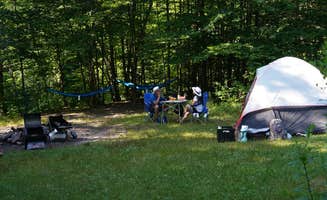
Accessible sites: For families with young children, sites with shorter approaches work best. At Allaben Primitive Campsites, Breanne H. describes it as a "Nice spot right off the main road and close to town" with a "picnic table" and "fire pit with cooking griddle."
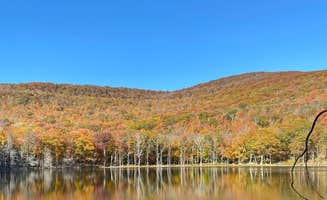
Easier terrain options: Echo Lake provides family-friendly camping with established sites around the water. James A. notes there is a "small lean two with a few campfire spots" while other "campsites are scattered and require navigating through small overgrown trails."
Bug protection: Sites near water features typically have higher insect activity, particularly in summer months. Kate at Echo Lake advises "it can get swampy near the edge of the lake so you may want to bring bug spray."
Tips from RVers
Size limitations: Most dispersed sites accommodate only small trailers or vans due to narrow access roads and limited turning space. At Betty Brook Camp, a local resident cautions, "I would not recommend this for large trailers. The site is fairly small."
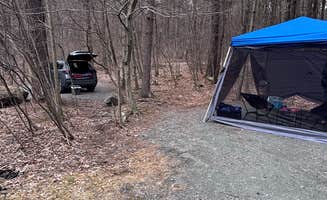
Ground conditions: Soft entrance areas can cause issues for heavier vehicles, especially after rain. At Westkill Camp, The L. recommends "Parking across the street if it's wet. Entrance is soft."
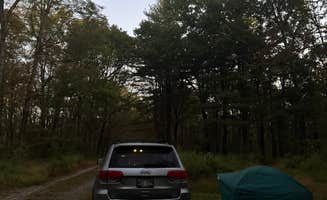
Recovery equipment: Forest roads may require self-recovery equipment during wet conditions. At Duck Pond Campsite, a reviewer warned the access road was "pretty rough" and required a four-wheel drive vehicle, with "intermittent cell service which was frightening while driving on these rough roads."






 Guide
Guide


