Tent campsites near Humboldt-Toiyabe National Forest Headquarters range from basic dispersed sites to established campgrounds with primitive amenities. Located in Nevada's high desert region, this area typically experiences significant diurnal temperature variations of 30-40 degrees between day and night. Winter visitors should note that camping areas at higher elevations become inaccessible after snowfall, while summer temperatures regularly exceed 95°F.
What to do
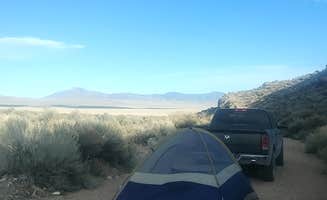
Mountain biking on backcountry trails: The terrain surrounding Chief Mountain West provides excellent mountain biking opportunities on unmaintained desert trails. "If you bike or have an off-road vehicle it's a perfect spot," notes camper Jake C., who recommends bringing all necessary gear and supplies for self-sufficient adventures.
Wildlife photography: Early mornings offer prime opportunities for photographing wild horses that frequent the camping areas. "We saw quite a few wild horses too!" reports Joel C., who used Chief Mountain West as a basecamp for exploration. Dawn and dusk provide optimal lighting conditions for photography.
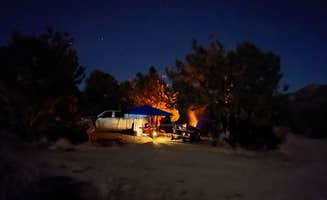
Nighttime stargazing: The minimal light pollution in this remote region creates ideal conditions for astronomical observation. Pack binoculars or telescopes to take advantage of these dark skies. "Very dark area so lots of stars," mentions Joel C., highlighting one of the region's most valued natural features.
What campers like
Self-sufficient camping atmosphere: The isolation and independence of camping in this area appeals to those seeking distance from developed facilities. At Big Rocks North, campers appreciate the rugged setting. "It's a great place for isolation, we encountered a couple hunters scouting the area," explains Michael H., noting the remote character of the site.
Accessibility to Basin & Range National Monument: Numerous dirt roads provide routes for exploring this relatively new national monument. "The dirt roads are very well maintained, this is a dream area for those of you that like dispersed camping," reports Eric F. about the Gap Mountain area, emphasizing the network of accessible routes.
Shade structures at established sites: Several campgrounds include constructed shade shelters, a welcome feature in the exposed desert environment. "The camp has nice sites and shade structures," notes Joel C. about the Chief Mountain West area, highlighting amenities that provide relief from intense sun exposure.
What you should know
Route planning considerations: Visitors should research access roads before arrival, as GPS directions may suggest impassable routes. "Be careful how you enter this area. Google tried to direct me right through the mountains and it was impossible with the two wheel drive truck," warns Eric F. regarding Gap Mountain, suggesting alternative approaches: "Off of 318 make sure you pass Gap Mountain and enter is a left."
Temperature management strategies: The canyon terrain creates significant temperature variations throughout the day. "If you are going in winter the shade from the canyon starts at 3pm and the temperature drops real fast once you are in the shade," cautions Michael H., highlighting the need for proper clothing layers and shelter planning.
Navigation tools: Cell service remains nonexistent throughout most of the region, requiring offline navigation capabilities. "There is no water or toilets and zero cell reception," notes Michael H., emphasizing the importance of self-sufficiency and advance preparation.
Tips for camping with families
Wildlife viewing opportunities: Children often enjoy observing the wild horses that frequent certain camping areas. Maintain appropriate distances of at least 50 feet for safety and minimal impact on natural behaviors. The area around Chief Mountain West offers regular sightings.
Informational resources: Some entrance points provide educational materials about local attractions. "On the Seaman wash road entrance there are really cool maps that will show you how many things there are to see," mentions Eric F., pointing out resources that can enhance exploration with children.
Site selection factors: When camping with children at Cherry Creek, consider proximity to shade and natural barriers from potential strong winds. The seasonal operation from April to October aligns with school breaks, making this an accessible option for families with school-aged children.
Tips from RVers
Leveling requirements: Finding naturally level sites requires advance scouting or high-clearance vehicles. "This is BLM land and we did not stay at the campground but on a level spot a few miles away," explains Joel C., highlighting the importance of identifying suitable parking areas.
Seasonal access limitations: Most unimproved roads become impassable for RVs after rainfall or during winter months. The main access roads to designated campgrounds typically remain accessible year-round for properly equipped vehicles.
Supply planning: With no services available, RVers must arrive fully stocked with all necessary supplies. "It's operated by BLM so it's off grid and dispersed. Make sure you bring supplies," advises Jake C., emphasizing the self-contained nature of camping in this region.





 Legend


