Cabin camping near Mark Twain Lake spans 18,000 acres in northeastern Missouri with 285 miles of shoreline at an elevation of 606 feet. The lake lies within rolling hills and hardwood forests that display vibrant colors during fall months. Winter temperatures often drop below freezing while summer highs consistently reach 85-90°F, affecting cabin availability and amenities.
What to do
Hiking trails access: Several well-marked paths near Siloam Springs State Park provide forest hiking opportunities. "Great hiking trails for all ages. Nice hiking loop for backpacking camping," notes one visitor. Trails range from easy walks to more challenging routes with stairs built into hillsides.
Fishing opportunities: Anglers can fish directly from shore at many cabin locations or access boat ramps. "There were fishing ponds a retreat center and cabins... Over 160 acres of land to explore on!" reports a visitor to Cedar Creek Resort & RV Park. The lake supports multiple fish species including crappie, bass, and catfish.
Lake recreation: Water activities extend beyond fishing at many cabin areas. "Free rentals on pontoon boats, kayaks, and paddle boats," mentions one camper about Cedar Creek Resort. Swimming areas with designated beach access points exist at several locations around the lake, though most close after Labor Day.
What campers like
Privacy between sites: Many cabin areas feature natural spacing between units. At Ray Behrens campground, campers note "All the sites have enough empty space in between that most campgrounds would have stuck another site in-between." This spacing creates a more secluded cabin experience even at busier times.
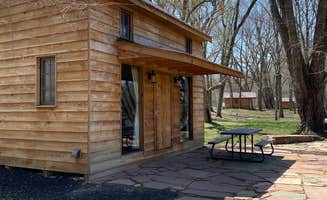
Cabin positioning: Lake view cabins command premium rates but offer direct water access. "The cabins are spectacular and right on the water!" reports a visitor at Cedar Creek Resort. Some cabins include paths directly to the shoreline, while others require short walks to reach water access points.
Site amenities: Beyond standard cabin features, many sites include outdoor living spaces. Ray Behrens provides "plenty of rocked lounging or tent space with each site. Good size fire pits, lantern post, and an aluminum picnic table on a concrete pad," according to one reviewer.
What you should know
Seasonal operation: Most cabin facilities operate from April through November with reduced services in shoulder seasons. "Stayed 2 nights for $18 total with National senior pass. Electric hookup only. 91 degrees needed fan air movement," notes a Ray Behrens visitor, highlighting limited climate control in some cabins.
Bathroom facilities: Restroom quality varies significantly between properties. At Hickory Ridge Campground, one camper reported "bathhouses were horrible... Shower didn't drain, bugs all over." Consider cabins with private facilities if bathroom quality is important.
Reservation policies: Weekend bookings during summer months may require reservation months in advance. "This park is well worth the trip," notes one Mark Twain State Park visitor, but warns about availability issues. Most properties now use online reservation systems with deposits required.
Tips for camping with families
Kid-friendly activities: Mark Twain Lake Jellystone Park offers structured programming for children. "Great for a family with kids of all ages. The activities are not all day, so plan on some campside entertainment before 10am and after 6pm," advises one visitor. Many activities are included in rates, but equipment rental may cost extra.
Cabin selection for groups: Larger family gatherings benefit from cabin clusters. "We just took 40+ family members and everyone fell in love with this campground," reports a Cedar Creek Resort visitor, noting their ability to accommodate multiple related groups.
Safety considerations: Some cabin areas lack cell service, requiring advance planning. "Cell service (T-mobile) was really weak, but the wifi coverage was excellent," notes a visitor to Puma Campground. Cabin locations with reliable wifi provide backup communication options.
Tips from RVers
Site leveling: Many cabin and RV sites require adjustment for comfort. At Puma Campground, campers note "Beautiful area, but honestly not sure if any campsite is truly level. Be prepared." Bringing leveling blocks or requesting specific sites can improve the experience.
Supply runs: Distance to stores varies by location. "The closest store for provisions is about 15 miles away, but ice and firewood is available on site from both hosts," mentions a Puma Campground visitor. Cabin guests should arrive with essential supplies as shopping options are limited.
Access roads: Some cabin areas have unpaved approaches. "The only thing I didn't love was the gravel road all the way in. Our truck and camper was covered with gravel dust," reports a Cedar Creek Resort visitor. Accessing cabins during heavy rain can be challenging on these surfaces.






 Legend


