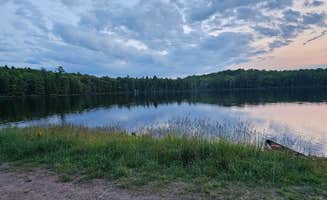
Dispersed camping opportunities surround Bruce Crossing, Michigan in the Ottawa National Forest and neighboring Wisconsin forests. Most sites sit on small lakes with primitive facilities at elevations ranging from 1,200-1,600 feet. Winter access becomes limited by November when temperatures regularly drop below freezing, with spring thaw typically occurring in late April.
What to do
Fishing at small lakes: Three Johns Lake Dispersed offers a serene fishing experience on a no-motor lake. "Tents only. Short walk to campsite only one on lake. 5 dollar parking national Forest," notes one visitor to Three Johns Lake.
Hiking forest trails: The Hidden Lakes Trail system connects to several camping areas. At FR 2140 Dispersed, a camper mentioned, "There is hiking trail access from campsite, but no water access to butternut lake or it would have been 5 star. There is access down the road."
Wildlife observation: Early mornings and evenings provide opportunities to spot local wildlife. At Lake Perrault, campers report "interesting animal calls overnight" making it an attractive option for nature enthusiasts.
What campers like
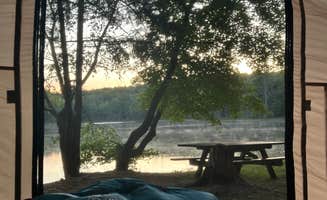
Secluded waterfront sites: Many lakes feature limited camping spots offering privacy. "Two sites on lake some distance apart. Sand bottom on shore, picknick table and fire ring. No fee for camping can stay 14 days," reports a visitor to Robinson Lake Dispersed Campsite.
No-fee camping options: Most dispersed sites in national forests are free, though some require parking permits. One camper at McKinley Lake noted, "A single campsite can park next to tent only. Access to lake."
Motor restrictions on lakes: Several lakes prohibit motorized watercraft, creating peaceful environments. At Harriet Lake Campsite, a camper shared, "On small lake has fire ring and picknick table. Room for small camper 10to 15 foot also tents wilderness toilet. No motor lake."
What you should know
Road access challenges: Forest roads require careful navigation with standard vehicles. A visitor to Bose Lake Campsite warned, "Single campsite on small lake. Room for small camper in parking less than 15 foot. Fire ring and picknick table. Road to get in is narrow and pot holed."
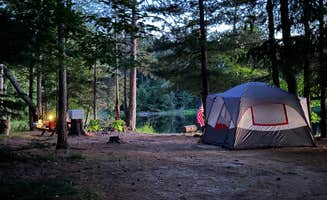
Limited facilities: Plan to pack in all necessities including water, waste disposal bags, and toilet paper. Most sites feature only fire rings and occasional picnic tables.
Cell service variability: Coverage depends on specific location and carrier. One camper at FR 2140 reported, "Did get one bar of cell (cricket) full with 20 foot ant."
Seasonal considerations: Summer brings mosquitoes while winter requires cold-weather gear. A winter camper shared, "Winter camped here, was a nice spot pic nik table, fire ring, wilderness toilet."
Tips for camping with families
Easily accessible sites: Some locations offer shorter walks from parking. At Indian Lake, a visitor noted, "The campsite is just off a paved road making it easily accessible. It's intended for tents, but a small trailer might fit in the parking area. Many hiking opportunities are nearby."
Sandy shorelines: Several lakes feature gentle entries good for children. Robinson Lake includes a "sand bottom on shore" according to camper reviews.
Item management: Keep track of personal belongings, especially at popular sites. One Lake Perrault camper mentioned, "Believe we left a small stuffed squirrel there, if it's found let me know, it's a sort of family heirloom."
Tips from RVers
Size restrictions: Most sites accommodate only small trailers under 15 feet. Harriet Lake Campsite provides "room for small camper 10 to 15 foot also tents wilderness toilet."
Leveling challenges: Prepare with leveling blocks as sites rarely offer perfectly flat parking. Small RVs work best in these rustic camping areas near Bruce Crossing.
Dust conditions: Forest roads create seasonal dust issues. A camper at FR 2140 observed, "I've been through here in summer and the road is gravel very dusty from traffic."





 Guide
Guide


