Located in northeastern Iowa, the equestrian camping region around Elma offers terrain characterized by limestone bluffs, river valleys, and rolling farmland. The area generally sits at elevations between 1,100-1,300 feet above sea level with several trout streams creating natural water crossings for horse trails. Winter temperatures can drop below 0°F, while summers average in the mid-80s with high humidity, affecting both human and equine comfort during rides.
What to do
Trout fishing access: Multiple campgrounds offer convenient access to cold-water trout streams. At Forestville Mystery Cave State Park Campground, visitors can fish in the park's streams after exploring the cave system. "I came here to explore the caves and it blew me away. I think the cave was around 12-13 miles long and there was water and different formations," notes Kevin T.
Cave exploration: The region contains impressive limestone cave systems open for guided tours. "Mystery Cave State Park is surrounded in a lush green forest with huge oak and maple trees that hang over the road like a huge living canopy. My new word while we stayed there was 'Forresty' due to feeling like we had entered a different world," shares TyAnn J. about her experience at Forestville.
Historical sites: Visit restored 19th-century villages within state parks. "On top of that it has this awesome living history 1800's village managed by the Minnesota Historical Society. There's also a very interesting cave with a museum and all the talactites, stalagmites, and underground pools you can imagine," describes Jason S. from Forestville Mystery Cave State Park Campground.
What campers like
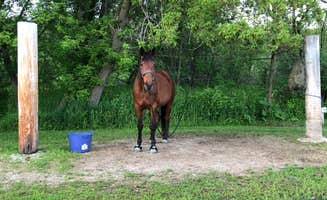
Specialized horse facilities: Equestrian campers appreciate dedicated areas with proper amenities. At Maple Springs Campground, "The sites have water and electric. There are high ties for the horses. The sites have a nice gravel pad with a picnic table and fire ring at each site," according to Jen M., who visited with her endurance riding group.
Trail variety: The region offers diverse riding experiences from beginner to advanced. "There is a nice gravel track that goes along a large river. Trees everywhere so bring bug spray. Quiet, peaceful," reports Ax H. about Shellrock River Preserve, noting the mix of riverside and wooded riding options.
Quiet atmosphere: Many equestrian sites are separated from general camping areas, creating a peaceful environment. "This camp was so nice and quiet! We had a nice fire after dinner listening to the water and birds," writes Jen M. about Maple Springs Campground, highlighting the serene setting even with families and other campers nearby.
What you should know
Cell service limitations: Connectivity varies widely throughout the region. At Lake Louise State Park Campground, "There is no cell service (TMobile) here," mentions Lacey F., while another camper notes, "There was little to no cell phone coverage for AT&T." Plan communications accordingly, especially for equestrian emergencies.
Weather considerations: Sandy soils in some areas allow quick drying after rain. "We had some wet weather come through, but because of the sandy soils, things dried out and drained very quickly," reports ERolf P. about trail conditions, making this region more reliable for riding after rain compared to clay-based soil areas.
Reservation requirements: Popular equestrian sites fill quickly, especially during peak season. "Reserve early!" warns Lisa M. about Clear Lake State Park Campground, where securing spots can be difficult more than a week before holidays.
Tips for camping with families
Beginner-friendly trails: Several parks offer gentler terrain suitable for novice riders. "There are 3 different loops, an additional equestrian loop, and 5 cabins. We stayed in loop 'C' with has bigger sites for RV's and offers electricity," shares TyAnn J. about Forestville, noting the variety of accommodation options for families with different experience levels.
Swimming options: After dusty trail rides, cooling off is essential. At Clear Lake State Park Campground, "Easy access to the lake, and the town has so much to do during the summer months!" according to Vanessa H., providing additional recreation beyond riding.
Playground facilities: Many campgrounds include play areas for children. "For little ones, there is a large sand playground area with slides and swings. There is a sand beach to swim, where they also rent kayaks & canoes," notes Steve R. about George Wyth State Park Campground, offering options when kids need breaks from riding activities.
Tips from RVers
Site leveling: RV pads vary in quality throughout horse campgrounds. "Sites are decent size. They have a shelter and small playground. There is a spigot to fill your tanks and electric hook ups," reports Chantal C. about Camp Comfort Recreation Area, highlighting practical details about hookup access.
Hookup availability: Electric services and water access vary by campground. At Black Hawk County Park, "Nice place good amenities. Has plenty of fishing access archery gun range. Boat access. Decent shower/bathroom facilities," notes Travis R., mentioning the comprehensive facilities available to RVers.
Dump station locations: Not all horse campgrounds have on-site sanitary dumps. "There is a dump station & fresh water fill right off the park office," mentions TyAnn J. about Forestville, providing critical information for longer stays with horses requiring extended RV facilities.


 Traveler


