




E
Erin M. Guide
Guide
GuideRainbow Point
Open and grassy campsites
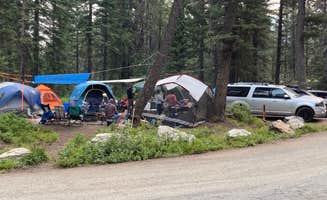
Nice grassy sites, water right there, vault toilets, fire rings and picnic tables, tent camping or RVs. Not a lot of shade but cools down nice at night. Lots to do nearby!
58 campgrounds · Check availability for any dates.
Tent campsites near Lake Fork, Idaho offer a mix of primitive campgrounds and dispersed options within Payette National Forest. Brundage Reservoir Camping Area and Paddy Flat provide tent-specific sites with lake access, while Lick Creek Area offers more secluded tent camping on the edge of wilderness territory. Most locations are primitive in nature with limited amenities, making them ideal for campers seeking a more authentic outdoor experience.
The terrain at tent campgrounds varies considerably, with most sites situated on uneven forest floors with minimal site development. Brundage Reservoir sites require driving down pot-holed dirt roads, which can be challenging in wet conditions or for low-clearance vehicles. Most tent camping areas lack drinking water and have either vault toilets or no facilities at all. Fire rings are common at established sites like Rapid Creek, though seasonal fire restrictions frequently apply throughout summer months. Campers should pack in their own water and supplies, as even established campgrounds offer minimal services.
Tent campers in the Lake Fork region often enjoy exceptional solitude, particularly at higher elevation sites. The Jughandle Mountain Area provides walk-in tent sites with alpine lake access, while Lick Creek Area serves as an excellent basecamp for wilderness exploration. Areas near Brundage Reservoir offer lakeside tent camping with water access, making them popular for paddling and fishing. Wildlife sightings are common, with several campers reporting moose, deer, and bald eagle observations. One visitor at Brundage Reservoir noted, "Waking up with the sun and making french press by the fire was a great way to the start the day in this majestic area." Sites at higher elevations like Rapid Creek can get "nippy at night," with temperatures dropping into the upper 30s even in August, requiring proper cold-weather gear for tent campers.
"A very cold lake bring water or filter."
"It’s really just a small meadow in the mountains that the BLM put a vault toilet and a couple of fire rings in. That being said, this place is beautiful."
"Driving down a pot-holed, dirt road for quite awhile, we found ourselves concerned that we may not find something. We then spotted a beautiful lake through the trees. "
"We went here for mountain biking (if you go, check out Groupon for the lift) this campground was awesome because it was so close to Brundage resort, and the ski lift up, it was such an enjoyable stay,"
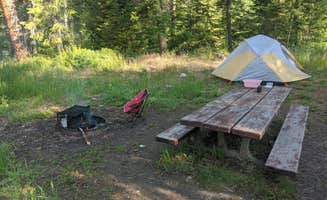
"There is a water pump at the entrance of the camp site that you get your water from. There are no hook ups or running water at sites. There are established fire rings and a picnic table."
"A CTX toilet and fire rings. Lick lake is a 3 mile hike into the wilderness and is gorgeous! No fee."
"awesome place for rent camping and hiking lots of trails to explore but not a great place if you need a RV to go camping"
"It was nice and quiet And you could hear the river nearby. Spot 3 has a great access trail that takes you down by the creek which flows into the river. There is a rock fire pit down there."
GuideNice grassy sites, water right there, vault toilets, fire rings and picnic tables, tent camping or RVs. Not a lot of shade but cools down nice at night. Lots to do nearby!

 Traveler
Nice flat spot with a stone fire ring. Hazard creek nearby isn't too loud and sounds great. Not much firewood is around as its all been picked already.
 Traveler
The campground itself is ok. If you get a site down by the water, those are the only ones with picnic tables and fire pits (19, 20, 21, 22, D1, D2, D3, where D = no hookups). Many of the sites with hookups are basically parallel parking spots but they don’t have their own picnic tables or fire pits. There are no tents allowed on the grass in the RV area, they are allowed on the pavement only. Tents are of course welcome on the grass in the tent camping area. There are picnic tables and fire rings in the tent area. Sites 6 and 8 were very sunny and hot. There is river access for swimming, shady areas over by the swimming area, and shady areas with picnic tables in the day use areas. The tent sites appeared to be on a slope. The camp host was THE BEST! She moved us out of a sunny site and had one available with a fire pit and picnic table for our first night. She checked back in frequently and was delightful to visit with. She takes excellent care of her guests and made the whole weekend especially enjoyable. There are docks available for boat parking and additional parking available for boat trailers. The grass is as green as can be and is watered daily which makes it very nice. There are flush toilets and a shower for guests to use as well as some porta potties. Dogs are welcome and must be leashed at all times. There are trash receptacles for waste and the campground was incredibly clean and nice.
GuideFish and game property, but managed under YMCA. $15 with no discount for anyone. Picnic table and fire ring. Pit toilet that is in desperate need of a simple fly strip! I had to wipe live flies off the toilet seat to sit down. Haul your garbage out. No electricity. Bear sites in campground but no notifications! No potable water. Seemed a bit pricey ! Perfect for canoes. Boat launch area.
Hawks, ducks, gorgeous waterfront!
GuideThis is a pretty quiet place! It about an hour drive/17 miles from Cascade on a paved road. True to it's name, the lake and campsite are right on a summit! The lake is pretty small and a little muddy, but a fun dip nevertheless. It's about a 5 minute hike from the campsites. There are 3 campsites at the campground and they are all first come first serve! Dispersed camping is allowed in the area as well. Managed to find 2 empty spots here on Labor Day weekend, which was a real treat! The sites all have fire rings and picnic tables and share a vault toilet. The sites are well spaced and there little noise carries around the area. The campground is a little close the to highway (Warm Lake Rd) but traffic at night is pretty low, so the noise isn't bad. There is a wilderness airstrip not too far off, so some plane noise as well! Otherwise, a nice spot with some great views of the night sky.
 Guide
GuideThis is a typical campground with Vault toilets, no showers, no water or electric hookups. However, it is just a couple miles from nice dining, mountain biking, and hiking.
TravelerWe have high expectations since we’ve been at so many places, so please bear that in mind when reading this.
GuideThe fir trees stand tall and still. I can’t figure out if they are waiting for something to happen or if they simply don’t care.
If you’re looking for sone sort of gorgeous panorama, this might not be the place for you. It’s really just a small meadow in the mountains that the BLM put a vault toilet and a couple of fire rings in. That being said, this place is beautiful.
You can’t see rapid creek from the campground but you can hear it. And that’s really just as good. The white noise from the creek matched with the occasional bird or other nature sound is one of the most relaxing things on the planet.
It’s high enough in elevation that this place gets nippy at night. I stayed in early August and the temps dropped into the upper 30s at night.
The campground is well maintained and the vault toilet was reasonably clean when I arrived. It became Kevin clean shortly after I set up camp.
There are trails from both sites near the vault toilet that lead down to Rapid Creek.
I never saw any bear scat but signs on the property warn of them so be smart with your food.
All in all, Rapid Creek dispersed camping is excellent if you just want a quiet place where no one is around. It’s amazing but not for the reasons people usually like in my opinion. ◦
TravelerCamping is free, limit of 10 days. Not really any designated sites and surrounded by private land with aggressive signage. Not all roads around the reservoir are public, so be prepared to turn around and back up at dead ends. We came to an orange gate that said "private property", and stopped. While trying to turn around, we noticed a white truck sitting behind us. When we turned around and passed him, he motioned to roll down the window, and then berated us and called us idiots, even though we had not even entered the private land, nor did we want to. We felt threatened. In the end we chose a site on the upper road of the reservoir. The view was nice but not close to the pit toilet. No fire ring. No table. A no frills place. Like many lakes in Idaho, the reservoir is mostly dry. Not a huge deal but not the prettiest to look at. There is only one single pit toilet for the whole reservoir and someone was set up right next to it like it was their own. People ride off-road vehicles here. In an area with slim pickings for free camping, I guess you have to take what you can get.
Tent campsites near Lake Fork, Idaho typically remain accessible from late May through October, with most high-elevation sites not clearing of snow until mid-June. Located within Payette National Forest, the elevation ranges from 5,000 to 7,500 feet, creating significant temperature variations between day and night. Many campgrounds feature undeveloped sites with no reservation systems, requiring early arrival during summer weekends to secure spots.
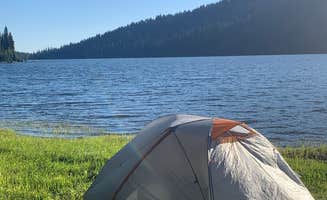
Paddleboarding and kayaking: The calm waters of Brundage Reservoir provide excellent conditions for paddlesports. Brundage Reservoir Camping Area offers direct water access where "last year I wasn't able to get a spot near the lake but there is so many places to boondock up there," notes camper Sherilyn.
Mountain biking: The area serves as an excellent base for accessing mountain bike trails. Franklin R. explains, "We went here for mountain biking (if you go, check out Groupon for the lift) this campground was awesome because it was so close to Brundage resort, and the ski lift up."
Hiking: Multiple trail systems connect from tent camping areas. At Lick Creek Area, camper Courtney R. shares that "Lick lake is a 3 mile hike into the wilderness and is gorgeous!" The trail climbs approximately 800 feet in elevation through forested terrain.
Hot springs: Several natural hot springs can be accessed from camping areas. Hannah C. at Fourmile Campground notes "About a mile and a half up the road is 16 mile hot springs which was wonderful!" These springs maintain temperatures around 100-105°F year-round.
Wildlife viewing: The forests around Lake Fork support diverse wildlife populations. At Northwest Passage Campground, Cindy N. reports "We saw bald eagles, moose, deer and chipmunks." Most wildlife sightings occur during early morning or evening hours.
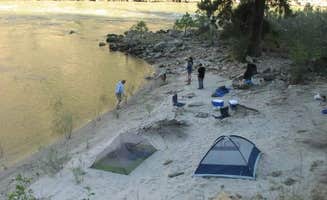
Riverside sites: Many campers appreciate access to water features. "The river is walking distance from all sites. It is perfect for paddle boarding kayaking and floating. There is a beach area for the campers that is perfect for kids to play," explains a Northwest Passage camper.
Seclusion: The remote nature of many sites provides peaceful camping experiences. Kevin C. at Rapid Creek Dispersed Camping Area shares, "All in all, Rapid Creek dispersed camping is excellent if you just want a quiet place where no one is around. It's amazing but not for the reasons people usually like in my opinion."
Natural soundscapes: The ambient sounds of flowing water enhance many sites. Kevin C. continues, "You can't see rapid creek from the campground but you can hear it. And that's really just as good. The white noise from the creek matched with the occasional bird or other nature sound is one of the most relaxing things on the planet."
Access challenges: Roads to remote sites often require high-clearance vehicles. A camper at Picnic Point notes it's "Quite a drive to this beautiful lake but apparently it is well liked by locals because it was crowded!"
Wildlife concerns: Beyond large mammals, small animals can create issues at campsites. At Penny Spring Campground, Lauri P. warns "The squirrels are out of control aggressive, worst I've had to contend with - ever. Make sure everything is secure in a bear canister &/or hung up off the ground, don't even turn your back on your food!"
Cold nights: Even in summer, temperatures drop significantly. Christopher R. at Granite Lake Camping Area describes it as "awesome place for tent camping and hiking lots of trails to explore but not a great place if you need a RV to go camping." Nighttime temperatures can fall below 40°F even in August.
Limited facilities: Most sites provide minimal amenities. At Lick Creek, Courtney R. describes "Lick creek campground has 3 spots. One large one with stock holding. A CTX toilet and fire rings."
Lake access options: Several campgrounds offer child-friendly water access. Shelly S. at Picnic Point shares "The water is crystal clear and fishing is popular. There is a trail that goes completely around the lake."
Extra mosquito protection: Insect populations can be dense, especially in early summer. Multiple campers mention bringing additional mosquito deterrents beyond just spray.
Temperature preparation: Parents should pack extra layers for children. As Kevin C. at Rapid Creek notes, "It's high enough in elevation that this place gets nippy at night. I stayed in early August and the temps dropped into the upper 30s at night."
Wildlife viewing opportunities: Schedule morning and evening wildlife observation times. At Northwest Passage, families regularly report moose sightings near water edges during dawn and dusk hours.
Size limitations: Most tent campsites near Lake Fork can't accommodate larger RVs. At Granite Lake Camping Area, Christopher R. warns it's "not a great place if you need a RV to go camping." Most access roads restrict vehicles over 25 feet in length.
Cost considerations: Non-residents face higher fees at some sites. Michael G. at Northwest Passage Campground notes "$62. No hooks. No cell. Because I'm out of state," highlighting the premium charged to visitors from outside Idaho.
Road conditions: Unmaintained forest roads can challenge RVs. A camper at Penny Spring describes "The road surface through the campground is deep and very soft/fine dusty soil, any vehicle kicks up incredible amount of dust even at 2 mph."
Limited hookups: No sites in the immediate Lake Fork area offer electrical or water connections. RVers must be fully self-contained and prepared for dispersed camping conditions.
Frequently Asked Questions
Which is the most popular tent campsite near Lake Fork, ID?
According to TheDyrt.com, the most popular tent campground near Lake Fork, ID is Paddy Flat - Jughandle Mountain Area, McCall RD with a 4-star rating from 1 review.
What is the best site to find tent camping near Lake Fork, ID?
TheDyrt.com has all 58 tent camping locations near Lake Fork, ID, with real photos and reviews from campers.
Keep Exploring