Dispersed camping near Wallowa-Whitman National Forest offers primitive sites across elevations ranging from 1,000 to 9,000 feet, creating distinct camping experiences throughout the year. Most backcountry camping areas receive significant snowpack from November through May, limiting access to high-elevation sites. Summer temperatures typically drop 20-30 degrees at night compared to daytime highs, requiring proper gear even during warm months.
What to do
Backcountry fishing spots: Several alpine lakes within hiking distance offer excellent fishing opportunities. At Aneroid Lake Backcountry Dispersed Campsite, campers can find both rainbow and brook trout. As reviewer Nick J. notes, "The lake is stocked every few years with rainbow trout, and has a good supply of brook trout."
High-elevation hiking: The Eagle Cap Wilderness area contains multiple backcountry camping options requiring significant hiking. The trail to Ice Lake involves "9 miles in (18 miles total)" according to Sarah W., who adds, "You can add some miles (and a lot of elevation) if you add a day hike to the Matterhorn. Second tallest to Sacajawea."
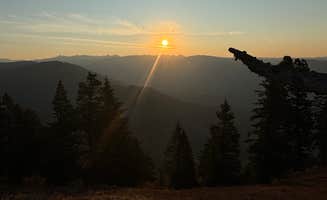
Photography at Hells Canyon: The overlook near dispersed camping areas provides exceptional sunrise and sunset photography opportunities. One camper reported, "Walking over late in the evening to Stargate over the canyon... And then woke up to watch the sunrise over the canyon. It's like a two minute walk from this campsite."
What campers like
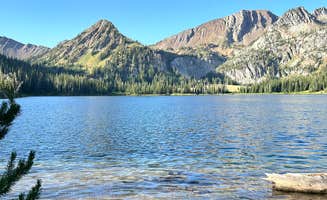
Remote alpine lakes: The effort required to reach high-elevation lakes rewards campers with solitude and pristine environments. At Echo Lake Dispersed Camping, Arielle W. found "a remote and peaceful retreat. The lake is so clear and serene. The views of the mountainside are breathtaking... The stars are vivid and you can see the movement of the stars and moon along the mountains."
Wildlife viewing: Early morning and evening hours offer opportunities to spot elk, deer, and turkey. One camper at a dispersed site mentioned, "I saw lots of elk and turkeys(?) and a rattlesnake."
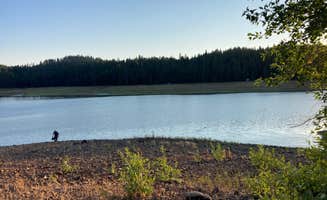
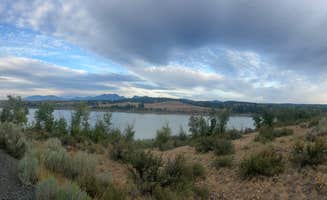
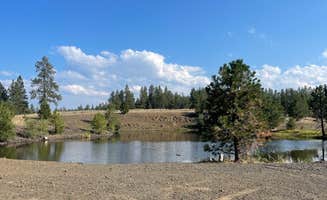
Reservoir camping: Several reservoirs provide waterfront camping with fishing access. At Wolf Creek Reservoir, Rory R. commented, "Awesome camp spot, off the main road so no one is here. Love that it's by the water."
What you should know
Road conditions vary drastically: Many dispersed camping areas require appropriate vehicles. At Balm Creek Reservoir Dispersed Camping, Sean S. warns: "Do not try and tow a trailer up this road!!! I made that mistake and barely made it out." Another camper described access as "About 13 miles from Medical Springs on a gravel road (half hour or so)."
Elevation challenges: High-elevation sites require physical preparation and acclimatization. Michael at Ice Lake reported: "Elevation is ~8,000 feet. Got altitude sickness on day two."
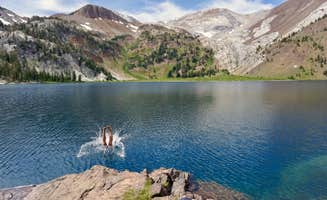
Water temperatures: Even during summer, alpine lakes remain extremely cold. Multiple campers noted frigid water temperatures, with one stating, "The water is no-joke cold" and another adding, "The water is very cold, but I definitely enjoyed the shock after the hike in!"
Tips for camping with families
Choose reservoir sites for easier access: Waterfront camping at lower elevations provides family-friendly options without difficult hikes. Social Security Point Trailhead offers "4 sites in the trees, but if you keep driving down it'll take you towards the lake," according to Evan W., who adds there's "room for a few more vehicles down by the water."
Pack for temperature swings: Prepare children for significant day-to-night temperature drops with appropriate clothing layers. Multiple reviews mention temperature variations requiring proper preparation.
Prepare for wildlife encounters: Establish clear rules for children regarding wildlife safety and food storage. One camper at Wallowa-Whitman NF 21 - Dispersed reported seeing "lots of elk and turkeys and a rattlesnake" during their stay.
Tips from RVers
Scout sites before committing: Many forest roads narrow considerably after initial access points. At Wolf Creek Reservoir, Heidi S. found "The site we got was nicely graveled and a pull through," but access varies throughout the forest.
Lower elevation options: Several areas provide more accessible RV camping without difficult terrain. As Tony D. notes about one location, "We were car camping but most sites have smaller trailer access."
Vehicle clearance requirements: Standard RVs may struggle on unmaintained forest roads. One camper advised, "likely tough to do without high clearance and/or 4WD when wet."








 Legend


