Equestrian camping opportunities near Hudson, Florida provide direct trail access through Central Florida's diverse ecosystems. The region features a combination of hardwood hammocks, pine flatwoods, and wetland areas with elevation ranging from 40 to 100 feet above sea level. Summer temperatures typically reach 90°F with high humidity, while winter daytime temperatures average 70°F, making December through March the most comfortable camping season.
What to do
Hiking on established trails: Jay B. Starkey Wilderness Park features over 50 miles of biking, hiking, and nature trails. "Great get away in west-central Florida as a day trip or long weekend stay. We spent the day hiking the numerous off-road trails and enjoying some of the amenities the park has to offer," notes reviewer Steve S.
Primitive camping experiences: The Green Swamp West Tract offers backcountry sites for those seeking solitude. "We hiked out about a mile along the Florida Trail and stayed for a night at the Gator Hole campsite. It was so peaceful, lots of space to explore and the symphony of Sandhill Cranes and Coyotes as the sun set was a memory I'll never forget," shares Kelly S.
Wildlife viewing: The Lower Hillsborough Wilderness Preserve provides opportunities to see native Florida species. "While hiking in I came across several deer and some gopher tortoise," reports Elliott B. The preserve encompasses multiple recreation areas with trails that accommodate day hikers and overnight campers.
Mountain biking: The Serenova Tract Campsites connect to multiple trail systems. "Not much in terms of single track for mountain biking, however we had fun exploring the dirt roads in our Forester. Be mindful of going after/during a good rain, it floods pretty easily," advises Brett D.
What campers like
Gate security systems: Many campgrounds in the region offer controlled access. At Serenova Tract Campsites, "The campground is gated so you need a code to get in, which is a nice safety feature. There's a primitive side & an equestrian side but during my stay it was all regular campers and nobody with any horses," reports Abby M.
Proximity to supplies: Campsites often have convenient access to necessities. "There's a Publix just across the street and a gas station not even half a mile down the road. Super easy to get to and short drive down a dirt road," continues Abby about Serenova Tract.
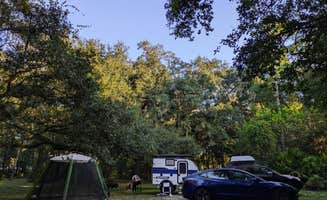
Spacious campsites: Colt Creek State Park provides ample room for camping setups. "Camp spots are big, flat with gravel parking areas. Power and water at each site for RV camping. Nicer (newer) bathrooms than most FL state parks," notes SanDal B.
Dark skies for stargazing: Tillis Hill Equestrian Campground provides minimal light pollution. "Overall, a great place to get away from city lights, noise, etc. If you lucky enough to stay during clear night skies...all the stars light up the area and it is very nice," says Doug E.
What you should know
Seasonal flooding concerns: Water levels vary throughout the year. Brett D. warns about the Serenova Tract Campsites: "Be mindful of going after/during a good rain, it floods pretty easily."
Water availability limitations: Many campgrounds require you to bring your own water. At Green Swamp West Tract, Monte W. advises, "You are permitted to collect firewood as long as it has fallen from the tree. For a free campsite, I can't complain. They have water stations, but do not count on these being full at all times. Bring water with you. Don't risk it!"
Road conditions: Access roads to some campgrounds require careful navigation. At Tillis Hill Equestrian Campground, Robert M. notes: "The 'right' road is a 1 1/2 mile drive on for the most part, smooth limestone. Yes two or three spots with pot holes, but manageable."
Reservation requirements: Most equestrian camping facilities require advance booking. "Need a reservation, there are just a handful of sites. Each has a fire ring and a table. Locked gate (you need a code they give you in your reservation confirmation)," explains Hootmon H. about camping at Serenova.
Tips for camping with families
Choose campgrounds with playground access: Several parks offer family-friendly amenities. At Jay B. Starkey Wilderness Park, Melanie B. shares, "Starkey Park campground is clean, rustic, and has lots of firewood for campers. There are many hiking, bike trails, and 2 playgrounds within mere steps of your tent or cabin. I've camped here with my 4/5 year old boys and our Cub Scout pack."
Look for educational opportunities: Nature centers provide learning experiences. Steve S. notes that Jay B. Starkey has a "Nature education center for children."
Consider accessibility needs: Some campgrounds offer specialized accommodations. Jeanene A. recommends Colt Creek: "We had the opportunity to camp at one of the handicap accessible sites recently and found it to be very convenient. Path and pad on site were roomy and fire pit was higher than usual for safety."
Pack extra water: Limited potable water availability makes this essential. Alicia B. warns about Green Swamp West: "Not many campers on the Cumpressco side but tons on the Ashley. No potable water at either site. Bring your own!"
Tips from RVers
Site selection is critical: At Holder Mine Campground, Todd L. reports: "Campground is nice and clean and very quiet. Road coming in is dirt and dusty but well maintained." Each site at Holder Mine has "a spacious level concrete pad and plenty of shade trees."
Prepare for varying hookup availability: Robert M. notes about Tillis Hill: "20-30-50 power and fresh water at sites. We have a 34' class A and had no issues with trees."
Cell service considerations: Coverage varies widely between campgrounds. Mandie Z. reports from Tillis Hill: "Cell service is bad for AT&T. I'm told other carriers are better. It's a fairly remote public campground."
Dump station access: Some campgrounds have limitations. Todd L. warns: "The dump station is no longer in use so you have to use the bath house or dump elsewhere" at Holder Mine Campground.







 Guide
Guide


