Equestrian camping near Grand Island, Florida offers diverse opportunities for riders and their horses throughout the Ocala National Forest and surrounding areas. At 79 feet above sea level, Grand Island sits amid freshwater lakes and pine forests that create natural barriers and corridors for equestrian trails. The region experiences mild winters with temperatures rarely dropping below 40°F, making year-round camping viable for horse enthusiasts.
What to Do
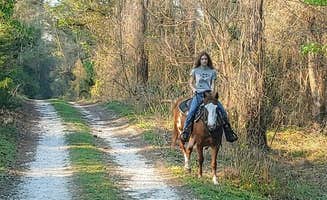
Trail riding exploration: Access miles of equestrian-friendly trails at Lake Panasoffkee Recreation Area, where campers can enjoy both open fields and shaded routes. "There are miles and miles worth of trails for biking, hiking, or horseback riding. There is a host on site who was extremely kind," shares Abby M., who appreciated the trail connectivity.
Observe horse training events: Visit Clarcona Horse Park for scheduled equestrian competitions and training sessions. "There are horse events, fun to watch, food truck available for breakfast and lunch day of event," notes Lisa C., highlighting the additional entertainment value beyond just camping.
Wildlife spotting: Bring binoculars for wildlife viewing along the trails at Wekiwa Springs State Park Campground, where natural habitats support diverse species. "Saw lots of animals. Everyone was very nice!" reports Caitlyn P., emphasizing the wildlife viewing opportunities that complement horseback riding activities.
What Campers Like
Spacious equestrian sites: The camping areas at Lake Panasoffkee offer ample space for trailers and horse equipment. "There was a big open field where basically all equestrian campers parked at since it was near the horse stalls. There's also more shaded camp spots towards the back," explains Abby M., describing the layout that accommodates different camping preferences.
Clean facilities: The bathrooms and common areas at many equestrian campgrounds maintain good standards. "Nice shade and clean bathrooms. Only $17 if over 55," says Lisa C. about Clarcona Horse Park, noting the affordability for seniors.
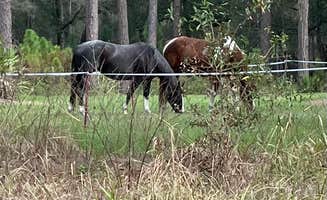
Peaceful environment: Campers consistently mention the quiet atmosphere at The Grand Oaks RV Resort, where horses graze nearby. "Just got here June 21st and only been a couple of days but really love the property. Host is very friendly and helpful and the sites are huge I can easily fit my fifth wheel camper, 2 trucks and trailer," shares Bobby M., highlighting the spaciousness that accommodates equestrian equipment.
What You Should Know
Reservation requirements: Most equestrian campgrounds require advance booking, especially during peak season. "Book well in advance," advises Zackari S. about Wekiwa Springs, where primitive camping areas fill quickly.
Water availability varies: Not all horse camping sites provide potable water for humans and animals. At Lake Panasoffkee, "There is non-potable water spigots throughout the campground," mentions Abby M., so campers should plan accordingly for drinking water needs.
Weekend crowds: Popular equestrian areas become crowded on weekends. "If you go on a weekend, make sure you go EARLY! Line of car starts around 9am and park will close at capacity," warns Hannah S. about Wekiwa Springs State Park.
Road conditions: Access roads to some horse camps may present challenges. At Doe Lake Group Site, "The forest road getting in is very rough and pot holes. But luckily it is a short drive into the camp," reports Diane D., advising caution with horse trailers.
Tips for Camping with Families
Accessible options: Lake Louisa State Park Campground offers accommodations for families with accessibility needs. "Our site, 2, was a handicapped one, and beautiful. Restrooms directly behind us. Beautiful tall shady trees. A very clean park," shares Lauren W., who appreciated the accessible amenities.
Multiple activity options: Choose campgrounds with diverse activities for non-riders in your group. "Wekiwa was an amazing place to camp and spend our weekend. The park offers hiking, biking, day swimming, a food grill, a canoe/kayak launch and rental, plus tons of wildlife!" reports Jenn B., detailing options that keep everyone engaged.
Educational opportunities: Look for parks with nature programs that complement equestrian activities. "There is a cute hidden lake called Bear Lake that you can bike or drive to and even put in your kayak or electric boat on this more remote lake," suggests Travyl Couple, describing additional exploration options at Lake Louisa.
Tips from RVers
Site selection for larger rigs: At most equestrian campgrounds, specific areas accommodate bigger RVs with horse trailers. "The sites are spacious and most are shaded. We stayed in site #3, which was tucked into the wood line and somewhat private," notes Rich S. about Santos Trailhead & Campground, emphasizing the importance of site selection.
Hook-up availability: Check which utilities are available at your preferred horse camping location. "We have a 36 ft Class A with a Cherokee Trailhawk tow and stayed in site 10 for 3 days in late April. The CG is very clean, well maintained. Most of the sites are fairly well spaced, particularly for a private CG," reports Ray & Terri F. about The Grand Oaks RV Resort.
Noise considerations: Some locations experience ambient noise that might disturb horses. "Nice campground. Not very shady at all. If you love to use awesome bike trails, this is the place! Extremely noisy with trains running through all night, of course, blowing their whistles!" warns Lauren W. about Santos Trailhead, which could affect sensitive animals.






 Legend


