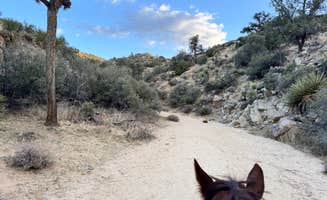
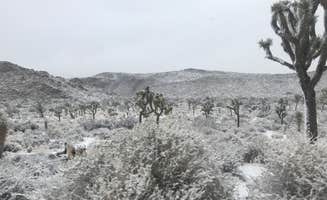
Equestrian camping near Rancho Mirage, California offers access to high-elevation trails through San Bernardino National Forest terrain. Trail networks sit between 4,300-5,000 feet elevation, providing relief from desert heat with temperature differences of 15-20°F compared to Rancho Mirage. Winter temperatures at these mountain campsites regularly drop below freezing after sunset, requiring proper cold-weather gear.
What to do
Mountain biking routes: Several trails near Black Rock Campground connect to larger networks suitable for various skill levels. "There are a lot of hiking opportunities without having to drive. There are actually tons of trails that lead directly out of the main camping area, so if you're not in the mood to even leave the campground, you can still experience a lot of nature," notes Christopher D.
Wildlife viewing: The mountain elevations around Heart Bar Campground offer excellent opportunities for spotting local species. "This spot is excellent for wildlife viewing and entry to the wilderness for hiking and exploring. This campground is only about 20 min out from big bear lake as well," says Nick L. The best viewing times are early morning and dusk when animals are most active.
Fishing access: For anglers seeking alternatives to trail riding, Lake Cahuilla provides accessible fishing opportunities. "Sites are W/E only. Dump station on site. Many people were fishing. Our site backed up to the road through the campground," explains Kellie. Fishing permits are required and available on-site.
What campers like
Diverse terrain: Horse trails near equestrian sites offer varied landscapes within short distances. At Ryan Campground, "The campground backs up to big rocks you can climb on. The spots are well spaced and they were very clean," reports Stefanie W. This terrain diversity creates opportunities for riders of different experience levels.
Temperature management: Higher elevation campsites provide natural cooling during warmer months. "We were in site #3. The nights were dark and quiet, no street lights! Always a plus for us! The weekend was busy, but still quiet at night," shares Kellie about Lake Cahuilla.
Astronomical viewing: The mountain areas provide exceptional dark-sky opportunities. At Ryan Campground, the elevation and distance from city lights creates ideal conditions. "Joshua Tree National Park is a world of it's own. Ryan was a beautiful site with great rock formations all around," notes Alex R., highlighting the combined geological and astronomical viewing opportunities.
What you should know
Seasonal preparation: Mountain weather changes rapidly, particularly at higher elevations. "We visited in January, and should have been better prepared! The campground was beautiful, and the desert at Joshua Tree and around is really special. The campsites are kinda open to the wind, but the star cover was amazing," warns Justin L. at Black Rock Campground.
Water availability: Water sources are limited at many sites. "No amenities—no toilet, water, or trash—so pack in and out. Fire ring and picnic table on-site," notes E B. about the South Ridge Yellow Post Sites. Always carry extra water for horses, particularly during summer months.
Cell service reliability: Communication options vary significantly by location. "Great Verizon service" is available at McCall Equestrian Park according to Anastasia H., while other remote locations have limited or no service. Download offline maps before arrival as navigation can be challenging.
Tips for camping with families
Water activities: For families seeking alternatives to riding, Lake Perris State Recreational Area offers water-based recreation. "Lake Perris was a fun and clean place to camp at! We did some fishing, bike riding, the water was clear, and my kids loved it. There is a cool museum where the amazing staff provided us with interesting history about the lake and Indian tribes," shares Lauren R.
Educational opportunities: Several campgrounds offer nature programs. "There is a small gift store in the DOI building that is accompanied by an excellent little art gallery. The featured artist was Diane Best. It was clearly inspired by the park. The ranger and host at the store were very helpful with information about the surrounding area," Ryan W. explains about Black Rock Campground.
Kid-friendly infrastructure: Look for sites with dedicated facilities. "They have a kids playground, and a splash pad for the warmer months. There's also a lot of grass areas to play on," notes David N. about Lake Skinner, making it suitable for families with younger children who aren't riding.
Tips from RVers
Site selection strategy: For equestrian RVs, larger sites provide necessary space. "The campground has several loops that each contain roughly 20 campsites, sometimes more. Highly recommend sites 32, 37, 47, 58, or 24 & 49 which are both double sites. This was due to their more isolated positioning to other spots, shade, flat ground, and proximity to bathrooms," advises Nick L. about Heart Bar Campground.
Leveling considerations: Terrain at many sites requires preparation. "Wide gravel sites, most with 50/30 amp service and water, many right on the small fishing lake. No trees or other screening between sites although not packed in like a standard RV park," reports Patrick M. about Lake Cahuilla. Bring leveling blocks as many mountain sites have uneven surfaces.
Winter power management: Cold temperatures affect battery performance. "The campground is close to the town of Yucca Valley, which some might consider a good thing, but there are neighborhoods literally built right up against the campground, so it doesn't really feel secluded at all here," notes Christopher D. about Black Rock Campground, offering an alternative for those seeking electrical hookups during cold weather.






 Ranger


