

M
Mary P. Scout
Scout
ScoutCastle Air Museum RV Park
$50 a night for full hookups, and WiFi
New Melones Lake features several established campgrounds including Tuttletown Recreation Area and Glory Hole Recreation Area. These campgrounds provide a range of accommodation options for tent and RV camping, with some sites offering water and lakefront views. The Bureau of Reclamation manages most camping areas, with developed campgrounds like Big Oak, Ironhorse, and Chamise offering basic amenities including vault toilets, picnic tables, and fire rings. Sites vary in size and terrain, with some providing more privacy and shade than others.
Summer temperatures frequently exceed 100°F, making spring and fall the preferred camping seasons. Water levels fluctuate significantly throughout the year, affecting lake access and swimming opportunities. Most campgrounds require reservations, particularly during peak summer months when boaters frequent the lake. Facilities include coin-operated showers at some locations, dump stations, and potable water sources, though availability varies by campground. A camper noted, "We selected spot 96 as it was the furthest from any other spot. It was something like 107 when we were setting up the tent, but on the lake itself, the temperature was perfect."
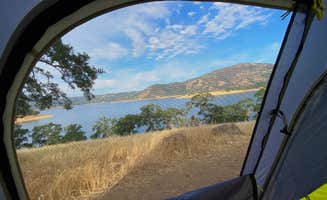
Campsites with lake views receive consistently positive feedback, though many lack substantial shade. Several visitors mentioned the clean facilities as a highlight, while others noted issues with trash at certain sites. The campgrounds provide good access for fishing, swimming, and boating activities when water levels permit. Weekday visits typically offer a quieter experience with better site selection. One reviewer shared, "The view was amazing, the tent spot was level and clear of big rocks, and it was so dark that I was able to do some great astrophotography." Wildlife sightings, including deer and raccoons, are common throughout the area. Sites at Tuttletown tend to be smaller and closer together, while Glory Hole offers more spacious camping options with better lake views when water levels are adequate.
$150 / night
"Water level in the New Melones Lake was quite low at that time and it is kind of an off-season time to visit this recreation area so campground was not crowded at all."
"Cute small campsites, kind of close to your neighbor. Not a lot of bugs which is always a plus when your near water, we went mid October and the weather wasn’t too hot or too cold."
"The only downside is that the park closes at 8:00 pm so we had to sleep behind the entrance until 4:00 am when they opened the door again. A Fire ring and a bench available at each spot."
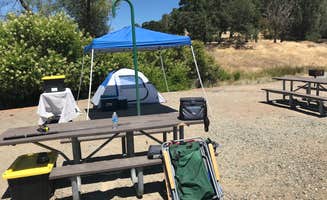
"Sites were a good size and were tucked down a slight hill from the road which was great for privacy. Bathrooms were kept very clean and well stocked."
$18 - $22 / night
"Showers and bathrooms aren't working but otherwise a great place to camp. been going to the nearby Tuttletown camp for showers and working bathrooms while they work on Gloryhole."
"The lake's water was too low for a swim though :( sad"
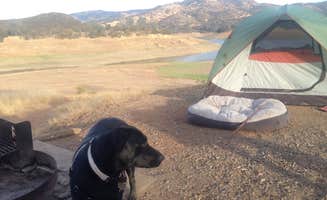
"We were lucky to have a spot at the dead center of the top of the mountain looking out at the lake (site 13) with a big shade tree."
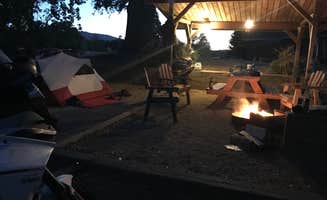
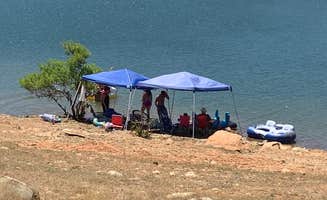
"There are sites on the lake with shade provided over the tables. It was mid week and was not crowded at all. The lake is gorgeous and at night there were several deer walking thru the site."
$30 / night
"A good clean campground, popular in central California. Reasonably priced $20 per night."
"The lake has receded quite a but that one of the docks is about 100 yards from the actual lake now (California drought). The campsite was well maintained."
"Super nice, close to the bathrooms. There's a community outdoors kitchen with stove and sink. Small hiking trail that had some horse nearby that cam and said hi to us. Will definitely be coming back."
"Close to lots of cute towns and wineries."
"This site is right on the lake, the bathrooms were clean. It was pretty busy but the spaces are far enough apart that it wasn’t super loud even in a tent."
$24 - $439 / night
"Only 5 minutes away from a small town for groceries. It is quite a drive to get to the actual locations in the Yosemite park from the campground."
"If you plan to go into Yosemite NP, it's a long drive so plan accordingly. Our family really enjoys Rainbow Pools and Yosemite Pine's proximity to Rainbow Pools is part of why we stay here."
"At the junction of Hwy49 the “Chain of Gold” and 108 outside Yosemite National Park. Daily/weekly rates. Short walk to downtown in this 1850’s mining town."
$25 - $70 / night
"I think this is my favorite California State Park. It is situated in the Calaveras Big Trees Giant Sequoia Grove."
"Pros - you are in the middle of the Sequoias, near hiking, kayaking, etc. Beautiful river nearby; pretty easy in and out for small-ish RVs. Hard to beat the location."








 Scout
Scout$50 a night for full hookups, and WiFi


 Ranger
Not even sure i found the exact place. Go through a little neighborhood an come to a gravel road. Found a little turn around an spent the night. Didnt see anyone. Cell coverage enough to get texts.
 Traveler
Beautiful. Would definitely come back.

 Guide
GuideWe were able to a site that backed up to the river. Small campground, very clean and quiet. Has toilets
 Ranger
Lots of sites with privacy! Bathrooms are clean and they have coin operated showers. Dumpsters and water in various spots. Right on the river, a small beach access. Saw some cats. Bear box, picnic table, and fire pit at each spot.
TravelerBeautiful area, full hookups, not parking lot camping, well maintained. New owners very friendly.
TravelerWell I guess I’m the last to leave for the season . I’m in the campground 7 miles from the entrance there is another one closest to the road . If your here to see the big trees then stay bye the road if you can
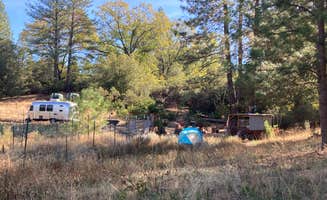
TravelerOur first dispersed camping experience, so i'm not sure how it compares to others. There is tons of space, no bathrooms, no water, basically no people - kind of lovely. The ground is all fairly rocky - so expect bumps and lumps under your tent. 😅 There is TONS of space in what I assume was their parking lot. Easy RV parking for sure. There is also a dirt road you can go down to get a bit further from the main road. Reccomend AWL or FWD if going more than half way down. Come prepared with enough water etc. - the views are absolutely worth it. Oh! And I often had 5G signal with Verizon. Sometimes only 4G, but very rarely fully lost signal.
RangerSuper nice and attentive host. Bathrooms were super clean, including the shower.
New Melones Lake offers camping opportunities at elevations between 800-1,200 feet in the western foothills of the Sierra Nevada mountains. The reservoir spans over 12,500 acres when full, with 100 miles of shoreline accessible for camping and recreation. Water temperatures range from 50°F in winter to 80°F during summer months, affecting both swimming conditions and fishing productivity.
Hiking trails: Several campgrounds provide access to hiking paths with views of the reservoir. At Glory Hole Recreation Area, trails range from easy to moderate difficulty. A camper noted, "There are easily accessible hiking trails that were a great help in wearing out the pups... The Carson Creek Trail is listed as a 'moderate' trail as is the Gold Rush Trail. Don't be dissuaded by that. Both trails are really easy and offer great views."
Fishing year-round: Tuttletown Recreation Area offers multiple fishing locations with varying shoreline access. "Fishing areas were easy to get to and we watched numerous people enjoy water sports on the lake," reports a visitor. Rainbow trout, bass, and crappie are common catches depending on season.
Wildlife viewing: Early mornings and evenings provide opportunities for wildlife sightings around campgrounds. A camper at Lake Tulloch RV Campground and Marina shared, "Several 'packs' walked through our campsite all throughout Sunday night when everyone else was gone. They walked up to us to smell our campfire and our food."
Astrophotography: The limited light pollution makes New Melones Lake excellent for night sky photography. Bring a tripod and camera with manual settings for best results. Weeknights typically offer less ambient light from other campers.
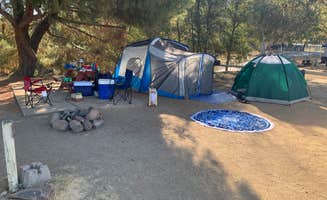
Spacious sites: Acorn Campground features well-spaced camping areas suitable for different equipment configurations. "This is a large campground with sites generally well spaced apart, you don't feel right on top of your neighbors. Lots of site variation, so do your homework or be flexible, you might get an amazing lake side spot with a view," one camper advised.
Clean facilities: Despite seasonal challenges, most campgrounds maintain functional amenities. At USBR Gloryhole Rec Area Big Oak Campground, "Bathrooms were kept very clean and well stocked. Sites were a good size and were tucked down a slight hill from the road which was great for privacy."
Weekday solitude: Visiting Sunday through Thursday provides a dramatically different experience than weekends. A camper observed, "We pulled in on Easter Sunday to a near empty campground. The campground is quiet and the scenery is amazing this time of year... The campground was a little busier than last visit, but surprisingly empty during the week."
Lake views: Higher elevation sites offer better vistas, particularly in the early morning and at sunset. "Site 116 is great. It is a little steep to get to the fire pit but the views were worth it," noted a camper.
Site selection matters: Researching specific site numbers before booking improves camping experience. "Sites 116 and 117 had great views of a larger part of the lake... Site #142 has great afternoon shade, a nice view, and is very level," advised a repeat visitor at Glory Hole Recreation Area.
Heat preparation: Daily temperature swings can be extreme, especially in summer. A camper at Ironhorse - Glory Hole Area reported, "This site is right on the lake, the bathrooms were clean. It was pretty busy but the spaces are far enough apart that it wasn't super loud even in a tent. There aren't a lot of trees so no hammock and no privacy but still a really great park."
Facility variability: Bathroom and shower conditions vary significantly between campgrounds and seasons. "The bathrooms that were open were disgusting... No camp host onsite while we were there," reported one camper, while another noted, "They have flushing toilets and coin operated showers with is nice, but the toilet situation near our campsite was questionable."
Cell service limitations: Most campgrounds have limited or no cellular reception. Download maps, reservation details, and activity information before arrival to avoid connectivity issues.
Shade structures essential: Most lakeside sites lack natural shade. "No hammocks allowed so if that's your sleeping method you'll want to bring a tent," advised a visitor at Tuttletown. Bring pop-up canopies for daytime comfort, particularly during summer months.
Swimming locations: Angels Camp Campground and RV offers controlled swimming areas better suited for children. "There's a day use area and a swimming area with a beach," notes a visitor. Lake access points vary significantly with water levels, requiring drives from some campsites.
Wildlife precautions: Secure food items at all campgrounds to prevent unwanted visitors. "Deer and cats get into everything! And cats pee on everything!" warned one camper. Use provided food lockers or bring sealed containers for nighttime storage.
Campsite terrain: Many sites feature uneven ground requiring careful tent placement. "The tent spot was level and clear of big rocks," noted one satisfied camper, but conditions vary across campgrounds and individual sites.
Dump station logistics: Facilities at Tuttletown include a fee-based dump station. "There is a nice dump station ($8 fee recommended... pay station is at park entrance)," advised an RVer. Plan to dump early morning to avoid lines on busy departure days.
Site dimensions: RV campers should research specific site measurements before booking. "Def geared for tent camping although I was lucky enough to be here when it was dead empty and picked a good site for my 27' toy hauler," reported one RVer at Tuttletown.
Water access challenges: RVers noted varying distances to water sources. "Water was available at campground," mentioned one visitor, while another cautioned, "No idea where the water is at but didn't really look." Bring hose extensions to ensure hookup reach at partially-serviced sites.
Frequently Asked Questions
Where can I find camping at New Melones Lake?
New Melones Lake offers several camping options. The Tuttletown Recreation Area provides well-spaced campsites with good interior roads and facilities. The campground is typically less crowded during off-season months like October. For RV camping near the lake, Glory Hole Recreation Area offers reservable sites with amenities suitable for recreational vehicles. Both areas provide good access to the lake for water activities, though water levels can fluctuate seasonally due to California's drought conditions.
Are there any designated campgrounds at New Melones Reservoir?
Yes, New Melones Reservoir has several designated campgrounds. Ironhorse- Glory Hole Area offers reservable sites with water and toilet facilities. Another option is Chamise - Tuttletown Area, which provides drive-in access with reservable sites and amenities. Both campgrounds are well-maintained and offer varying proximity to the water depending on current reservoir levels. For visitors looking for full hookups near the reservoir, several private RV parks are located within a short driving distance.
What recreational activities are available near the Turtle Town Recreation Area at New Melones Lake?
Turtle Town Recreation Area at New Melones Lake offers diverse recreational opportunities. Boating is popular with multiple boat ramps available when water levels permit. Fishing is excellent, particularly when water levels are high. Hiking trails wind through the area, providing scenic views of the lake and surrounding landscape. Swimming is available in designated areas, though conditions depend on water levels which can fluctuate seasonally. For those wanting to explore beyond Turtle Town, Lake Camanche is nearby and offers additional family-friendly recreation options including easy lake access and well-maintained facilities. Acorn Campground on New Hogan Reservoir is another alternative with excellent boating opportunities.
Keep Exploring