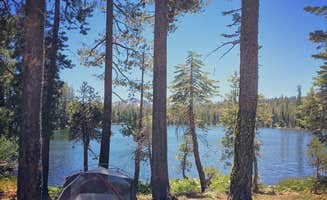
Tent camping near Emigrant Gap, California provides access to numerous alpine lakes between 5,500 and 7,200 feet elevation in Tahoe National Forest. The region features granite outcroppings and mixed conifer forests dominated by ponderosa pine and Douglas fir. Most dispersed camping locations require travel on unpaved forest service roads that can become impassable after rainfall or during early season snowmelt.
What to do
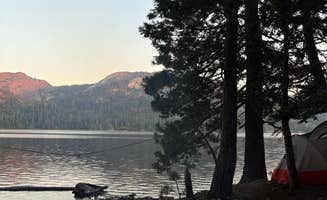
Lake activities: Several camping locations offer direct lake access for swimming, fishing, and paddling. At Lake Spaulding Campground, visitors can launch kayaks and spend days exploring the water. "We take our Kayaks and spend the day on the lake. It gets choppy in the afternoon so be aware," reports John and Trish N.
Hiking to multiple lakes: The area contains dozens of interconnected hiking trails linking various alpine lakes. From Grouse Ridge Campground, campers can access numerous bodies of water. "The views were beautiful and the water was perfect. The road was much more technical than a standard forrest service road, but doable in most stock crossover vehicles or better," notes Har Rai K.
Waterfalls and swimming holes: Short hikes from campsites lead to natural water features throughout the region. Near Bowman Campground, visitors should "try to hike to the waterfalls at the creek at the end of the lake if you can," suggests David L. The area also connects to the Yuba River's Emerald Pools, approximately 20 minutes from Rucker Lake.
What campers like
Warm water swimming: Unlike many Sierra lakes, some in this area warm significantly during summer months. At Rucker Lake, "the lake was very warm and had a epic rope swing if you can find it," shares Haidon M., though reaching campsites requires planning since "you have to park and walk all your stuff down to your spot."
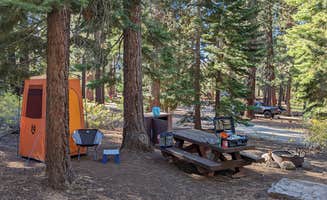
Solitude and privacy: Many campgrounds feature widely-spaced sites with natural separation. Onion Valley Campground receives praise for its peaceful setting: "Only one other group on the opposite end of the campground since it has a north/south side. There aren't many spots and they are well spaced out," reports Jordan R.
Night sky viewing: Minimal light pollution allows exceptional stargazing opportunities from open areas. "I loved the open fields of wild flowers. Those open spaces allow for some great star gazing night," notes Caroline B. about Onion Valley. Many campers recommend bringing extra layers as temperatures drop rapidly after sunset.
What you should know
Road conditions: Forest service roads to popular campgrounds often require high-clearance vehicles. The approach to Bowman Lake Dispersed demands careful driving: "The road to get here is rocky, but worth every second! We love spending our time here," shares Autumn L., adding "make sure your vehicle is able to go up steep rocky roads."
Weather variability: Despite summer daytime temperatures that can reach 80°F, nighttime temperatures often drop below 40°F even in July and August. At Grouse Ridge, one camper reported: "We were there last weekend in June and there was still snow on the ground. Woot! It was awesome... It was 25 degrees cooler up there than in Sacramento."
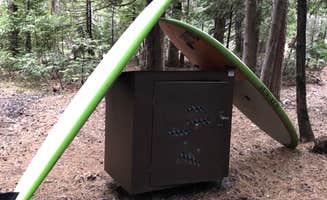
Limited facilities: Most campgrounds provide only basic amenities, and many have no potable water. "No running water, but there are restroom buildings, fire rings and bear boxes to use. Mosquitoes are abundant here. Don't forget your repellent," warns Chris N. about Bowman Lake.
Tips for camping with families
Gear transport solutions: Some campgrounds require walking gear from parking areas to campsites. For Rucker Lake Campground, Nick K. advises: "300 foot walk from cars to campground so bring a dolly/wagon. $15 a night fee. Bring a lot of drinking/dishes water (no spigots, no sinks)."
Swimming-friendly destinations: For families with children, certain lakes offer safer swimming conditions. Lindsey Lake Campground provides "direct access to lake to launch and swim," according to Rebecca J., who stayed "6 days with friends and dogs" and found the "sites were rustic but clean."
Bear awareness: All camping areas require proper food storage due to bear activity. Most established campgrounds provide bear boxes, but they vary in condition. At Onion Valley, Jordan R. notes: "Tables and fire rings in most of them. Vault toilet near the entrance was in surprisingly good condition. The dump spot by the front was obviously not bear/raccoon proof enough."
Tips from RVers
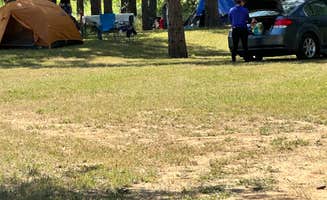
Site selection: Most campgrounds accommodate small trailers and camper vans but have limited space. At Faucherie Lake Group Campground, Indigo H. warns: "Portions of the trail got a bit rough, but manageable with higher clearance vehicles. When we arrived, there wasn't a soul in sight... so we settled on a patch of dirt and rock between some pines on the loop."
Alternative accommodations: For larger RVs, boondocking options exist on forest service land. Dean C. advises about Lindsey Lake: "There are 12 official campgrounds near the lake. They are first come first serve and are often full by Thursday afternoon. The surrounding area is National Forest Land, though, so you can dispersed camp for free."
Preparation for access: RVers should plan for challenging road conditions when visiting most campgrounds in the region. "Trailers and RV are mostly kept to the boat launch," explains John and Trish N. regarding Lake Spaulding, where campgrounds are "set among huge boulders and can be very private."










 Guide
Guide


