Dispersed camping near Talladega, Alabama centers around the interconnected trail systems of Pinhoti, Chinnabee Silent, and Skyway Loop within Talladega National Forest. The terrain features significant elevation changes, with ridge campsites sitting 600-800 feet above creek-level sites. Water availability follows seasonal patterns, with most creek sources running highest from late winter through early summer when temperatures average 65-80°F.
What to do
Explore Devil's Den Falls: A short hike from Chinnabee Silent Trail Backcountry Site 2 provides access to this natural attraction. As one camper noted, "Just up the Chinnabee silent trail from the turnip seed campground heading towards the pinhoti sits this awesome campsite" which serves as an excellent base for day hikes to the falls.
Stargaze from ridge sites: The elevated position of some backcountry sites provides exceptional night sky viewing opportunities. A visitor to Skyway Loop Backcountry recommends to "spend some time out on the rocks at night since you can see every star in the sky."
Photograph seasonal wildflowers: Spring brings abundant wildflowers along the lower trail sections. "This is a great place to visit in Spring or early summer before it gets too hot and while the water levels are still high. You can see some amazing wildflowers," reports a camper at Skyway Loop Backcountry Site Near Chinnabee.
What campers like
Multiple-day loop options: The trail system allows for varied backpacking routes. One reviewer notes that Skyway Loop Backcountry Site Near Chinnabee "is a great place to rest and have lunch or this would be a good night option if you do the loop over 3-4 days. (For a 2 day loop I suggest starting at the southern point and camping at either Turnipseed or Cheaha Falls)."
Creek-side camping: Many sites feature proximity to running water, adding both practical value and ambiance. A camper at Skyway Loop Backcountry Site Near Chinnabee appreciated how "The creek runs right alongside so there is easy access to water and it provides a peaceful background sound during the night."
Protected ridge sites: Some elevated campsites offer natural windbreaks. A reviewer of Pinhoti Backcountry Campground near Odum Intersection described it as "a nice protected area a short way off the trail" with "several large boulders that work well to block the wind and make this a more comfortable space in bad weather or when it is cold out."
What you should know
Seasonal water considerations: Water sources vary dramatically by season. A camper at Pinhoti Backcountry Campground near Odum Trail cautions that "water is seasonal and can be very low in winter. Be prepared to not have water for pumping and bring extra in dry times."
Trail intersection awareness: Several trails interconnect in the region, requiring attention to navigation. One hiker pointed out that Skyway Loop Backcountry Site Near Chinnabee "is located at a point where the trail splits and either goes to the Lake Chinnabee recreation area or turns and continues on the skyway loop south. This is an important point because if you miss the turn you will get lost and not make it around the loop."
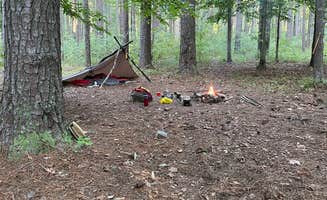
Group site availability: Larger parties should seek out specific sites designed for more people. Chinnabee Silent Trail Backcountry Site 2 features "an enormous clearing under the tree canopy perfect for a large group to set up camp. Not only is it well protected and have an easy freshwater source but it has not one, not two, but three built of fire rings for all the bonfire fun."
Tips for camping with families
Consider shorter access options: Some sites require less hiking than others. At Chinnabee Silent Trail Backcountry Site 2, "if you have any younger campers joining along it is not such a far trek in from where you park so they will have an easier time hauling gear."
Look for protected sites: Camping areas with natural windbreaks provide more comfort in changing weather. Pinhoti Backcountry Campground near Odum Intersection offers "a more comfortable space in bad weather or when it is cold out" thanks to its boulder formations.
Scout for multi-tent clearings: Some dispersed sites accommodate multiple tents better than others. Chinnabee Silent Trail Backcountry Site 5 is "fairly large with two established firepits and multiple cleared areas for tents. It also has plenty of trees for setting up hammocks."
Tips from RVers
No direct RV access to backcountry sites: All dispersed camping areas require hiking in. While some sites like Skyway Loop Backcountry Site Near Chinnabee are "a short distance to get to the campsite," vehicles must remain at designated parking areas or trailheads.
Use established campgrounds as base camps: For RV users, developed campgrounds like Turnipseed serve as staging areas for day hikes. From there, backpackers can access trails to Chinnabee Silent Trail Backcountry Site 2, which is "not far up the trail from the Turnipseed campground."
Plan for no facilities: Dispersed camping areas have no amenities for RVs. All sites are primitive with "no option for filling up water," as noted about one backcountry site, meaning RVers must be fully self-contained if planning overnight stays at trailheads.




 Guide
Guide


