


WhiteBoyChase  Scout
Scout
ScoutSandy Cove on the St. Croix River
Good spot
Back in 2020 I did about 3 months camping along here ! Good spot !
Dispersed camping options near Eau Galle Lake, Wisconsin include Sandy Cove on the St. Croix River, accessible only by foot via hike-in or walk-in routes. This primitive site features an open-air vault toilet, fire ring, and wheelchair-accessible picnic table. Located along the Ice Age Trail, the site provides both crushed gravel paths and single-track footpaths with proximity to Lions Park. The site requires a permit but remains free of charge, with policies allowing alcohol, fires, and pets.
The nearby Zumbro Bottoms State Forest in Minnesota offers additional primitive camping opportunities. Located off a low-maintenance dirt road, this area is best accessed from the south as the northern gate by the river bridge is sometimes closed. A review notes "a parking spot near a known dispersed camping site with easy vehicle access next to it" with hiking trails passing through the area. Both locations provide rustic experiences with minimal amenities, making them suitable for campers seeking solitude rather than services.
"This area is off a low maintenance dirt road. It is best to come in from the south as sometimes the gate on the river bridge to the north is closed."
"Back in 2020 I did about 3 months camping along here ! Good spot !"
"No one around, but it's first come first serve."
"Good to use ATV on trails and perfect for RV camping. First come first serve."
ScoutBack in 2020 I did about 3 months camping along here ! Good spot !


 Traveler
The spot is along the ice age trail. Well managed gravel trail to the south and single wide footpath to the north.
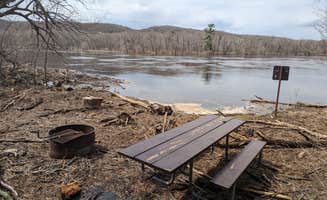
There is a pad at the bottom of the path up to the open air vault toilet, a fire ring, and a table. The table has an extra long side for those in a wheelchair. The crushed gravel path to the south makes travel to the nearby Lions park easy.
The ease of access probably makes this a hangout spot as we saw a good amount of refuse around the pad. The pictures are probably worst case scenario. We visited in April after historic snowfall and thaw causing the river to flood. I'd imagine when the river is lower with the fire ring and table where they're supposed to be this would be a nice place for the night. Right on the beautiful st.croix river.
Dispersed camping near Eau Galle Lake, Wisconsin provides primitive outdoor experiences in the surrounding St. Croix River watershed. Winter conditions typically limit access from November through March due to snowfall averaging 45-50 inches annually. Summer temperatures range from 75-85°F with high humidity, making spring and fall the preferred seasons for rustic camping experiences in this region.
Hiking trails exploration: The Zumbro Bottoms State Forest offers multiple unmarked paths through dense woodland. "There are hiking trails that pass by this site," notes camper T S., who found the dirt road access challenging but worthwhile for the solitude.
River activities: Primitive sites along the waterways provide direct water access for fishing, swimming and kayaking. One visitor to the area mentioned, "The water levels fluctuate significantly based on rainfall, sometimes changing access points completely within days."
Wildlife viewing: Dawn and dusk offer optimal wildlife spotting opportunities in the forests surrounding Eau Galle Lake. Campers regularly report sightings of white-tailed deer, wild turkeys, beavers, and various migratory birds throughout the camping areas.
Natural isolation: Sandy Cove on the St. Croix River provides secluded camping despite its accessibility. Travis B. describes it as "Right on the beautiful st.croix river," noting the area has a mix of "crushed gravel path to the south" and "single wide footpath to the north."
Cost considerations: Most dispersed sites in the region require no fees, though some require permits. Budget-conscious campers appreciate the combination of free camping with natural surroundings as an alternative to developed campgrounds.
Seasonal variations: Spring camping offers flowing streams and wildflowers while fall brings spectacular foliage. Several campers note late September through mid-October provides optimal camping conditions with fewer insects and moderate temperatures.
Water conditions: River levels around rustic camping near Eau Galle Lake vary dramatically with rainfall. A visitor observed, "We visited in April after historic snowfall and thaw causing the river to flood," making some sites temporarily inaccessible.
Access challenges: Many dispersed sites require planning for vehicle clearance. The low-maintenance roads leading to camping areas often deteriorate after rainfall, with several campers reporting the need for high-clearance vehicles during wet seasons.
Permit requirements: Most dispersed camping requires permits obtained through regional forest service offices. While many permits are free, they help land managers track usage and provide important regulations specific to each site.
Safety preparations: Families should bring additional water supplies when camping near Eau Galle Lake. Recent visitors recommend "at least one gallon per person per day" since drinking water is unavailable at most rustic sites.
Educational opportunities: The area provides natural science learning experiences for children. Parents report the forest areas serve as "outdoor classrooms" with opportunities to identify native plants, observe wildlife patterns, and learn about watershed ecology.
Weather readiness: Summer thunderstorms develop quickly in this region, particularly in afternoon hours. Experienced family campers suggest always setting up rain protection first, even on clear days, as weather patterns can change rapidly.
Site accessibility: Most dispersed camping near Eau Galle Lake is unsuitable for larger RVs. Several RV owners noted only truck campers and smaller trailers under 20 feet can navigate the narrow access roads to reach primitive sites.
Road conditions: Unpaved roads leading to camping areas often wash out after rain. Campers with trailers frequently mention the importance of calling ranger stations for current road conditions before attempting access with any towed vehicle.
Generator restrictions: Noise ordinances and regulations limit generator use in most dispersed camping areas. RVers should prepare with alternative power sources such as solar panels or plan to camp without electricity for the duration of their stay.
Frequently Asked Questions
Which is the most popular dispersed campsite near Eau Galle Lake?
According to TheDyrt.com, the most popular dispersed campground near Eau Galle Lake is Zumbro Bottoms State Forest with a 3.5-star rating from 2 reviews.
What is the best site to find dispersed camping near Eau Galle Lake?
TheDyrt.com has all 4 dispersed camping locations near Eau Galle Lake, with real photos and reviews from campers.
Keep Exploring