The Blue Ridge area in Virginia offers varied terrain for tent camping, from riverside locations to mountain sites along the Appalachian Trail. Elevations range from 600 feet at river campsites to over 3,000 feet at mountain locations, creating diverse camping environments. Many campsites lack cell coverage, particularly those located in valleys or beyond Forest Service roads.
What to do
River activities: Campers at Shirleys' River Retreat enjoy direct access to riverbanks for swimming, fishing, and paddling. One camper noted it has a "wonderful host and amazing campsite right in the riverbank."
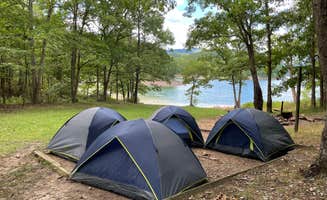
Lake paddling: Greenwood Point Campground provides water-only access camping on Lake Moomaw. A visitor explained, "Beautiful quiet lake, not heavily trafficked. Campsite is only accessible via water, so we packed our gear up on paddle boards to get there."
Hiking access: Many campsites serve as basecamp for local trails. The hike to Dragon's Tooth rock formation connects with the AT and becomes "a strenuous hike once you get to the big rock," according to reviews. White arrows painted on rocks guide hikers to the summit where camping is possible.
What campers like
Waterfront privacy: Campers frequently mention the value of private sites with water access. At Lynchburg KOA, "Sites are huge and level. It's quiet and peaceful, and the surrounding area is gorgeous."
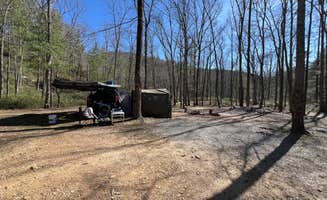
Group camping flexibility: The dispersed site off Forest Road 812 accommodates larger groups with "enough room to fit about 10 vehicles/groups if people don't mind being next to each other" and features "a very rocky path, about 50 feet long, to get into the campground."
Secluded spots: Primitive sites like McClintic Point offer true seclusion. One camper shared, "No neighbors. Maybe we just got lucky," while another noted, "It's in a valley and two sites back up to the lake."
What you should know
Water sources: Few dispersed sites offer potable water. Plan to filter stream water or carry in your supply. At Catawba Mountain Shelter, you'll find water but must "collect water with a filter only" as noted by a hiker.
Temperature variations: Valley campsites often remain cooler than surrounding areas due to their geography. McClintic Point "seems to stay chillier than the surrounding area" as one camper observed, making extra layers necessary even in summer.
Road conditions: Access to remote sites requires careful driving. The FR 812 site has "a very rocky path" leading in, while other Forest Service roads may require higher clearance vehicles. Check conditions after heavy rains.
Tips for camping with families
River safety: When camping with children near the James River, be aware of current strength which varies seasonally. Sites with "calm" sections are better for families than areas where "water flows fairly fast."
Space considerations: Families need room to spread out. Look for sites with ample flat space like the FR 812 area which has "large open space with several flat areas for tents" and "easy access to the stream."
Toilet availability: Plan bathroom facilities accordingly. Dragon's Tooth trailhead offers "vault toilets stocked with toilet paper" and "bear proof trashcans" but no running water, making it more family-friendly than completely undeveloped sites.
Tips from RVers
Site leveling: RV sites at established campgrounds require minimal leveling. The former Wildwood Campground (now Lynchburg KOA) features sites that are "huge and level" making setup straightforward.
Seasonal accessibility: Forest Service roads may become impassable for RVs during wet seasons. Stick to established campgrounds with gravel access roads during spring and fall when rain is more common.
Alternative options: For RVers wanting to experience more remote locations, consider basecamp at an established site and use day trips to explore. The Dragon's Tooth trailhead has "a gravel lot, pretty level" where "there were several other cars parked overnight."








 Scout


