Tent camping near Putney, Vermont centers around the wooded foothills of the Green Mountains where elevations range from 400-2,200 feet throughout the region. Summer temperatures typically reach highs in the 70s-80s°F, while spring and fall camping seasons can see overnight lows in the 40s-50s°F. Several campsites in the region maintain seasonal operations, typically closing from late October through April due to snowfall and freezing temperatures.
What to do
Paddle Tully Lake: Tully Lake Recreation Area offers canoe and kayak rentals for exploring the lake's islands and shoreline. "We take our canoe and spend the whole day at the lake. You can find lots of private areas to swim, pick blueberries and relax," notes camper Ben P. from Tully Lake Recreation Area.
Hike mountain trails: Access to the Appalachian Trail and Long Trail systems provides backpacking opportunities ranging from day hikes to multi-day treks. At Stratton Pond Shelter, "The shelter is a 3.75mi hike from the nearest parking lot in winter. There are 2 tent platforms, 2 outhouses and at least 16 bunk spaces in the shelter."
Explore waterfalls: Doane's Falls near Tully Lake features a series of five cascading waterfalls accessible via a short trail. "The highlight was Doane's falls, a very quick walk from the campground area," shares Jean C., noting that "it's not unusual to spot professional nature photographers at various points along the waterfalls."
What campers like
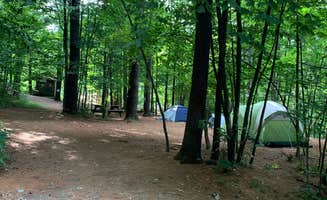
Privacy between sites: Maple Ridge Farm receives praise for site spacing and layout. "They'll drive you in an ATV up to some of the sites that are further away from the parking lot," mentions Les R., noting the owners provide transportation assistance to more remote sites.
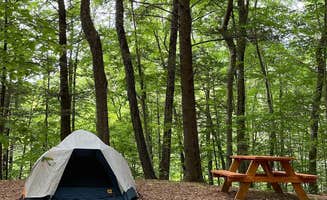
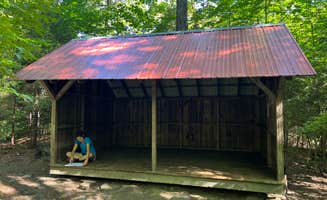
Walk-in camping experience: Little Rock Pond Group Camp & Shelters maintains a rustic camping atmosphere without vehicle access. "Operated by the Green Mountain Club caretaker who lives onsite, this campsite costs only $5 per person per night. There's a big 3-wall cabin with room for at least 12, several tent platforms, and there's even a composting privy."
Waterfront camping options: Many campers appreciate waterfront access at several campgrounds. At Tully Lake Recreation Area, "We stayed at site 1, which was HUGE and extremely private. Sites closer to the water that we saw were less private, but still very peaceful and spread out. No cars at all at the campsites, which was great for peace of mind as our toddler roamed around."
What you should know
Gear transport planning: Most walk-in sites require transport planning. At Tully Lake, "Some of the sites are located on a small rise; I suspect that was appreciated the night 4" of rain fell recently! You may choose to paddle your gear over" for waterfront sites, while others need carts for transport.
Limited cell service: Many campsites have poor or non-existent cell coverage. "Cell coverage is pretty close to absent or poor in most of the area, so download any maps you might want (driving, trail, geocaching) before you arrive," advises a camper at Tully Lake.
Water availability varies: Several backcountry sites lack drinking water. At Seth Warner Shelter, hikers note "The long trail is a very wet nasty trail but it can be dry so be careful having a fire. Hang your food! Watch for bears and coons." Little Rock Pond offers "water available at a creek and a spring nearby."
Tips for camping with families
Look for cart-accessible sites: Families with small children should consider campgrounds that offer transport assistance. "You park at the entrance, register with Ranger. Large wooden wheelbarrows are provided to bring your gear to your camp site. This means no noise or disturbances from cars entering your camp sites," notes Nancy R. at Tully Lake.
Consider central facilities proximity: When camping with children, bathroom proximity matters. At Zoar Outdoor, facilities are "well maintained" though one camper noted they "Could use a refresh but overall great experience." Another camper at Tully Lake mentioned, "Our site was fairly far from services, long run with small kids in the middle of the night."
Check for swimming options: Not all waterbody-adjacent campgrounds permit swimming. At Barton Cove, "You can't swim (unless you rent a canoe/kayak and swim while you're out on the water) and sites are fenced in due to how steep it is to the water which was a downside but views between the trees are nice."
Tips from RVers
RV options limited: Most tent camping near Putney focuses on walk-in, hike-in, or primitive sites unsuitable for RVs. For RV camping, look to established campgrounds with hookup options like Monadnock HQ Campground that offers electric, water, and sewer connections approximately 45 minutes east of Putney.
Consider tent-only alternatives: Many RVers in the Putney region opt for tent experiences instead. At Tully Lake, "If you are a car camper this is going to be more rustic as there is no driving up to the sites, but there is a main parking area and a few sites 50-100 yards away from it."
Watch for reservation windows: Advanced planning is essential for popular campgrounds. "The sites fill up weeks out and can completely fill the day registration opens, which is date-dependent each year. Booking for Memorial Day meant I booked in April," notes one camper.










 Scout
Scout


