Tent camping near North Hartland Lake requires planning for variable Vermont weather conditions. The area sits within the Upper Valley region along the Connecticut River, with elevations ranging from 400 to 1,200 feet. Summer temperatures average 70-80°F during days but can drop significantly at night, making proper sleeping gear essential for backcountry sites.
What to do
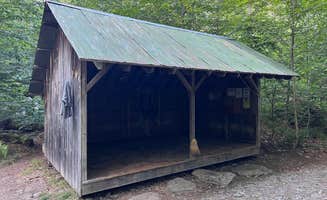
Swimming opportunities: Several backcountry shelters offer refreshing water access during summer months. At Stony Brook Backcountry Shelter, "there was plenty of water at Stony Brook / Mink Brook" with "a decent swimming hole (could just barely submerge myself) to clean off a bit," according to a recent visitor. This shelter also includes a bear box, uncommon for AT shelters in Vermont.
Mount Cardigan summit hike: Located within day-trip distance of North Hartland Lake, Cardigan Campsites provides access to Mount Cardigan trails. One camper noted it's a "Great spot to spend the night before a climb of Mt. Cardigan! The climb is challenging but shouldn't take too long. Great fire tower views at the top too!"
Explore forest service roads: Michigan Brook Road offers multiple exploration opportunities along rough terrain. A visitor reports that "Road goes in pretty far. Some parts are muddy and very rough. Higher clearance would be advised!!!" The rugged access creates greater solitude for those willing to navigate the conditions.
What campers like
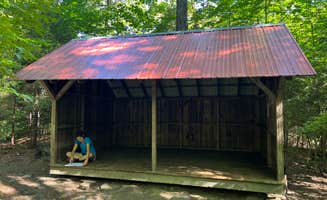
Double-decker shelter design: For an interesting backcountry camping experience, Happy Hill Backcountry Shelter features a unique two-level structure. A recent camper observed the shelter "had a ground floor and a loft but each floor could maybe fit 4-5 people comfortably," noting how "the loft was nice since folks could decide to sleep up there while others were down below, either cooking, arriving, or departing."
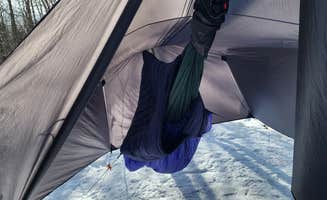
Year-round accessibility: Michigan Brook Road camping areas remain accessible during winter months, though with limitations. One winter visitor shared: "The main road to the parking lot is plowed and sanded. However if you would like to continue down the service road during winter months I would highly recommend snowshoes or a snowmobile." This makes it one of few tent camping options near North Hartland Lake with maintained winter access.
Multiple size tent platforms: Many AT shelters feature level tent sites of varying sizes. At Velvet Rocks Shelter, "the tent camping here was ok, with some slightly slanted spots around the main shelter area." This contrasts with other shelters offering more level platforms.
What you should know
Limited connectivity: Cell service is extremely limited or nonexistent at most tent camping areas. At Michigan Brook Road Camping, one camper warned, "THIS LOCATION DOES NOT PROVIDE CELL PHONE SERVICE OR WIFI CONNECTION," but noted "if you walk to the end of upper Michigan Brook road you will have cell phone service and a gas station along with a United States Post Office as well as a general store."
Water unreliability: Most backcountry shelters have inconsistent water supplies, particularly during summer and fall. Even shelters that report water sources may run dry seasonally. A camper at Trapper John Backcountry Campground noted "there is a water source in the area but it did not have water when I visited (probably on account of the drought)."
Driving conditions: Access roads to the best tent camping near North Hartland Lake often require higher-clearance vehicles. A visitor to Michigan Brook noted, "Some parts are muddy and very rough. Higher clearance would be advised!!!" Another camper reported getting "stuck overnight but was able to dig myself out the next morning" during winter conditions.
Tips for camping with families
Private tent areas: Families seeking privacy may prefer shelters with separate tent platforms. A camper at Winturri Backcountry Shelter reported "lots of tent camping spots as you worked up the hill perpendicular to the shelter" and noted "this stop had a great amount of tent camping around in spaces with decent privacy," making it suitable for families wanting separation from other hikers.
Restroom considerations: When camping with children, reliable bathroom facilities become important. Shelter privies vary considerably in quality and maintenance. One visitor observed that Stony Brook's "privvy looked brand new and was more spacious than most on the trail," while at Happy Hill the "privvy was relatively new and in great shape."
Flat tent sites: Families typically need larger, flatter areas for setting up multiple tents. At Thistle Hill Backcountry Shelter, a visitor cautioned that it "seemed to have smaller spots for tent camping that were somewhat sloped," which could be challenging for families with multiple tents or larger shelters.
Tips from RVers
Parking limitations: Most tent camping near North Hartland Lake offers extremely limited parking for larger vehicles. Trapper John Backcountry Campground is "entirely hike in," making it inaccessible for RVs. Even the more accessible Michigan Brook Road presents challenges as "some parts are muddy and very rough," requiring higher clearance vehicles.
Seasonal road conditions: Winter camping requires specific planning for road conditions. A winter visitor to Michigan Brook Road suggested "snowshoes or a snowmobile" for accessing areas beyond the plowed parking lot, noting they "attempted to bring my car and was stuck overnight." Most forest service roads receive minimal maintenance during winter months.
Supply access: RVers converted to tent camping should know about supply locations. One Michigan Brook visitor mentioned the nearby general store "serves as a restaurant" where "you can find just about anything. Gas, firewood, water/drinks and a restroom" - important information for planning extended stays without typical RV amenities.









 Legend


