Equestrian camping near Flag Pond, Tennessee offers direct access to mountain trail systems across the Cherokee and Pisgah National Forests. Located in mountainous terrain at elevations ranging from 1,700-3,500 feet, the area's camping options experience temperature variations that can drop 15-20 degrees cooler than surrounding lowlands, particularly during spring and fall seasons.
What to do
Trail riding connections: At Harmon Den Horse Camp, riders find multiple trailheads leading into the surrounding wilderness. "You have to reserve in advance to get a code to get through the gate, so you don't have curiosity seekers coming in," notes Myron C., highlighting the security measures in place for equestrians.
Summit hikes: The area provides access to several mountaintop experiences within 25-30 miles. "We parked at the top of Mt. Mitchell and took the Ridgeline trail, eventually turning onto the Big Tom Gap Trail and then a left onto the Buncombe Horse Trail," explains John L. about his hike from Maple Camp Bald, where many trails accommodate both hikers and horses.
Waterfall exploration: Cold Springs Creek Road offers fishing spots and cascades. "There is a trail to SetRock Falls, right on the campground property...and several other foot trails to keep you busy and hiking," mentions Dave V. from his stay at Black Mountain Campground.
What campers like
Mountain breezes: Elevation differences create comfortable camping even in summer months. "At 3144 feet in elevation according to my altimiter app so it is nice and cool," reports Overland 1 about temperatures at Harmon Den Horse Camp, which provides relief from valley heat.
Creek sounds: Multiple campsites position visitors near running water. "We stayed at a site right on the river and could hear the water flowing the whole time we were there," shares Charles H. about camping at Black Mountain, where both equestrians and standard campers appreciate the natural sound barrier between sites.
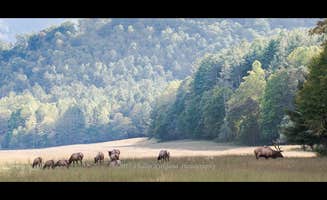
Wildlife viewing: Cataloochee Campground offers excellent animal spotting opportunities about 40 miles from Flag Pond. "If you want to see the elk, you're going to have to be up early. I use to be in the park at 5 AM with night vision gear, I saw some very nice elk," advises Patrick K., noting seasonal differences in viewing times.
What you should know
Road conditions: Forest service roads to horse camps require appropriate vehicles. "The road is quite the trip just in a car, and I can't imagine driving a large RV on it," notes Kristina about accessing remote campgrounds, with some roads requiring high-clearance vehicles.
Water sources: Water access varies significantly between established and primitive sites. "No water so bring treatment methods," warns Justin S. about Old Forge Recreation Area, similar to conditions at many horse camps where natural sources must be filtered.
Seasonal availability: Most equestrian facilities operate on limited schedules. "The campground features level parking areas sized for horse trailers with additional room for portable paddocks or tie systems," but most are only open May through September with reduced services in shoulder seasons.
Tips for camping with families
Beginner-friendly horse trails: Several areas offer less challenging routes for inexperienced riders. At North Mills River Campground, "We've enjoyed this campground mainly for the fly-fishing. The local Trout Unlmiited group has also spent many hours upgrading the walkways and fence lines to protect the river," notes Shannon K., highlighting the dual recreation possibilities.
Swimming holes: Natural water features provide cooling options. "There's a swimming hole on the South Toe River in the campground just beyond the end of the riverside sites. It has a small sandy 'beach' area and a neck deep refreshing hole," explains Dave V., describing features at Black Mountain that families appreciate.
Non-equestrian alternatives: For families without horses, Big Creek Campground offers similar mountain experiences. "The camp is beautiful and you are surrounded by the magical sounds of rushing water. There are two creeks nearby, one big and one small," reports Alison W., noting the tent-only environment provides a quieter atmosphere.
Tips for RVers
Size limitations: Most horse camps have strict size limitations for rigs. "Motorhomes over 32' and trailers over 25' in length are not recommended due to the access road," cautions Kristina about Cataloochee, with similar restrictions at most equestrian facilities in the region.
Level sites: Look for descriptions mentioning level trailer parking. "The sites in the upper curve are bigger then the ones on the hill. There are several that offer tent pads and small vehicle pads. Check your lengths and bring your leveling boards," advises Shelly S. about setup at campgrounds near horse trails.
Hook-up availability: Most horse-focused campgrounds lack power and water connections. "You need to be self contained to camp out here. The nice thing is, the camp is at 3144 feet in elevation according to my altimiter app so it is nice and cool," mentions Overland 1, emphasizing the importance of being fully self-sufficient.



 Guide
Guide


