Equestrian camping near Seaside, Oregon provides access to diverse forest and coastal terrain with over 40 miles of mapped trail systems. The region receives approximately 70 inches of annual rainfall, creating lush, verdant forests and occasional muddy trail conditions during spring and fall seasons. Most horse campgrounds in the area operate seasonally from May through November when trail conditions are optimal.
What to do
Trail riding through old growth forests: At L.L. Stub Stewart State Park Hares Canyon Horse Camp, riders can access an extensive network of trails. "Experiencing several of the many long trails on horseback was an unforgettable experience," notes Tanya B. The park connects to the 21-mile paved Banks-Vernonia Trail for those seeking smoother terrain.
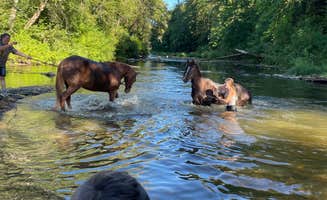
Creek exploration with children: Jones Creek Campground offers multiple river access points where children can wade and splash. "The river is where it's at, folks are swimming, tubing and fishing dawn to dusk. Folks jumping off the bridge and having picnics," shares Aria R. The shallow creek depth makes it suitable for supervised children.
Stargazing without light pollution: The higher elevation sections of horse camps provide excellent night sky viewing. According to Jeff H. at Hares Canyon Horse Camp, "The top of the park shows a vast section of sky which is perfect for meteor shower watching." Bring red-filtered flashlights to preserve night vision while moving around camp.
What campers like
Privacy between campsites: At Fort Stevens State Park, campers appreciate the natural separation despite the campground's size. "Still, many of the sites are deep and surrounded by trees, keeping the vibe natural and relatively private," reports Patrick M. The park maintains nearly 500 sites across multiple loops.
Wildlife viewing opportunities: Campers report frequent wildlife sightings throughout the area. At Nehalem Bay State Park, campers can experience coastal wildlife. "Nehalem Bay is beautiful, and it's just down the road from two jetties. My family and I went crabbing just a ways away from the state park," shares Aaron R. Bring binoculars for optimal wildlife spotting.
Walk-in tent sites for solitude: More secluded camping experiences can be found at the walk-in sites. Camp Wilkerson visitor Annie T. notes: "My partner and I had a relaxing time camping at Camp Wilkerson... We stayed at the tent site T9 and pretty much had the place to ourselves on Sunday. The solitude and creek nearby made the experience quite tranquil."
What you should know
Trail conditions and horse waste management: When riding at Camp Wilkerson, expect to encounter varying trail maintenance levels. One visitor noted, "We did have a hell of a time figuring out the trail wayfinding! The Little Foot trail is overgrown and the wayfinding signs don't make any sense." Most horse camps require riders to clean up after their horses and provide manure bins with cleanup tools.
Weather preparedness is essential: The Pacific Northwest climate can change quickly. At Fort Stevens, a camper advises: "I recommended being prepared for any type of weather rain or shine." Spring and fall visits often encounter morning fog and afternoon showers.
Limited cell service at many locations: Most forest campgrounds have spotty or no cell coverage. Robert D. at Dairy Creek Camp notes: "Cell service was just ok." Bring printed maps and campground information since digital resources may be inaccessible.
Tips for camping with families
Select campgrounds with play areas: Some campgrounds offer designated recreational facilities. At Dairy Creek Camp, Ryan W. observes: "Open feel, but sites are spacious. Nice playground for kids, fun disc golf course and wonderful access to biking (paved or dirt)." These amenities provide entertainment options during longer stays.
Consider educational opportunities: The Tillamook Forest Center is accessible from Jones Creek Campground. "Definitely check out the Tillamook Forest Center, you can even hike over from the campground," suggests Aria R. This free interpretive center offers kid-friendly exhibits about forest ecology.
Look for campgrounds with beach access: Nehalem Bay Trailer Park provides coastal camping options. "The sound of crashing waves on the ocean was the constant background sound for this family and pet friendly campground," reports Noah R., who also notes the park "has beach wheelchair check out available for free during your stay!"
Tips from RVers
Site selection for satellite reception: At some heavily forested campgrounds, satellite reception may require strategic site selection. Robert D. at Dairy Creek Camp reports: "Our spot was on the north side of the road so when we put out our satellite unit it had lots of southern sky to find a signal from." Request sites with southern exposure when making reservations.
Full hookup availability: While many state parks offer partial hookups, some provide complete services. At Dairy Creek, OregonSteve notes the campground has "well maintained full hookup sites with 50amp, most 63' long." Verify hookup specifications when booking as amperage and water pressure can vary significantly.
Consider proximity to necessities: Forest locations may require planning for supplies. One camper at Nehalem Bay notes: "You are located close to town and good grocery/coffee shops/bakeries." At Fort Stevens, Jenny M. points out, "You are close to a Fred Meyer store in case you forget something."






 Legend


