Dispersed camping near Rogue River-Siskiyou National Forest offers primitive sites at elevations ranging from 1,200 to 3,500 feet. Temperatures fluctuate significantly between day and night, with summer highs reaching 90°F and overnight lows dropping to 45°F even in July. Most primitive camping locations throughout this region require vehicles with higher clearance due to unmaintained forest roads.
What to do
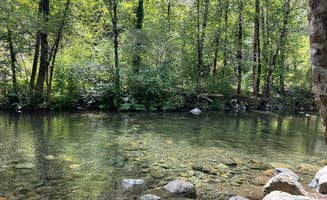
Fishing for crayfish: Evans Creek at Elderberry Flats Campground provides excellent opportunities for crayfish catching during summer months. "There are small swimming holes, lots of crayfish and salmon spawning beds," notes Jennifer H., making it an ideal spot for amateur foragers.
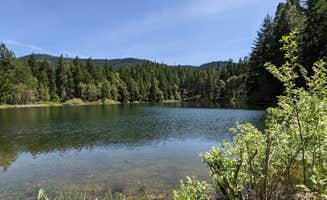
Wildlife viewing after dark: Burma Pond offers exceptional nighttime wildlife viewing opportunities from May through September. "Quiet and clean... with tons of bats flying around at night. Super cool!" reports Casey B., who visited during summer. The pond area creates a natural habitat for various nocturnal species.
Blackberry picking: Seasonal wild blackberries grow abundantly along water edges at several dispersed sites in late summer. "Tons of blackberries growing wild along the waters edge," mentions Clayton P. about his August visit to Burma Pond BLM, providing a natural snack option for campers.
What campers like
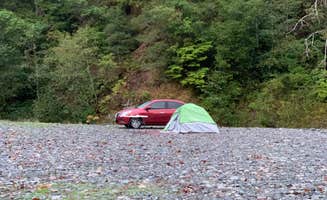
Level camping spots: Finding flat terrain for setting up camp remains challenging across the region. At Rocky Riffle, "There are some spots close to the river and others up above it more with nice views as well as shade," according to Laura M., though she notes the road has "some areas of high rocks" requiring careful navigation.
Quick access from highways: Several primitive sites offer relatively easy access without long forest road drives. "Quiet spot not far from I5. No noise at all, just the wind in the trees and bullfrogs," reports Clayton P. about Burma Pond BLM, noting it sits "about 20 minutes off I5" according to another camper.
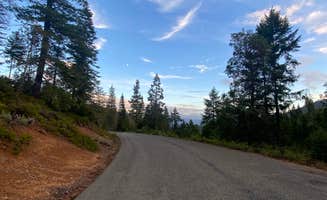
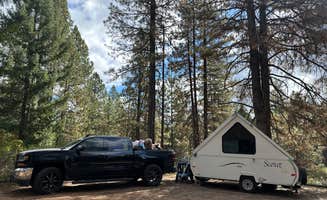
Pullouts with views: Small roadside spots along forest roads provide scenic overnight options. "This spot is a gravel pull off that is about 25ftx15ft. You can fit a small pull behind, truck, and/or van," explains Connor M. about a dispersed view site off Forest Road 25, adding "the 6.5 mile road (FS-25) is paved so the accessibility of the site is a plus."
What you should know
Summer crowds: Many accessible water sites experience heavy weekend traffic beyond what's mentioned in existing descriptions. "It gets very busy on holiday weekends," warns Monica W. about Ennis Riffle, where the $15/night fee includes access to the boat ramp.
Shooting activity: Some areas experience disruptive target practice from nearby users. "I was also woken up in the middle of the night to someone practicing with their shotgun in the distance for a good half hour," reports Shelby S. about Canyon Gulch, highlighting safety concerns in more accessible areas.
Site spacing considerations: Proximity between camping spots varies greatly across locations. At Burma Pond BLM, "The spots are VERY close together, 10 to 20 feet apart. All of the spots are right on the edge of the water," according to Clayton P., making it less ideal for privacy seekers.
GPS confusion: Navigation apps frequently suggest problematic routes. "GPS via Apple and Google wanted me to go on a rarely used and overgrown forest road to get here, I recommend using GPS to get in the general area then look at the map to manually navigate the last half mile or so," advises Clayton P.
Tips for camping with families
Check water levels seasonally: River camping areas can flood completely during rainy seasons. "Beware of camping here during the rainy season. The water covers the entire campground," warns Monica W. about Ennis Riffle, making it unsuitable for family camping during winter and spring months.
Tick prevention: Parasites can be problematic when camping near water or hiking with pets. "We found some ticks on the dogs immediately so we didn't end up exploring it," notes Hannah S. about trails around Argo Bar, suggesting proper tick prevention measures for children and pets.
Bathroom planning: Most dispersed sites lack formal restrooms. "Tent/car campers welcome but must have port-a-potties. You must pack out your waste and trash," explains Laura M. about Rocky Riffle, making portable toilet solutions essential for family camping trips.
Tips from RVers
Road gradient concerns: Access routes to some of the most scenic sites involve steep descents that complicate departures. "The way down I was in 1-2 gear riding the break on some of the hills," reports Laura M. about leaving Burma Pond, adding it would be problematic "if rain was expected."
Small RV advantages: Many forest roads limit the size of suitable camping vehicles. "10 miles up a fire road with some spots along road. All are tiny pullout spots just enough for a van to park, would not recommend for an rv or trailer," explains Kali R. about dispersed spots on Forest Road 25, though she appreciates that it has a "paved road the whole way!"
Parking strategies: Finding level spots requires advance planning. At Skull Creek Campground, "Easily accessed by 2 x 4 SUV, although there were a few large potholes, easy to maneuver around," notes Scot W., but warns there's "very little shade from the sun."







 Legend


