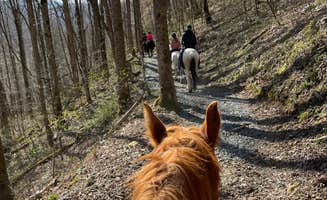
Bristol Fields Horse Camp is situated within Nantahala National Forest's extensive trail system at approximately 3,500 feet elevation. The campground provides direct access to multiple equestrian trails with varying terrain difficulty levels. Seasonal changes affect the forest ecosystem, with vibrant foliage in autumn and rhododendron blooms in June and July making it a popular period for riders.
What to do
Explore Tsali Recreation Area trails: Mountain bikers and equestrians share this trail system on alternating days. "I've been going here for the last 25 years and enjoying the intermediate Mountain trails. As a flatlander I love to come to tsali to get my legs into shape for the mountains," notes a visitor to Tsali Campground.
Fish in nearby streams: Trout fishing opportunities abound in the cold mountain waters. "Branch of Nantahala river offers trout fishing with NC fishing license," explains a camper at Standing Indian Campground.
Hike to waterfalls: Several waterfalls require minimal hiking distance from campgrounds. "If you visit make sure to drive a little further down the road and take some of the many hikes along the river. I suggest the Laurel Falls trail to a gorgeous secluded waterfall where you can take a dip on a hot summer day."
Visit historic sites: Explore preserved mountain cabins and structures throughout the forest. "Go on the car tour loop and make sure to stop and look at the cabins and church. History at its finest," recommends a camper at Cades Cove Campground.
What campers like
Natural water features: The forest's streams and small waterfalls provide cooling relief. "We could hear the stream from our site at night. Exactly what we were looking for..." shares a visitor at Standing Indian Campground.
Mountain views: Elevated campgrounds offer panoramic perspectives. "One of my all-time favorite campsites. Great for accessing the mountain bike trails at Tsali. Ride right out of your campsite and hit the trails, or easy access to Lake Fontana," notes a Tsali visitor.
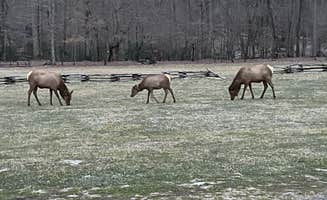
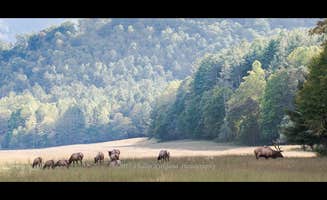
Wildlife viewing opportunities: The forest hosts diverse native animals. "We have never seen more black bear. It was a very safe distance we watched them about a football field away across a field pretty amazing experience," explains a visitor at Cades Cove.
Trail connectivity: Many equestrian campgrounds link directly to trail networks. "What a nice little river that runs near by the camp that you can wash dishes and bathe in with the perfect noise not to loud not to silent to hear the highway near this camp," mentions a camper at Hurricane Creek Camp.
What you should know
High-clearance vehicles required: Some horse campgrounds near Nantahala National Forest have challenging access roads. "Definitely high clearance 4x4 or bikes. Sketchy but that's our style," warns a Hurricane Creek visitor.
Seasonal considerations: Weather variations affect water sources and trail conditions. "November is when the leaves are changing. Temps cool at night, moderately nice during the day...got snow at Clingman's Dome however during the day!" shares a Cades Cove camper.
Limited amenities: Most equestrian campgrounds offer basic facilities only. "You can put in your tube at one side of campground and float to end of tent sites to get out (15-20 minutes total float) or drive up the road a bit to Smoky Mountain Deep Creek entrance for a longer run of about 2-3 hours and end up back in camp," explains a visitor at Deep Creek Tube Center & Campground.
Campsite availability: Many sites operate on first-come basis. "The campground is first come, first served, which is a bit of a challenge when you show up as a group. Plan accordingly," cautions a Tsali visitor.
Tips for camping with families
Choose campsites near water features: Children enjoy playing in shallow streams. "The headwaters of the Nantaha River flow through the campground providing a gathering place for families to enjoy playing in a cold mountain stream," notes a Standing Indian visitor.
Pack appropriate clothing: Mountain temperature fluctuations require layering. "Cades Cove has a long paved road where you can see everything from deer, Bear, turkeys, and more. The campground has everything you need. You're off the beaten path, nearest 'town' is Townsend, TN, with limited resources."
Consider day trips: Plan excursions to nearby recreational areas. "We spent a weekend here with a group of friend for a rafting trip," mentions a Deep Creek visitor.
Seek established campgrounds for convenience: Family-friendly facilities provide essential services. "This is a great family friendly campground. Plenty for the kids to do, including gem mining, feeding goats and several playgrounds. Plus you can rent tubes and drive a short distance into the national park for some fun tubing," recommends a Deep Creek camper.
Tips from RVers
Scout sites in advance: Equestrian campgrounds often have limited space for large vehicles. "Unless there is another way into this lovely park that I am unaware of, I would not attempt to tow a 5th wheel or other large trailer to this location. Place is beautiful though. Tow your pop-up or pitch a tent. You'll be glad you came," advises a visitor at Oconee State Park Campground.
Prepare for uneven terrain: Many forest horse campgrounds lack level parking. "Campsites are often uneven with a lot of tree roots running throughout. It does require consideration before parking your trailer or RV," notes an Oconee camper.
Check road conditions: Forest service roads may deteriorate seasonally. "I'm glad I arrived in daylight because my first drive in on the approximately 4 mile stretch of dirt and gravel road was a little nerve racking. Mostly because I wasn't 100% sure I was going the correct way and second because there are some nice drop offs from the road."
Bring leveling equipment: Many equestrian sites require stabilization. "We got lucky with site #78 and hope to return," shares a Standing Indian visitor regarding their site selection.



 Scout
Scout


