Dispersed camping near Franklin, North Carolina offers numerous free and primitive camping options beyond the well-known Appalachian Trail sites. The elevation of camping areas ranges from 2,500 feet in the valleys to over 5,000 feet at mountain peaks like Albert Mountain and Wesser Bald. Seasonal considerations are important, with summer temperatures typically 10-15 degrees cooler than surrounding lowlands and winter bringing possible road closures at higher elevations.
What to do
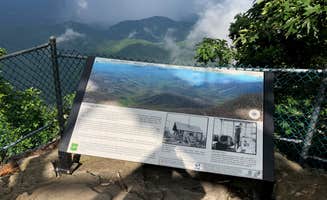
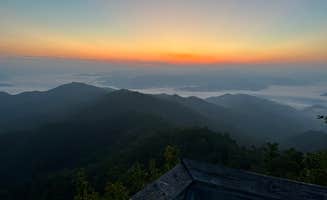
Hike to fire towers for sunrise views: At Albert Mountain Firetower Dispersed Campsite, campers can experience exceptional panoramic views. "Once you make it to the Fire Tower, however, all is forgiven. The site from the bottom is breathtaking, and you can see, well, forever," notes William S. The tower itself provides nearly 360-degree views of surrounding valleys.
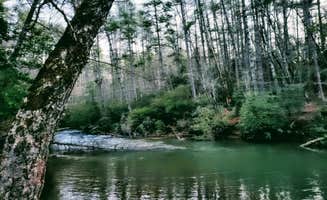
Access primitive waterfall swimming spots: Many dispersed camping areas feature seasonal creeks with small waterfalls that provide natural swimming holes. "You can also hike up or down the stream to get to other beautiful small falls that are perfect for swimming in during the hot summers," reports Asher K. about Soggy Boot Campground just across the Georgia border.
Follow the Bartram Trail: This historic trail offers multiple camping options with varying difficulty levels. "This section of trail is part of the Bartram trail which is a wonderful through hike starting at the border with Georgia and traveling all the way up through Franklin and ending at Cheoah Bald and Stecoah Gap," explains a camper about the Whiterock Gap Backcountry Campsite.
What campers like
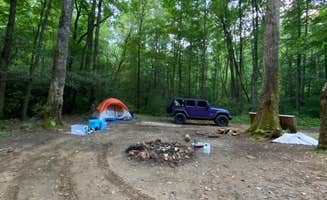
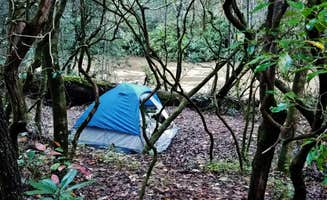
Privacy between sites: At Blue Valley Dispersed Camping, campers appreciate the seclusion. "Beautiful, large, private sites. You couldn't see our site from the road, huge site, lots of woods surrounding for kids to play and explore, right beside a gorgeous large creek," describes Kristin S.
Group-friendly clearings: Several sites accommodate larger groups with ample space. "8 very well kept campsites. Almost all near a creek of some sort. Hiking trails near by. No facilities. Room for larger groups ~40 people max for the biggest site ~6 for the smallest," reports Alex T. about Blue Valley Dispersed Camping.
Weather variations by season: The mountain climate offers respite from summer heat. "I went in July and it was cool in day and cold at night nice, secluded," says Linda F. about her Blue Valley experience, highlighting how temperatures can drop significantly after sunset even in summer months.
What you should know
Navigation challenges: Finding these remote sites can be difficult, especially after dark. "Never found this place but it's definitely not where the map brings you. Beware," warns Clay B. about Blue Valley. Another camper suggests: "From Highlands, follow NC 28 south about 5.5 miles and turn right onto Blue Valley Rd. (S.R. 1618) at the sign."
Road conditions vary significantly: Many access roads become primitive quickly. "The pavement will end in a half mile. Just stay on the main path for just little over 3 or so miles," notes Garnet B. about reaching Blue Valley. Some roads require high-clearance vehicles during wet weather.
Water planning is essential: Mooney Gap Backcountry Group Campsite requires water preparation. "The only major downside to this site is it doesn't have super easy water access but since it is so close to the parking area this is something that can be prepared for," advises Asher K. Most sites require filtering water from nearby creeks.
Tips for camping with families
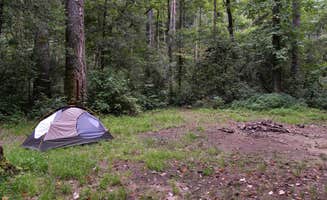
Choose sites with exploration room: Look for campsites that offer natural play areas. "The sites are level and have multiple areas for tents along with large fire pits surrounded by logs for sitting," according to feedback about Blue Valley sites, making them suitable for families with children.
Consider hiking distances for children: Some sites require significant hiking that may challenge younger kids. "You can access this campsite by various means, but do your research and save yourself as many steps, because make no mistake, this is a serious hiking trail (a mile to a mile and a half, depending on route) up to the Fire Tower," cautions William S.
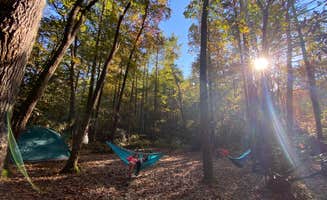
Pack for temperature swings: Mountain elevations mean dramatic temperature changes. At Wesser Bald Fire Tower, campers note: "Started out after dark and set up hammocks under the fire tower. Nice hike and good view in the morning," showing how overnight camping requires proper gear for temperature variations that can drop below 50°F even in summer.
Tips from RVers
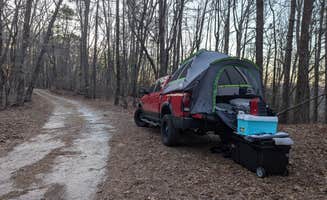
Length limits on forest roads: Many dispersed sites are unsuitable for larger RVs. "Very much so a dispersed site, I would be a bit concerned with larger rigs on the small road but small RVs or tents are great," notes a camper about Blue Valley's access road, which becomes increasingly narrow and primitive.
Avoid meeting oncoming traffic: Forest roads are often single-lane. "Pretty rough in some places and very narrow, let's just say I wouldn't want to end up encountering another car," warns Crystal C. about navigating to Blue Valley with even small campers.
Spot clearings before committing: Finding level spots for small RVs requires advance planning. "The sites are tree-filled and nice. Picnic tables and fire rings were at each site and sites were pretty well spread out," according to feedback, though getting to these spots may require careful maneuvering on unpaved roads.










 Legend


