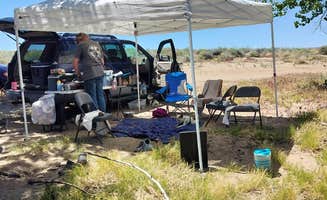
Dispersed camping sites near Fallon, Nevada offer varying levels of solitude with temperatures that can fluctuate dramatically between day and night. Winter lows often drop below freezing while summer temperatures frequently exceed 100°F, making spring and fall the optimal seasons for tent camping. The high desert landscape provides minimal natural shade at most campsites, requiring campers to bring their own shade structures during warmer months.
What to do
Wildlife photography opportunities: At Stillwater National Wildlife Refuge Dispersed Camping, visitors can capture images of diverse wetland species. "Tons of birds, waterfowl, deer, coyotes, beavers. Amazing sky with mountains in the background," notes one visitor who appreciated the natural setting.
Paddling seasonal waterways: Water levels vary throughout the year, affecting paddling options. According to a camper at Stillwater NWR, "Some of the lakes are paddleable depending on season and there are lots of hiking trails and interpretive trails."
Historical site exploration: Fort Churchill State Historic Park offers educational opportunities combined with camping. "We watched the sunrise over the ruins then toured the visitors center," reported one camper who stayed at Samuel Buckland Campground.
What campers like
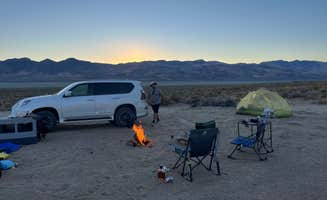
Privacy and solitude: Remote camping areas provide quiet experiences away from crowds. A camper at Stillwater NWR said, "When we were there in April/May 2020, we were the only ones camping in the Refuge. Camped on Division Rd. All sites were clean and quiet."
Dark skies for stargazing: The minimal light pollution creates excellent night sky viewing conditions. At Lahontan State Recreation Area, visitors appreciate the open views. "Midweek and mid September- plenty of sites even in the non primitive campsites. Beautiful view- very quiet; clean bathrooms," wrote one camper.
Level parking areas: Several dispersed sites offer flat surfaces for vehicle camping. "The coordinates lead to an info sign. Past that sign is another that clearly says how far the 2 sites are. It's a long gravel road, but if you're lucky enough to be the only campers, as we were, is beautifully serene," noted a visitor to Stillwater NWR.
What you should know
Road conditions vary significantly: Many camping areas require travel on unpaved routes of varying quality. "Great place to visit and take pictures but not a great overnight destination," said one camper about Stillwater NWR, mentioning well-maintained roads that any vehicle should handle.
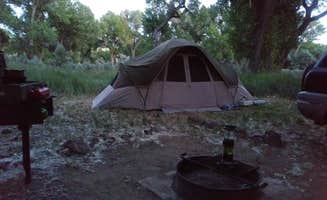
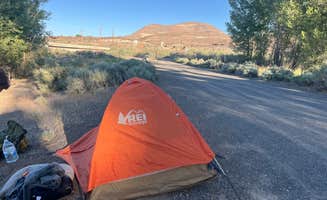
Tent camping limitations: Some sites better accommodate vehicle camping than tent setups. A reviewer explained, "You could park an RV or a van here and be fine. But the only place to pitch a tent that's not next to a main road is super loose sand."
Seasonal temperatures fluctuate drastically: Prepare for temperature swings between day and night. A visitor to Churchill County Regional Park noted, "The campground is closed for special events at the fairgrounds, and you are right next to the Rodeo Arena. The flip side is that you ARE on the Lonliest Highway in America."
Tips for camping with families
Bring multiple shade options: Limited natural shade makes portable shade structures essential. At Lahontan State Recreation Area, a visitor shared, "Not a bad place, but probably not worth paying for if you are just looking for a quick overnight camp. As mentioned, some of the roads can be aware bit rough and pitted, with random sand washes throughout."
Consider campgrounds with basic facilities: For family comfort, choose sites with toilets. At Desert Rose RV Park, "Nice staff, and the Wi-Fi worked. My last four campgrounds advertised Wi-Fi, and it worked at the office, but not at my campsite. Close to town, with town having many multiples of options for food, groceries, etc."
Plan for wind protection: Open desert areas experience frequent strong winds. A camper at Lahontan State Recreation Area noted, "Had a hard time leaving the trailer due to sand in the wind flying at high rates of speed. No hook ups, they do have a dump station and community water faucets."
Tips from RVers
Check road access beforehand: RV accessibility varies widely between sites. A visitor to Fallon RV Park shared, "The RV spots are paved and level, the hookups worked well. Most RVs seemed to be people living there."
Generator regulations vary by location: Not all campgrounds permit generator use. "Several people used construction generators to power their rigs," explained one camper at Lahontan State Recreation Area, indicating informal enforcement.
Trailer size limitations: Some campgrounds have tight turns or narrow roads. "We pulled a 36' toy hauler, and we were able to find a pull through spot. However, it was pretty tight, and I wouldn't recommend that large of a trailer if you don't want a few scratches from bushes," warned a visitor to Samuel Buckland Campground.







 Scout
Scout


