Summit Trailhead Horse Camp sits in the Lewis and Clark National Forest at an elevation of approximately 5,500 feet. The area experiences cool nights even in summer, with temperatures often dropping below 45°F after sunset. Trail access varies seasonally with snowmelt typically occurring by late June, allowing riders full access to the extensive trail network that connects to multiple wilderness areas.
What to do
Trail riding from camp: Connect directly to backcountry trails from Bowman Lake Campground for rides ranging from 2-26 miles roundtrip. "The lake is simply stunning, especially in the early morning, when the sun comes up over the mountains. There are trailheads right next to the lake shore, with varying distances and difficulties to choose from," notes Lora C.
Wildlife viewing: Observe native wildlife from your campsite at Red Eagle Campground where bears and other animals frequent the area. "It is bear country, after all, so make sure to keep your food in your car and only burn wood in the firepits. While we didn't see any wildlife while we were there, (old) bear scat was near our site," shares Anthony D.
Water access: Find suitable water crossing points at river access sites for horses. "Great spot for launching rafts. Also very good choice for relaxing and getting away for a few hours to a day," says Cody L. about Bear Creek River Access, which provides good water access points for both people and horses.
What campers like
Privacy between sites: Many equestrian campers appreciate larger, more isolated sites. At Johnson's Campground, "We stayed in the tent camping area and felt like it gave great privacy vs. the typical rows of RVs," according to UnnamedAdventures.
Natural surroundings: Tree cover provides shade for horses during hot days. "The sites are not on the same level as your neighbors, but are close. There is some shade," notes Nancy C. about Timber Wolf Resort, providing information about the terrain variations that can affect where to set up horse containment.
Proximity to trails: Quick access to riding routes without trailering. "Located very close to the park, adequate WiFi, no cable and trees blocked satellites," explains Ann F. about Glacier Campground, which is positioned well for accessing nearby trail systems.
What you should know
Road conditions: Access roads vary in quality and can be challenging with horse trailers. "Be prepared for a dusty, bumpy, narrow, pot-holed drive in on the road. If the road is wet, it is treacherous!" warns Scott-Christy B. about Johnson's Campground, highlighting access concerns for large rigs.
Seasonal considerations: Spring conditions often include mud and mosquitoes. "When I say off the beaten path I should really be saying unpaved path. Make sure you have good shock absorbers on your vehicle, as it is miles and miles of dirt roads to get here," advises Stephanie T. of Bowman Lake Campground.
Water availability: Not all sites provide horse water. "No services, but plenty of spaces... There was a sign posted saying there were no services," explains Nancy C. about Red Eagle Campground, indicating the need to bring your own water supply.
Tips for camping with families
Kid-friendly riding options: Look for shorter, gentler trails suitable for younger riders. "This campground is right outside the Two Medicine entrance to Glacier National Park... We found ourselves a lovely site next to a creek that flows into the Two Medicine Reservoir," shares Anthony D. about Red Eagle Campground.
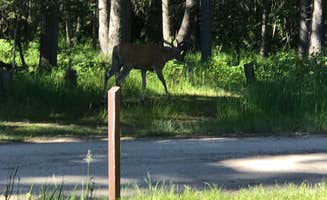
Wildlife education: Teach proper food storage and bear awareness. "We didn't see any bears, but deer frequent the campsites, sniffing around the fire pits, searching for food, and they're not scared of people. They'll come right up to your tent. It's crazy," reports Lora C. about Bowman Lake Campground.
Evening activities: Plan non-riding activities for downtime at camp. "There is a pavilion with gas grills and playground. They do rent Jeeps," mentions Nancy C. about Timber Wolf Resort, providing options for family members who might not ride.
Tips from RVers
Leveling challenges: Bring adequate blocking materials for uneven sites. "The site was also partially on an incline, so care had to be used," advises Tamara B. about Timber Wolf Resort, which applies to both RVs and horse trailers with living quarters.
Hookup limitations: Plan for self-contained camping at most horse camps. "All the camp sites have Electric, and water hookups. Some have sewage as well. There is a dump station, and propane fill up on site. It's $25 to dump," notes Marcus K. about Glacier Campground.
Size restrictions: Measure your rig carefully before booking. "Very close to glacier as you can get without being in it... Rv spots are really tight together," explains david C., providing important context for those bringing larger horse trailers with living quarters.








 Legend


