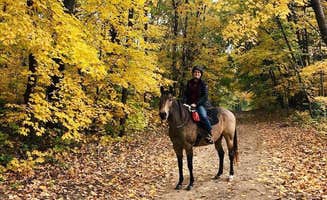
Equestrian camping near Long Lake, Minnesota offers riders direct access to extensive trail systems through diverse Minnesota landscapes. The area sits in the gently rolling terrain of Hennepin County at approximately 950 feet elevation, with mixed hardwood forests interspersed with prairie restoration areas. Summer temperatures average 71-85°F with moderate humidity, while spring and fall provide cooler conditions for trail riding with average temperatures between 45-65°F.
What to do
Trail exploration: Dawn to dusk rides connect through neighboring park properties. "I grew up going to baker park! Tons of trails and camping," notes a visitor to Three Rivers Park District Baker Campground. The interconnected trail system allows for rides ranging from quick 3-mile loops to all-day excursions.
Swimming with horses: Designated water access points allow cooling off during summer rides. "There are two swimming beaches: 1 for the campground and one for all of the day visitors," explains a camper at Baker Campground - Baker Park Reserve. Water access locations are clearly marked on trail maps available at ranger stations.
Guided trail experiences: Professional rides available seasonally. "There is a stable with horses/ponies that you can take guided trail rides on," mentions a visitor at Bunker Hills Regional Park. These guided experiences cost $45-$85 depending on duration and typically require reservations 48 hours in advance.
What campers like
Spacious corral layouts: Each site provides ample room for trailers and equipment. "The sites are decently private and there is nice bathrooms/showers," reports a camper at Bunker Hills Regional Park. Most equestrian sites accommodate trailers up to 45 feet, with level parking areas.
Trail accessibility: Direct connections from campsites to main trail systems. "The park maintains a nice 6+mile biking trail that connects to others," shares a visitor to Baker Campground. Equestrian-specific routes typically open by 8:00 AM year-round, weather permitting.
Group camping options: Affordable shared facilities for multiple horse trailers. "You can fit quite a bit of horse trailers on here. The barn stalls are available for use, otherwise there are overhead horse hitch lines," explains a visitor to Crow Hassan Park Reserve. Group sites range from $70-$80 per night and can accommodate 8-12 horse trailers.
What you should know
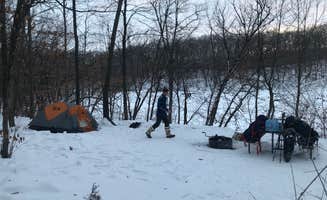
Seasonal conditions affect trails: Wet periods create challenging riding conditions. "After months of winter the first trip of the season is something we look forward to," notes a camper at Baker Campground, highlighting the importance of seasonal timing for equestrian camping trips.
Limited electrical access: Most equestrian sites lack hookups. "This is a rustic with no hookups except very clean portapotty and hand lever water jack," reports a camper at High Island Creek Park. Bring sufficient battery power for camping needs.
Reservation requirements: Weekends fill quickly during peak season (May-September). "You'll need to book for at least two nights and book as soon as you can," advises a visitor to Baker Campground. Reservations typically open 120 days in advance for equestrian sites.
Tips for camping with families
Multiple activity options: Non-riders have plenty to do. "With great fishing, playground, swimming, and biking trails very nearby, the kids were kept as busy as they wanted to be," explains a visitor to Baker Campground. Most parks offer fishing piers within walking distance of equestrian campsites.
Playground access: Recreation areas for younger children. "They have a water park with a wave pool, a disc golf course, a golf course, several pavilions with grills, a few playgrounds and plenty of trails both paved and unpaved," shares a visitor to Bunker Hills Regional Park.
Consider camper cabins: Alternative to tent camping with horses. "They also have little cabins to stay in that I'd like to try out," mentions a visitor to Lake Maria State Park Campground. Cabins typically cost $65-$85 per night and require separate reservations from horse corrals.
Tips from RVers
Limited hookup availability: Plan for self-sufficient camping. "You'll find some sites with nice long driveways that can accommodate multiple cars, or even a truck with a boat/trailer," notes a visitor to Ann Lake, but electrical and water connections remain limited at most equestrian sites.
Access road considerations: Some entrance roads present challenges. "Some overhanging branches on the road in scrape the top and sides," warns an RV camper at Ann Lake. Most equestrian campsites can accommodate RVs up to 30 feet, with some sites suitable for larger units.
Fresh water supply planning: Limited on-site water access. "There isn't any potable water on site," cautions a camper at High Island Creek Park. Bring sufficient water for both human and equine needs.




 Legend


