Equestrian camping options near Chanhassen, Minnesota provide access to well-maintained trail systems and specially designed facilities for riders. Located in the rolling terrain of the Minnesota River Valley, these horse-friendly campgrounds typically sit at elevations between 700-950 feet and experience seasonal temperature variations that affect trail conditions. Most equestrian campsites in the region maintain a 30-50 foot separation between camping areas to accommodate horse trailers.
What to do
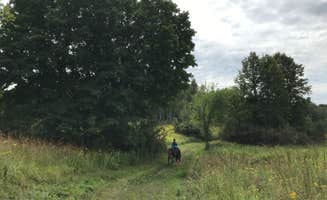
Trail exploration on horseback: At Crow Hassan Park Reserve, riders can access sandy prairie trails that offer relief from woodland insects. "This is my all-time favorite park to bring my horse to, and it's her favorite trail too. Seriously, when we head back to our trailer she will stop and refuse to proceed," notes one regular visitor.
Swimming access: Lake Ann at Sand Dunes State Forest offers a beach area separate from the camping section. "The beach is nice and private, but it's a bit of a hike from the campsites. I'd recommend just hopping in the car and driving over if you've got young kids with you," advises a camper.
Mountain biking: For campers looking to combine horse camping with other activities, nearby trail systems accommodate multiple recreation types. At Baker Park Reserve, visitors find "nice paved trails around a couple of lakes/ponds for biking, and easy access to the shower and bathroom facilities."
What campers like
Privacy between sites: Lake Elmo Park Reserve receives praise for its site layout. "Sites are spacious and spread out, electric hookups at all sites, swim pond is great for kids, and other amenities like an archery range and hiking trails are fantastic for kids," writes one reviewer.
Group camping options: Equestrian group sites often provide better value than individual sites. At Riverbend group equestrian campground, "you can rent this group campsite for $70-$80 a night, which is ridiculously cheap considering that you can fit quite a bit of horse trailers on here."
Wildlife viewing: The natural setting offers opportunities to observe local fauna. At Lake Maria State Park, one camper reports, "We saw pileated woodpeckers, red squirrels, and a chorus of chorus frogs. Nature feels close here — in the best way."
What you should know
Weather considerations: Spring can bring muddy conditions on many horse trails in the region, while summer increases insect activity. "The best place to be bug-free happens to be the sandy prairie trails, the wooded areas are nice but you may want to hustle out of there if you don't have enough bug protection," notes one visitor.
Site reservation systems: Many horse campgrounds in the area operate on different reservation models. High Island Creek Park uses a different approach: "Call ahead to stay overnight so sheriff is aware. Not a lot of people know about it and is at end of long gravel road for peace and quiet."
Poison ivy awareness: Several campgrounds in the region have significant poison ivy growth. At Sand Dunes State Forest, "Sites are large with varying degrees of privacy. Well spaced out, just some have less undergrowth. Be aware that the undergrowth is at least 25% poison ivy."
Tips for camping with families
Water recreation options: Baker Campground offers diverse water activities: "The lake is nice.




 Legend


