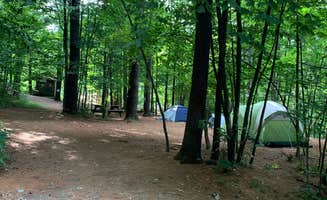
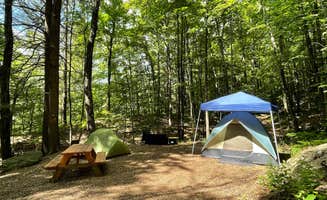
Tent campsites near Barre, Massachusetts offer primitive to moderately developed camping facilities in wooded settings. Many campgrounds in central Massachusetts focus on tent-only accommodations, limiting RV access and providing a more natural camping atmosphere at elevations ranging from 500-1,100 feet above sea level. Winter temperatures can drop well below freezing, with camping seasons typically running May through October.
What to do
Waterfall exploration: At Doane's Falls near Tully Lake Recreation Area, hikers can access a series of cascades within a 0.5-mile walk from the campground. "The highlight was Doane's falls, a very quick walk from the campground area," notes reviewer Jean C., who hiked the complete 4-mile loop around Tully Lake.
Paddling and island hopping: Campers can navigate Tully Lake's numerous islands and shoreline coves during day trips. Reviewer Ben P. explains, "We take our canoe and spend the whole day at the lake. You can find lots of private areas to swim, pick blueberries and relax."
Off-grid hiking: Federated Womens Club State Forest offers access to historic Quabbin Reservoir trails with limited cell coverage. "If you continue past site 15, you'll head through Gate 36 out toward Soapstone Hill which offers a great view of Quabbin Reservoir and sunsets," reports Jean C., who advises downloading offline maps beforehand.
Winter camping: While most tent sites near Barre close for winter, some state forests permit off-season primitive camping for experienced winter campers. These options require proper cold-weather gear and parking at designated access points, as interior roads remain unplowed.
What campers like
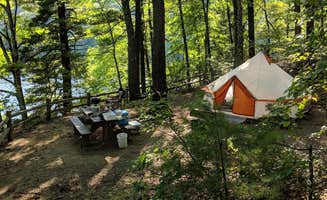
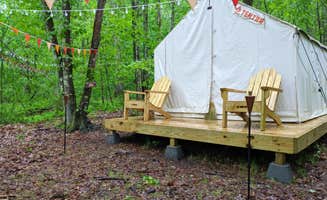
Cart-in tent sites: Barton Cove Campground provides tent platforms with dedicated carts for gear transport. "The office was super helpful when I called to make reservations, making sure to ask questions about how big my tent was, what kind of view/privacy we wanted etc so they could help me find the perfect campsite," writes Brie B.
Blueberry picking: Seasonal wild berry harvesting attracts campers to lakeside areas around Tully Lake in late summer. Ben P. mentions this as part of the lake experience: "You can find lots of private areas to swim, pick blueberries and relax."
Paddle rentals: On-site equipment rentals eliminate the need to transport personal watercraft. "Canoe, kayak & padddleboard rental available," notes Sa R. at Tully Lake, while another camper appreciates that "You can paddle on it and explore its shoreline."
Proximity to historic sites: The area surrounding many campgrounds contains cellar holes and remnants of towns that were flooded during reservoir creation in the 1930s. Jean C. notes at Federated Womens Club State Forest: "You'll find cellar holes throughout, remnants of the towns lost in the 30s to create the reservoir."
What you should know
Site accessibility varies: Many tent sites require significant walking from parking areas. Kris M. from Tully Lake advises, "The sites here are great, if you aren't bringing too much with you (or are staying long enough you don't mind the multiple treks to and from the car for various stretches)."
Limited facilities: Most primitive campgrounds have minimal amenities. At Zoar Outdoor in Charlemont, Seth K. notes: "They don't allow fires at the campsites though which is annoying and their quiet hours are quite oppressive."
Advance reservations essential: Popular sites book up rapidly during peak season. "The sites fill up weeks out (and can completely fill the day registration opens, which is date-dependent each year...Booking for Memorial Day meant I booked in April), so you have to be on your game," warns Kris M.
Cell service gaps: Connectivity is limited throughout the region. Jean C. advises: "Cell phone coverage is faint to nonexistent on Verizon. You may want to download offline maps before you head out here."
Tips for camping with families
Site selection for bathroom access: When camping with children, consider proximity to facilities. Lauren A. from Tully Lake Recreation Area shares, "Our site was fairly far from services, long run with small kids in the middle of the night."
Car-free camping benefits: Vehicle-free campgrounds create safer environments for young children. Megan G. notes, "No cars at all at the campsites, which was great for peace of mind as our toddler roamed around. It also made for a super quiet stay."
Pack minimal gear: When sites require hiking from parking areas, streamline equipment. Miguel B. advises, "Keeping gear to a minimum is a good idea," noting that "though they provide carts the trails can make hauling them tough."
Check site privacy: Some waterfront sites offer less screening between neighbors. Megan G. observed, "Sites closer to the water that we saw were less private, but still very peaceful and spread out."
Tips from RVers
Limited RV options: Most camping near Barre is tent-focused with few RV accommodations. Small trailers under 20 feet may access Maple Ridge Farm with advance permission. "The owners were so friendly and excited to welcome campers," notes Les R., mentioning their ATV transport service for distant sites.
Dispersed camping alternatives: RVers seeking boondocking options near Barre must typically travel 30+ miles to designated areas. National Forest land further north provides more suitable dispersed camping for self-contained vehicles.
Parking logistics: RV owners visiting tent-only areas should confirm parking arrangements beforehand. At Barton Cove, Brie B. details the complex procedure: "You check in at the office, grab a key to unlock the gate, drive to the campground, unlock gate, drive through gate, lock gate, unload your stuff, drive to gate, unlock gate, drive through gate, lock gate, return key."




 Scout
Scout


