Equestrian camping near Girdletree, Maryland offers access to a unique coastal environment where the mainland meets barrier islands. Girdletree sits in Worcester County with elevations under 50 feet above sea level, providing a flat terrain ideal for beginning riders. The region experiences distinct seasonal shifts with summer high temperatures averaging 85°F, while spring and fall maintain moderate temperatures that attract horse owners seeking comfortable riding conditions.
What to Do
Beach riding at sunrise: Access the ocean shorelines at Assateague Island National Seashore Oceanside Campground where riders can experience early morning solitude. "Amazing stars, beach and bay. We will be back!" according to Danielle, who enjoyed the quieter morning hours before day visitors arrive.
Pond trail riding: The trails at Trap Pond State Park Campground offer wooded paths suitable for novice horses. "Nice quiet, everything you need, kayaking, fishing," notes Coleen H., mentioning the calmer environment that nervous horses might prefer compared to ocean beaches.
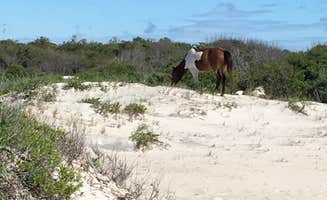
Wildlife photography on horseback: Riders frequently encounter native wildlife while traversing the natural areas. "The wild ponies are visible throughout the island," creating opportunities for unique photographs from horseback as riders maintain proper distance from the feral herds.
What Campers Like
Varied terrain for different skill levels: The region offers both open beach stretches and wooded trails. "There are a short to moderate hiking trails and the pond is popular for kayaks," says Jim G. at Trap Pond, highlighting terrain that's gentle enough for green horses.
Multiple water features: Bayside Assateague Campground provides both ocean and bay access points. "The beach was beautiful, and you can camp roughly 100 yards from it," describes Daniel P., noting the proximity to water that allows horses cooling options after rides.
Designated horse camping areas: Specialized facilities make equestrian camping more convenient. "We were able to set up both of our tents, including the 17 foot long one," explains Rita M., who appreciated the spacious sites that accommodate horse trailers and camping gear at Tom's Cove Park.
What You Should Know
Weather challenges: Wind conditions can affect camping comfort for both horses and humans. "Prepare for wind," warns Tori V., explaining that "the storms roll in quickly" at Oceanside Assateague, making proper shelter and secure containment for horses essential.
Insect preparation: Biting insects present challenges during warmer months. "Love this place but be prepared for the bugs. Even enjoyed this in the winter," says Michael W., suggesting off-season visits for more comfortable equestrian camping experiences.
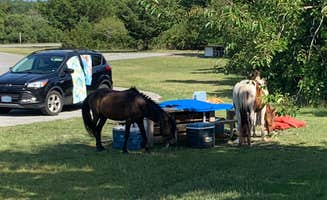
Horse behavior management: The wild horses require special precautions. "The horses will roam right into campsite," cautions Karen W., emphasizing the importance of securing feed and keeping domestic horses separate from the wild herds.
Water access considerations: Delaware Seashore State Park Campground offers multiple water crossing options. "It's right next to a bridge - which is beautiful at night," notes Gayle B., mentioning how riders must plan routes around water features and bridges.
Tips for Camping with Families
Junior ranger programs: Educational activities keep children engaged between rides. "Check out the awesome views on the bayside trails. There is an app you can use to identify the ponies," suggests Tony P., referring to educational resources that enhance children's experience.
Scheduling around crowds: Sun Outdoors Frontier Town offers alternative activities when beaches become crowded. "Located about 15 min from ocean city and assateague with a shuttle to take you when you don't want to drive," explains Liz Y., highlighting transportation options that help families manage logistics.
Safety education: Teaching children proper behavior around horses is essential. "The Ponies are giant trash pandas. They're smart and can open latches," warns Tony P., emphasizing the importance of teaching children not to approach or feed the wild horses.
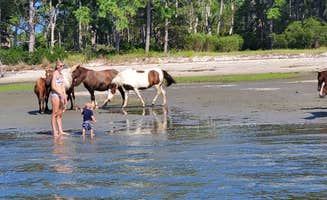
Supervised wading areas: Select locations with calmer waters for younger family members. "We like the bay side for the kids no waves," reports Rich E., pointing out gentler water areas appropriate for families with small children and horses new to water exposure.
Tips from RVers
Trailer parking requirements: Plan for adequate space when bringing horse trailers. "Sites are fairly spacious and have an interesting semi-circle pull through layout so backing in not required," notes Jim G. about Trap Pond, which offers easier access for larger rigs.
Power availability: Tall Pines / Chesapeake Bay KOA Holiday provides needed utilities for extended stays. "We had requested site 50, back-in with FHUs but were told since the park was fairly empty, we could take a golf cart and go choose a site," explains MickandKarla W., describing the flexibility larger parks offer for rig placement.
Surface conditions: Be prepared for varying ground conditions that affect both vehicles and horses. "Their pull-through sites are long and nicely spaced," states Greg S., noting that proper site selection helps prevent horses from standing in wet areas during rainy conditions.






 Guide
Guide


