


 Guide
GuideElm Grove — Historic Lake Scott State Park
Kansas Oasis
There is not a lot to see on the flat western plains of Kansas and you would not see this state park either if you didn’t know it was there. This lake is like a sunken oasis of trees and water. The area itself was great! There’s even a few histoical sites to visit and it is close to Monument Rocks, which is what bought us to Kansas.
The campground, however, is just ok. Perhaps it would’ve been better if they had rain to green up the grass, but it was mostly brown in June when we camped there. They have a large selection of sites and on a Monday night in June, we had many choices available for tent camping. It appeared that most who camp here have an rv and those spaces looked about full. Thankfully, those are two different areas of the campground because they were packed into a parking lot style campground. The tent area probably would’ve looked packed in too since the sites are small, but with only a handful of tents, we had some space.
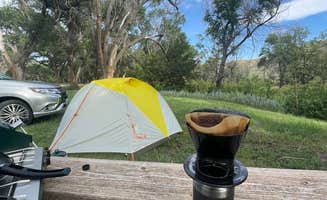
One thing that did limit our choice of sites was a LARGE herd of geese that covered all of the lakeside sites as well as the next row in. I didn’t want to set up in bird poop in the dry grass so the sites with a decent view were out. We did luck out and find site 2 of the Flatland area which was up above the water line so the geese couldn’t swim up and walk in. Site 2 had a great view of the lake and was set apart from the other sites along with site 1. Site 1 would’ve been the better site but it was occupied by a tent that appeared to have been abandoned. Site 2 was not level by any means, in fact it sloped quite a bit compared to the rest of the sites. There was no tent pads, which would’ve helped a lot for this site. We just set up so our heads would be at the high end and it worked. It was too nice of a view to let a bumpy sloping site stop us!
The campground has a host and everyone was quiet for the night. We slept pretty well, other than the high humidity of Kansas.
The bathhouse left a lot to be desired. A good cleaning to remove dead bugs would’ve went a long way. A fresh coat of paint would make it inviting. It looked like nobody had checked on its’ condition for many years. We were hoping to use the showers, but they were no cleaner and had an odd design with no doors or shower curtains. The lighting was very dim as well, making it all look a little too creepy for a shower there. A fresh coat of paint, brighter lighting, some shower curtains, and a good scrub down would make this facility SO much better! We also checked the other batthouse on the opposite side of the lake and it was the same way...only creepier because there was one lone rv camped near it.
Overall, I would not camp here again unless I read some reviews indicating the the bathhouse has been improved. It’s not a dealbreaker to not have a shower, but if this campground had been fuller, the geese all over the sites may have been. If you have an rv and pay for full hookups, you might like this campground. If you are tent camping, keep looking.


