Free camping near Orlando, Florida typically requires driving 45-90 minutes from the city center. The subtropical climate makes year-round camping possible, though summer months bring high humidity, frequent afternoon thunderstorms, and temperatures often exceeding 90°F. Many dispersed sites in the region become difficult to access during Florida's rainy season from June through September, when unpaved roads may flood or develop deep ruts.
What to do
Kayaking opportunities: Primitive sites near Trout Lake offer direct water access for paddlers. "Very narrow trails but really easy access, you will leave with some new pinstripes," notes Joe P. about Trout Lake Primitive Sites.
Wildlife observation: The Ocala National Forest area hosts diverse wildlife. One camper at Blue Sink reports, "Most beautiful place to stumble upon. You may need ATV or creative backpacking to get there now. The Forestry Service recently chopped down trees and covered the easy access roads."
Off-roading adventures: Many dispersed camping areas double as staging grounds for off-road vehicle enthusiasts. At Freak Creek Dispersed Camping, campers report, "It's super secluded and quiet. Depending when you stay there's at times people who show up to party and then leave."
What campers like
Solitude and seclusion: Many primitive sites provide genuine isolation from crowds. "We were the only ones there for the weekend, probably because of the summer heat. However, it was nice and free," reports a camper at Upper Hillsborough Water Management Area.
Budget-friendly options: No-cost camping appeals to budget-conscious outdoor enthusiasts. "It was an enjoyable and free experience," notes one Upper Hillsborough visitor, though they also mention, "I do wish the fire rings weren't so damaged, and the lack of trash cans was surprising."
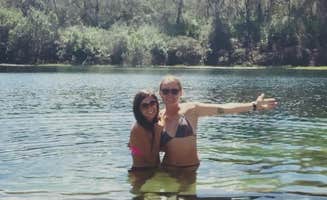
Natural swimming holes: Several sites feature natural water features for cooling off. The creek at Freak Creek Dispersed Camping provides swimming opportunities, with one visitor noting, "There is a nice creek area where you can swim and or fish if you have the right equipment to get back there."
What you should know
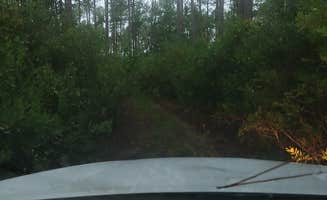
Vehicle requirements: Many free camping areas require specialized vehicles. "The main road in has huge deep ruts, the other road has a water crossing that was over my bumper on my lifted Mojave," warns a Freak Creek visitor. Similarly, for Blue Sink, "You may need ATV or creative backpacking to get there now."
Primitive conditions: Dispersed sites lack basic facilities. At Trout Lake, a visitor describes, "Set of primitive spots near lake. Main road entry is packed dirt; smaller access road to sites is two-track about 1/4 mile through woods — very narrow tree clearance. 4WD recommended."
Navigation challenges: Finding designated camping areas can be difficult. One camper at Upper Hillsborough reports, "Didn't find the Main Camping area. Parked in one of the side roads. Didn't run into anyone eventhough permit page indicated Booked out."
Tips for camping with families
Communication planning: Most free camping sites have limited or no cell service. At Trout Lake Primitive Sites, a camper notes, "Poor cell service even with booster. Plan on returning after antenna upgrade."
Prepare for minimal facilities: No running water or restrooms exist at most sites. Upper Hillsborough offers slightly more amenities, with one visitor noting, "There is a porta-potty, but I didn't check it out, so I'm not sure about the cleanliness. The grounds were nicely maintained, though."
Pack-in/pack-out necessities: All supplies must be brought in and waste taken out. "Just take your trash with you, leave no trace," advises a visitor to St. Johns River Dispersed Spot, which offers "a great view of the stars" according to reviews.
Tips from RVers
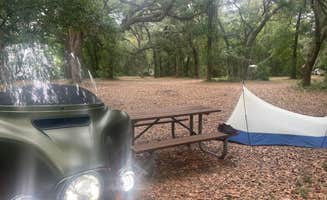
Site accessibility: Many free camping areas have limitations for larger vehicles. An RVer at Upper Hillsborough describes, "Large open area with great shade trees, no water, privy. Easy pull through for RV. Tent spots. Fire rings. Harley-Davidson approved."
Road conditions: Access roads to many primitive sites present challenges for RVs. At Trout Lake, a camper in a van reports, "Just barely scraped a FWD Promaster through the trees, into a pullout just before sand started."
Resource management: No hookups means careful planning for water, power, and waste. "Not the cleanest but passable," notes one Trout Lake visitor, suggesting travelers bring cleaning supplies and prepare for rustic conditions.





 Guide
Guide

