Primitive camping near Lake Mary, Florida offers backcountry experiences in the Ocala National Forest, with seasonal weather considerations affecting site accessibility. Florida's subtropical climate brings high humidity and afternoon thunderstorms during summer months, while winter provides more comfortable camping conditions with temperatures averaging 50-70°F. Dispersed sites vary in accessibility depending on recent rainfall and forest management activities.
What to do
Kayaking and paddling: Several camping areas provide direct water access for paddlers. At Freak Creek Dispersed Camping, campers note it's "a great place to put a kayak in the water." The natural waterways connect to larger systems for day-long paddling adventures.
Swimming in natural springs: The forest contains numerous natural springs and swimming holes. Campers can cool off during hot Florida days. One visitor to Trout Lake Primitive Sites described the setting as "breathtaking" with the lake providing a serene swimming location.
Wildlife observation: The forest ecosystem supports diverse wildlife including black bears, which requires proper food storage. A camper at Trout Lake Primitive Sites reported, "I had a black bear sighting that afternoon and I had no bear spray no cellphone service but all there was was whispering pines!"
What campers like
Stargazing opportunities: The minimal light pollution at many primitive sites creates excellent stargazing conditions. At St. Johns River Dispersed Spot, a camper noted, "Right next to the river and the trees open up so you get a great view of the stars."
Solitude and quiet: Remote locations provide a true wilderness experience away from crowds. At Freak Creek, one camper described the area as "super secluded and quiet," noting that occasional visitors "show up to party and then leave."
Natural features: Unique geological formations attract adventurous campers. A visitor to Blue Sink called it the "most beautiful place to stumble upon," though accessing it requires either "ATV or creative backpacking" due to forest management activities.
What you should know
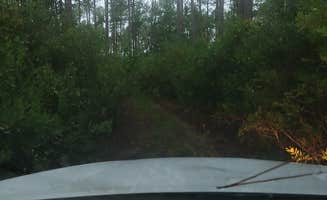
Vehicle requirements: Many primitive sites require specialized vehicles. At Trout Lake Primitive Sites, a camper advised, "Main road entry is packed dirt; smaller access road to sites is two-track about 1/4 mile through woods — very narrow tree clearance. 4WD recommended."
Road conditions: Sandy terrain presents challenges for standard passenger vehicles. A visitor attempting to access a site with an inappropriate vehicle shared, "I started panicking and trying to find a turn around after going through a very soft sandy spot."
Communication limitations: Cell service ranges from limited to non-existent at most sites. A camper at Trout Lake Primitive Sites reported "Poor cell service even with booster," recommending planning for communication alternatives.
Forest accessibility changes: Management activities can alter access without notice. Forest Service operations occasionally impact site accessibility, with fallen trees and intentional road closures affecting established routes.
Tips for camping with families
Safety preparations: Families should prepare for limited emergency access. Pack comprehensive first aid supplies and establish emergency plans before arrival, as most sites require significant travel time to reach medical facilities.
Water activities planning: Lakes and waterways provide natural entertainment for children but require supervision. Many water access points lack designated swimming areas or safety features.
Wildlife awareness education: Use camping as an opportunity to teach children about local ecosystems. Prepare children for potential wildlife encounters with appropriate responses, particularly regarding black bears which inhabit the forest.
Site selection considerations: Choose campsites with natural boundaries for younger children. Lake Dorr and other areas offer varied terrain, but families should research site-specific safety concerns before arrival.
Tips from RVers
Size restrictions: Most primitive sites near Lake Mary accommodate only smaller rigs. A camper at Freak Creek advised, "I would not attempt bringing a camper unless it's really small." Standard RVs larger than 20 feet may find most primitive sites inaccessible.
Vehicle preparation: Access roads require preparation and recovery equipment. One visitor warned, "If you don't have 4wd and recovery gear I wouldn't risk it," after encountering challenging conditions.
Clearance issues: Narrow forest roads create potential for vehicle damage. Joe P. noted at Trout Lake that despite "very narrow trails," there was "really easy access, you will leave with some new pinstripes," referring to scratches from branches along the trail.
Supply planning: With no services available, RVers must arrive fully self-contained. Bring all necessary water, fuel, and supplies as resupply opportunities are limited to towns several miles away.






 Guide
Guide
