Bridalveil Creek Campground offers equestrian camping options at 7,200 feet elevation in Yosemite National Park's southern region. Campsites accommodate horses with dedicated spaces and access to water sources during operational seasons. The campground connects directly to Yosemite's network of bridle paths, allowing riders to access major attractions including Glacier Point and wilderness trails without trailer relocation.
What to do
Trail riding to Glacier Point: Equestrians at Yosemite Valley Backpacker's Campground can access multiple trail systems. "The camp is located right next to the horse stables, it is relatively isolated with no major roads running by it. Nevertheless, it is well connected to the rest of the valley amenities," notes Erin S., who appreciated the strategic location for accessing trails.
Swimming in natural pools: During summer months, several creeks near equestrian camping areas provide cooling options. At Big Sandy Campground, Leon G. mentions "a very nice stream that runs right down the middle of campground that basically every site is next to the water," providing convenient access for both horses and humans to cool down.
Winter recreation: While Bridalveil Creek Campground closes during winter, nearby Twin Lakes Campground offers alternative recreation options during colder months. "Remember that you're at elevation so it can get cold at night even in the summer," advises Jonathan G., noting that the area offers "biking during the summer and snowsports in the winter."
What campers like
Proximity to riding trails: The network of bridle paths connected to camping areas provides convenient access to scenic destinations. "Great location right in the middle of Yosemite Valley. Great access to beautiful hikes and scenery," writes Norina N. about the North Pines Campground, noting that "because it's an equestrian campground, you will smell the horses and stables—be prepared."
Spacious sites for equipment: Horse-friendly campgrounds typically provide more room than standard sites. At Bridalveil Creek, Buck R. notes, "Just off the road that takes you to Glacier Point. Reservations not needed, but tough to get on weekends," highlighting the convenience of the location and the challenge of securing spots during peak times.
Natural water sources: Many equestrian-friendly campgrounds feature creek access. At Sweetwater Campground, Amanda V. shares, "Nice camp sites, right up the road from rainbow pools," providing natural water features that horses and campers can enjoy.
What you should know
Seasonal availability: Most high-elevation equestrian camping areas close during winter. "The campground typically operates seasonally, with closures during winter months when snow makes access difficult," explains the campground information.
Permit requirements: Backcountry riding requires specific permits. Jack L. notes about Yosemite Valley Backpacker's Campground: "You do have to have a valid backpacking permit for either the day before or after you stay here," which applies to equestrians planning overnight rides.
Fire regulations: Campfires are permitted in designated rings at equestrian sites, but regulations can change seasonally. At Goat Meadow, Derrick H. observed, "Beautiful scenery, clean, close to Yosemite, and easy to reach... There's an open area with fire pits," though availability depends on current fire restrictions.
Tips for camping with families
Choose sites with amenities: Families with both children and horses need access to proper facilities. In North Pines Campground, Kerry V. recommends, "This campground is in the heart of Yosemite Valley. It is great to camp on the valley floor, especially during peak season as traffic from all main gates to the valley floor is very congested."
Plan for changing weather: Mountain elevations experience significant temperature fluctuations. At Twin Lakes Campground, Sallie H. notes, "Fantastic campground nestled along shores of Town Lakes and amid pine forest. Abundance of recreational activities," making it suitable for families seeking diverse activities beyond horseback riding.
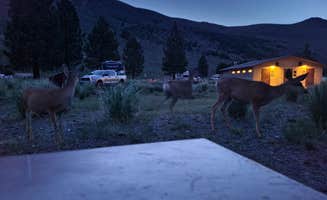
Secure food properly: Wildlife encounters require proper precautions. Rodger K. shares his experience at North Pines: "We were able to store our food and go hiking all day. Got back to camp, set up our propane stove on the table, and cooked a great dinner," adding that "it was fun to watch various critters (birds, squirrels, deer, coyotes) waltz through camp," while maintaining proper food security.
Tips from RVers
RV size limitations: Many equestrian campgrounds cannot accommodate larger rigs. Benjamin C. notes about Bridalveil Creek, "decent space. decent privacy a bit more wooded than other campground in the park," adding that "amenities: cleaned daily," but cautions about site selection for different vehicle types.
Generator hours: Noise restrictions apply at most campgrounds. Sarah F. recounts her experience at North Pines: "The only downside to the spot was everyone else had a RV and had there generators on at 6am. We are not RV people so we don't know why they need to run them," highlighting the importance of understanding generator hour limitations.
Parking considerations: Horse trailer parking requires specific planning. Elliott B. advises regarding Bridalveil Creek: "These sites are first come, first serve which is good and bad. Doesn't fill up like some of the year round sites right by half dome and it's really not that far if you want to get some awesome views," noting the trade-off between location and securing a spot.




 Ranger


