Camping in the American River area ranges from 700 to 2,500 feet elevation with cool winter nights and summer temperatures frequently exceeding 100°F. Terrain transitions from oak woodland to pine forest as elevation increases, with most campgrounds situated near waterways. Access roads vary from paved highways to challenging dirt tracks that can become impassable during winter months.
What to do
Gold panning at historic sites: Try your hand at panning at Coloma Resort, located at the historic site of Sutter's Mill where gold was first discovered. "If you ever want to experience the thrill of gold panning, and California history go here! You will not strike it rich, but with a couple hours of effort you can get a nice little bottle of gold flakes to take home with you," notes one visitor.
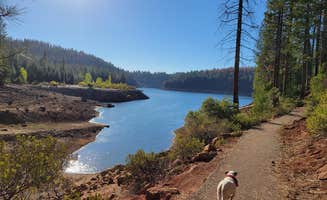
Hiking forest trails: The forest service maintains several trail networks throughout the region with varying difficulty levels. One camper at Giant Gap reports, "There is a trail that goes around the entire reservoir, it is a 5 mile loop."
Swimming in reservoirs: Several campgrounds offer direct water access for cooling off during summer. "The water was awesome for swimming. Not too cold like a lot of the mountain reservoirs," shared a Giant Gap camper who visited in late June.
Watch white water rafting: Observe skilled rafters navigate challenging rapids from the shore. A camper at American River Resort explains, "It is right in the American River and next to a class 3 rapid called Trouble Maker. It was awesome watching rafters and kayakers go through it."
What campers like
Secluded forest settings: For campers seeking quiet, Dru Barner Campground provides a true forest experience. "You get the feeling you are in the middle of nowhere, but yet, still only 15 minute drive to Georgetown," explains one reviewer.
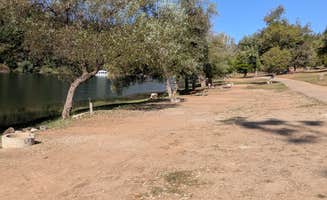
Waterfront camping spots: Multiple sites offer direct river or lake access. "We were treated to a site close to the reservoir. No hookups, but spectacular beauty," notes a visitor to Giant Gap.
Varied camping styles: The region supports all accommodation types. As one camper at Coloma Resort describes, "You can tent camp (it's covered sites for camping too), rent a cabin or RV camp. Great sites along the river too."
Clean facilities: Campgrounds maintain well-kept restrooms and showers. At Peninsula Campground, "The grounds are very well kept and the staff is available but keep their distance."
What you should know
Seasonal water levels: Reservoir levels can fluctuate dramatically. At Peninsula Campground, "In the summer months the lake is very busy and the hills are brown with dried grass. But in the early spring it is quite, especially here, with green grass and wild turkeys."
Fire restrictions: Fire regulations change seasonally with increased restrictions during summer and fall. One camper at Ruck-A-Chucky Campground advises, "Bring extra cash in case you need a tow out of there. Happened to me. Was $100 to get my rig out of there."
Insect activity: Wasps and bees can be problematic during summer months. "The only negative were the excessive amount of bees during the day. Our site was swarming and several of us were stung - it was manageable but fairly annoying," reports a Giant Gap visitor.
Varying road conditions: Access roads range from paved highways to challenging dirt tracks. "The trek down to the campsite was slightly difficult and we decided to utilize the four wheel drive as we navigated to and from," notes a Ruck-A-Chucky camper.
Tips for camping with families
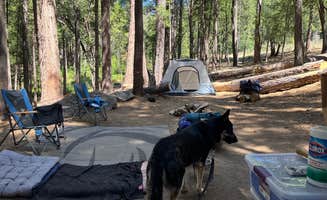
Consider off-season visits: For pet friendly camping near Greenwood, California with children, spring and fall offer milder temperatures and fewer crowds. "We spent the weekend for my wife's birthday. It rained most of Friday and into Saturday but we had a great time," shares a Coloma Resort visitor who camped in early spring.
Pack for temperature swings: Daily temperature variations can exceed 40°F, requiring both warm clothing and cooling options. "The Sacramento area gets very hot in the summer, and this campground provides some but not a ton of shade," notes a visitor to Beals Point Campground.
Select riverside sites strategically: Sites near water offer recreation but come with higher foot traffic. "We stayed in spot 33 with a large group and didn't feel crowded. One concern was the road along the river view spots. It is one way and people were constantly going opposite directions," explains an American River Resort camper.
Monitor quiet hours enforcement: Enforcement of quiet hours varies by campground. A camper at Peninsula Campground advises, "Try not to forget anything because it is eleven twisty, narrow, miles back to the city of Cool, where you can buy the essentials."
Tips from RVers
Water and power considerations: Many campgrounds have partial hookups only. "I had to bypass the surge suppressor because it kept cutting out due to low voltage. Voltage was generally 104-105," reports an American River Resort visitor.
Site leveling challenges: Prepare for uneven terrain. A visitor noted, "Had a standard Hookup-RV-Spot. Was very uneven, couldn't get the RV level."
Size restrictions matter: Many older campgrounds have limited space for larger RVs. "I would be very cautious about coming here with a larger RV. Ours is 30' bumper to bumper. I think 32 would be ok," advises an American River Resort camper.
Consider service schedules: Campgrounds with limited sewer hookups offer alternatives. "There is also a honey bucket truck that comes around to all camp sites Mon, Wed, and Fridays to dump your gray and black tanks," explains a visitor to Ghost Mountain RV Campground.













 Guide
Guide


