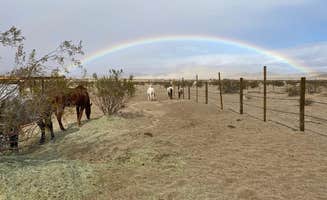
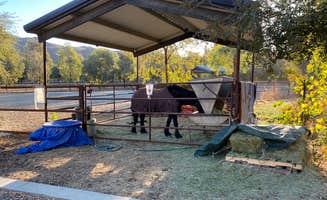
Black Rock Equestrian Campground serves horse owners with individual corrals and access to various trail systems. The campground sits at approximately 4,300 feet elevation within the high desert terrain of Joshua Tree National Park, where temperatures can fluctuate dramatically between day and night. Trail access remains a key feature for equestrians, with the California Riding & Hiking Trail providing a major thoroughfare through the park for mounted exploration.
What to do
Night sky viewing: Black Rock Campground offers exceptional stargazing due to dark skies and elevation. "The star cover was amazing, and surroundings were beautiful," notes Justin L. from Black Rock Campground.
Mountain hiking: Access trails directly from the campgrounds without driving elsewhere. Sierra T. from Black Rock Campground confirms: "There are also great hiking trails right next to the campground. The campground is also super close to the towns of Yucca Valley and Joshua Tree for picking up supplies."
Wildlife observation: Many horse campgrounds near Desert Hot Springs provide opportunities for wildlife viewing. "Quails running around everywhere, cool little spot at JTree, a little different than Jumbo and the other climber sites," reports Michael K.
Visit Pioneertown: Experience the Old West replica town near equestrian camping areas. "The campsite itself is no frills. Basically a huge dirt lot. Each spot has a picnic table. No hookups. There was 2 toilets near by which were clean," mentions Heather L. from Pioneertown Corrals.
What campers like
Convenient location: Equestrian campers appreciate sites with access to both wilderness and amenities. Christopher D. notes, "If you're looking for a quick and easy trip to experience nature and a national park, this is a good place to go."
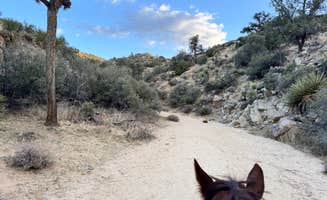
Trail access: Horse trails are a primary draw for equestrian camping near Desert Hot Springs. As Judith W. from Black Rock Equestrian Campground explains: "Trails are amazing. There is even an overland trail from here to the south end of Joshua Tree NP which is around 35 miles long."
Diverse terrain: The varied landscape offers different riding experiences within a single area. Ryan W. states: "Trails run right out of camp...lots of them...of all different difficulty levels. Something for everyone, and each of the trails we hiked, or came across were very well signed, which in the desert is appreciated."
Dark skies: Minimal light pollution makes for excellent night views. Justin L. advises: "Make sure to check the low and high temps to plan accordingly. The dessert has been known to test adventurers, so travel safely."
What you should know
Reservation requirements: Most equestrian campgrounds require advance booking. Mark D. from Black Rock Campground confirms: "Reservations are required but the park is easily accessible."
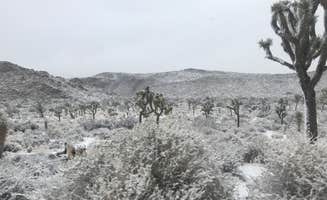
Seasonal considerations: Summer brings extreme heat while winter nights can be unexpectedly cold. Justin L. recounts: "We visited in January, and should have been better prepared! I know better, but we didn't check the conditions well enough, and froze our butts the first night!"
Limited amenities: Water and bathroom facilities vary significantly between equestrian campgrounds. Julie K. notes: "After visiting JTNP I learned that many campgrounds in the main part of the park had no water so extra props to this CG for water."
Wind conditions: Strong desert winds can affect camping comfort and fire safety. Christopher D. cautions: "The wind can get really crazy. I don't know if it was just a freak weather event, but the wind was crazy both days I camped here."
Tips for camping with families
Choose sites with shade: Desert sun can be intense for children. Ashley W. from Heart Bar Campground recommends: "Sites are good, bathrooms are always cleaned. Close to amenities if you need it (we travel with small children so that's a plus) compared to the more remote stays inside the national park."
Wildlife education opportunities: Turn animal sightings into learning experiences. Kevin T. observes: "This campsite has a lot of bird and would come during the cooler months."
Bring entertainment: Limited cellular service means offline activities are essential. Kathleen D. suggests: "The kids liked biking the loop. The scenery and starry night sky are breathtaking."
Bathroom access: Facilities vary widely between equestrian campgrounds. "Bathrooms with flush toilets (no showers)," notes Ryan W., an important consideration for families with young children.
Tips from RVers
Site leveling: Many horse campgrounds have uneven parking surfaces. As Judith W. notes about Lake Cahuilla: "Almost all sloped but not awful. Lot gets regularly graded."
Road conditions: Access roads to equestrian areas can be challenging. Ashley F. reports: "The road was pretty well maintained, a car without 4WD can handle it easily."
Generator rules: Noise restrictions vary between campgrounds. Christopher D. advises: "Neighbors can be very noisy, and I mean noisy in a number of different ways. There was loud music that was audible far beyond campsites."
Campsite spacing: Horse camping often means open areas rather than private sites. Julie K. observes: "The sites were close together, narrow roads and the sites were not level. We found a rock to level our van which helped, but flat spots were expected."






 Ranger


