Dispersed camping near West Point Lake provides backcountry experiences in Alabama's Talladega National Forest and surrounding wilderness areas. Most sites require moderate hiking access and lack formal facilities. Winter temperatures average 40-55°F while summer highs regularly exceed 90°F with high humidity, making spring and fall the preferred seasons for comfortable camping conditions.
What to do
Fishing at nearby streams: Tuskegee National Forest offers multiple dispersed campsites with access to fishing opportunities. According to one camper, "14 established campsites throughout this small National Forest. Some spaced apart as much as half a mile" making it possible to find private spots near water access.
Hiking the Pinhoti Trail: The Pinhoti Trail system provides extensive backpacking opportunities with various campsites along the route. A reviewer noted about one site, "This site isn't that special but practical if you need the space and want to have a nice jumping off point to see some of the other sites in the area," making it a good base for day hikes.
Swimming at seasonal spots: During warmer months, several backcountry sites offer swimming opportunities. One reviewer mentions sites "right next to Sipsey falls a little further along where you have access to water for pumping and swimming when the weather is right," though water levels vary significantly by season.
What campers like
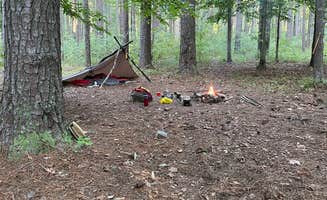
Protected camping areas: Many dispersed sites offer natural windbreaks. At Pinhoti Backcountry Campground near Odum Intersection, one camper appreciated that "The site itself is well cleared and has an established fire pit. There are also several large boulders that work well to block the wind and make this a more comfortable space in bad weather or when it is cold out."
Private clearings: Campers value sites set back from main trails. At Chinnabee Silent Trail Backcountry Site 5, a reviewer highlighted it as "fairly large with two established firepits and multiple cleared areas for tents. It also has plenty of trees for setting up hammocks. I like this site in particular since it is one of the less crowded spots."
Group-friendly spaces: Several sites accommodate larger groups with multiple tent pads. One camper described Pinhoti Backcountry Campground near Odum Trail as "a large site with a nice fire pit perfect for a large group. Someone also conveniently set up logs for sitting on."
What you should know
License requirements: Some management areas require specific documentation. At Joe Kurz Wildlife Management Area, visitors should note the "requirement for a valid Georgia hunting or fishing license to camp, reflecting the area's primary use for hunting and fishing activities."
Water access limitations: Many sites have seasonal water availability concerns. Reviewers recommend checking water sources before relying on them: "The only downside is this site doesn't have as easy water access as some of the other sites in the area."
Cell service gaps: Most dispersed sites lack reliable connectivity. One camper at Joe Kurz WMA simply stated "No cell coverage, has fire pit, mostly tent and car campers" - an important consideration for those needing to stay connected.
Trail difficulty: Some campsites require significant elevation gain. A reviewer warned about one area, "Be prepared to do some serious climbing to get up to the ridge though," suggesting proper physical preparation before attempting certain backcountry routes.
Tips for camping with families
Choose sites with shorter approach trails: For younger campers, select locations with minimal hiking required. At Chinnabee Silent Trail Backcountry Site 3, a reviewer noted it's "a nice backcountry campsite a short walk in from the chinnabee silent parking area" making it more accessible for families.
Look for flatter camping areas: Sites with level ground work better for family tents. One camper described a particular site as having "a nice large flat area for setting up several tents," which accommodates family-sized shelters more comfortably.
Consider seasonal factors: Plan family trips during moderate temperature periods (April-May or September-October). Summer temperatures regularly exceed 90°F with high humidity, creating uncomfortable conditions for children and less experienced campers.
Tips from RVers
Size limitations apply: Most dispersed sites near West Point Lake aren't suitable for large RVs. At Tuskegee NF Free Dispersed, a camper observed "Some sites wide open, some with trees" indicating variable access for different vehicle sizes.
Plan for self-sufficiency: No hookups or facilities exist at any dispersed sites. One RVer who visited Joe Kurz WMA mentioned "I went with a travel trailer" but noted the area is "mostly tent and car campers," suggesting preparation for completely off-grid camping is necessary.
Access road conditions: Forest service roads vary seasonally. A visitor to Tuskegee National Forest noted "As of Oct 2025, three sites that are south of 29 are not accessible due to Thunder rd being closed," highlighting the importance of checking current road conditions before attempting RV access.





 Legend


